
Strategist


• インサイト
US Treasury steps in as long-end yields rise
The US Treasury’s expanded buybacks signal growing concern over rising long-end yields and a shift towards a more activist approach. But without addressing the underlying fiscal pressures, its ability to contain yields may prove short-lived.
執筆者


Strategist
まとめ
- Expanded buybacks signal a more activist Treasury
- Shortening the average maturity of Treasury funding comes at a cost
- Fiscal pressures should keep long-end yields elevated
The US Treasury Department yesterday (19 August) announced that it would double the size of its liquidity-support buyback operation for longer-dated Treasury securities. The maximum size of each operation will increase from USD 2 bln to at least USD 4 bln. If operations continue at the current pace, purchases could amount to around USD 66 bln on an annual basis. These numbers are not insignificant, as the expansion of US Treasury purchases would effectively equate to roughly 15% of gross 20- to 30-year US Treasury supply.
Buyback operations are not new. They have been an active policy tool to improve the liquidity in older bonds for some time. The purpose is to improve liquidity with the aim of facilitating trade and lowering the yield premium. However, the timing of the announcement is notable. Yield premiums of older ‘off-the-run’ bonds have recently not been elevated, and only two weeks ago the Treasury confirmed its existing funding plans.
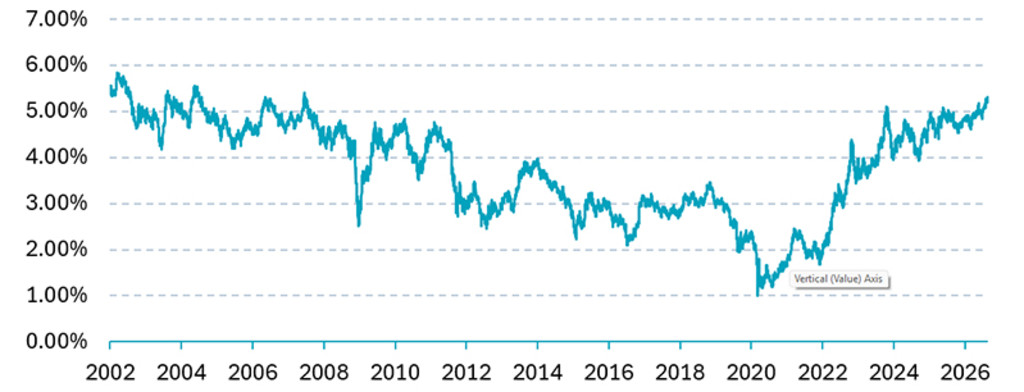
Clearly, the announcement should be seen as a response to rising US Treasury yields, as the 30-year Treasury bond recently closed at its highest yield since 2007 (see Figure 1). This suggests that the Treasury Department wants to send the message that it cares about the level of long-end yields and is willing to respond to limit the yield rise. Going forward, we are likely to continue to see a more activist Treasury Department.
In response to the announcement, longer-maturity bonds rallied and the US Treasury yield curve flattened significantly, with the spread between 30- and 2-year bonds decreasing by 10 bps on the day, from 112 bps to 102 bps.
Figure 1: US Treasury 30-year yield
Past performance is no guarantee of future results. For illustrative purposes only. Source: Bloomberg, August 2026
What else could the Treasury do?
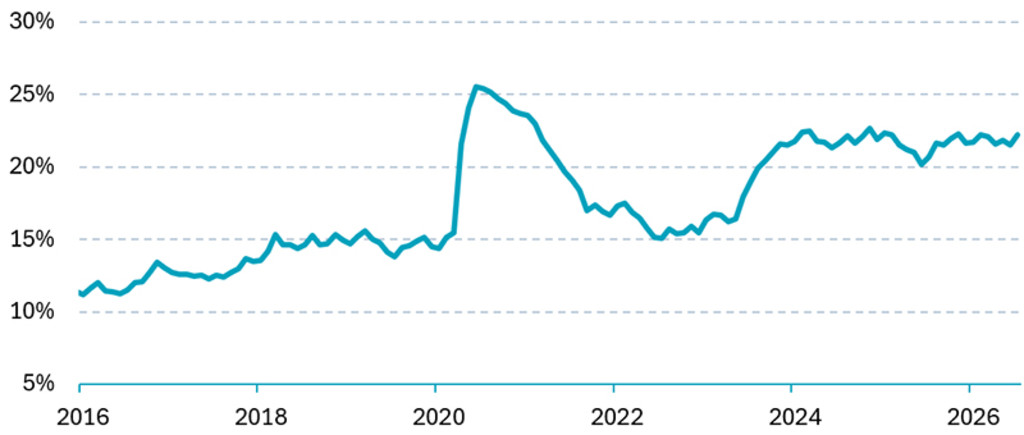
One important limitation is that the Treasury must finance these purchases in some way, most likely through additional T-bill issuance. This is a strategy the Treasury has been pursuing since 2023 (see Figure 2).
The question, then, is what else could the Treasury do to dampen the rise in long-dated yields? One potential next step would be to adjust the composition of newly issued debt. The Treasury determines how much government debt is issued across different maturities and could reduce the supply of longer-dated bonds. Any such change could be announced when it updates its issuance plans at the quarterly refunding in November.
Shortening the average maturity of its funding would come at a cost. A shorter maturity profile would make the Treasury’s interest payments more sensitive to Fed policy rates. It could also be perceived as adding pressure to the Fed to pursue a lower-rate policy. In addition, it would increase the rollover risk of the debt.
Figure 2: US T-bills as % of US debt outstanding
Source: US Treasury, Bloomberg, August 2026
Buybacks are not Operation Twist
At first glance, Treasury buybacks may appear similar to ‘Operation Twist’1. However, there are some significant differences. First, the size of the Fed’s Operation Twist was significantly larger. At more than USD 600 bln, the Fed’s purchases and sales across different maturities dwarfed the Treasury’s current purchases. Second, the Treasury Department does not have the ability to create liquidity, unlike the Fed, and must finance these purchases as previously discussed.
There also appears to be some dissonance between the policy preferences of new Fed Chair Warsh and the actions of the Treasury Department. Warsh is known to prefer shortening the duration of the Fed’s balance sheet and has started a task force to re-examine balance sheet policy. A possible outcome of this task force could be to decrease the maturity profile of the Fed’s Treasury holdings on the balance sheet by shifting reinvestments to shorter-dated government bonds.
The underlying pressures remain
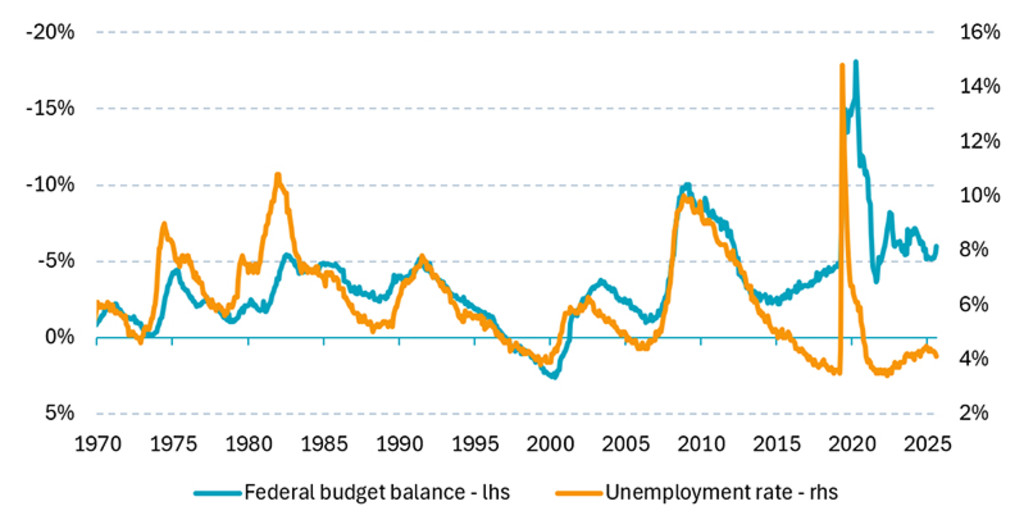
We believe that an activist Treasury can impact yields in the short term. However, its actions fail to address the underlying reason why long-end Treasury yields are high in the first place. Inflation uncertainty has increased and the US government is running a large deficit, estimated at 6.3% of GDP in 2026, even though the economy and labor market are relatively strong. There are no indications that these high deficits are likely to decrease any time soon. US government debt has just passed USD 40 tln (123% of GDP) and is expected to continue to rise for the foreseeable future.
For our positioning, this means we remain cautious on longer-maturity government bonds, with potential spillover effects from US yields on other bond markets. We have steepener positions in markets such as UK gilts and German government bonds.
Figure 3: Exceptionally high deficits given the state of the labor market
Source: US Treasury, BLS, Bloomberg, August 2026
Footnote
1 Operation Twist was a Federal Reserve program conducted from 2011 to 2012 in which the Fed sold shorter-dated Treasury securities and bought longer-dated securities to lower long-term interest rates without expanding its overall balance sheet.
クレジットの最新動向は?
クレジット運用の最新情報を先取りするニュースレター(英文)に登録しましょう。
重要事項
当資料は情報提供を目的として、ロベコ・ジャパン株式会社(以下「当社」)が独自に作成、または当社のグループ会社(Robeco Institutional Asset Management B.V.およびその関連会社を含む)から提供された資料を当社が編集・翻訳したものです。資料中の個別の金融商品の売買の勧誘や推奨等を目的とするものではありません。記載された情報は十分信頼できるものであると考えておりますが、その正確性、完全性を保証するものではありません。意見や見通しはあくまで作成日における弊社の判断に基づくものであり、今後予告なしに変更されることがあります。運用状況、市場動向、意見等は、過去の一時点あるいは過去の一定期間についてのものであり、過去の実績は将来の運用成果を保証または示唆するものではありません。また、記載された投資方針・戦略等は全ての投資家の皆様に適合するとは限りません。当資料は法律、税務、会計面での助言の提供を意図するものではありません。 ご契約に際しては、必要に応じ専門家にご相談の上、最終的なご判断はお客様ご自身でなさるようお願い致します。 運用を行う資産の評価額は、組入有価証券等の価格、金融市場の相場や金利等の変動、及び組入有価証券の発行体の財務状況による信用力等の影響を受けて変動します。また、外貨建資産に投資する場合は為替変動の影響も受けます。運用によって生じた損益は、全て投資家の皆様に帰属します。したがって投資元本や一定の運用成果が保証されているものではなく、投資元本を上回る損失を被ることがあります。弊社が行う金融商品取引業に係る手数料または報酬は、締結される契約の種類や契約資産額により異なるため、当資料において記載せず別途ご提示させて頂く場合があります。具体的な手数料または報酬の金額・計算方法につきましては弊社担当者へお問合せください。 当資料及び記載されている情報、商品に関する権利は弊社に帰属します。したがって、弊社の書面による同意なくしてその全部もしくは一部を複製またはその他の方法で配布することはご遠慮ください。 商号等: ロベコ・ジャパン株式会社 金融商品取引業者 関東財務局長(金商)第2780号 加入協会: 一般社団法人 資産運用業協会