

Portfolio Manager


• インサイト
Earnings growth is surging, but inflation risks are building
Global earnings are surging but a hawkish Fed pivot, and stretched AI valuations argue for a cautious rotation toward cyclicals, value, and international diversification rather than chasing momentum.
執筆者



まとめ
- Earnings surge could stoke inflation
- Rate expectations have flipped to a more hawkish bias
- Rotation towards companies with resilient cashflows could protect against multiple compression
Let’s start with the good news, because there’s a lot of it. The earnings backdrop right now is, frankly, quite extraordinary. Forward earnings for the S&P 500 are running near +29%1, and this isn’t just a mega-cap mirage; mid-caps are around +18% and small-caps near +24%. The last time we saw numbers like these we were clawing out of the financial crisis or the pandemic. The difference is we don’t have a recession this time. That’s what makes the cycle so unusual: a rising-tide-lifts-all-boats earnings surge with no crater to climb out of, powered by lagged rate cuts, a hefty fiscal package (Trump’s ‘One Big Beautiful Bill’ legislation in the US), and the AI capex firehose. Add it up and you get multiple points of GDP growth in combined stimulus landing more or less at once. For the next few months, that earnings momentum should keep stocks moving higher. Now the catch...
The thing about earnings this strong
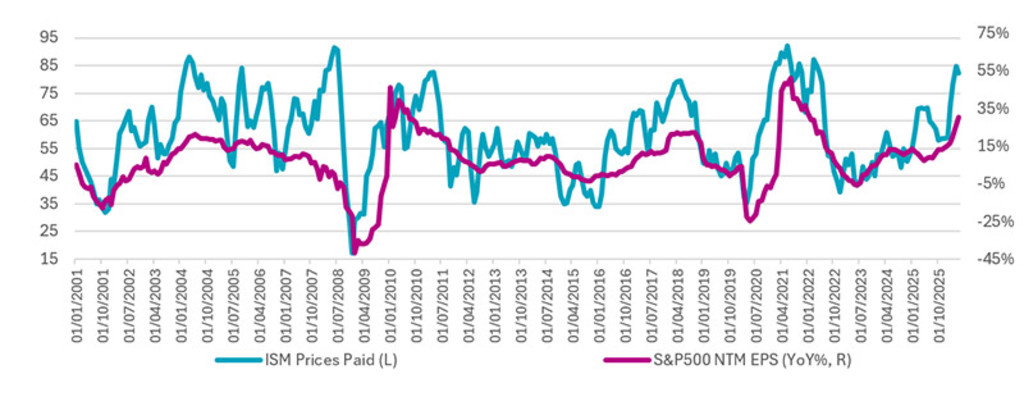
Earnings growth this powerful will almost always travel with a companion you’d rather not invite: inflation. The two move together because they’re both consequences of a hot economy. ISM prices-paid gauges are sitting at levels that have historically front-run a pickup in core inflation (see Figure 1). This pipeline pressure is already showing up in stickier core services, housing disinflation that’s basically tapped out, tariffs, and an oil scare out of the Middle East that could take six to nine months to fully bleed into core prices. The uncomfortable historical nugget: when S&P earnings growth runs north of 20%, the Fed has ended up tightening in roughly seven of the last eight episodes. Which brings us to rates.
Figure 1: Higher earnings = higher prices
Source: BMO Capital Markets, Bloomberg
Central banks: from tailwind to headwind
This is the regime change almost nobody is positioned for. The global easing cycle is over, and the live question is no longer “how many cuts” but “will they hike?” The labor market the Fed fretted about last year has healed; job growth has picked up and the unemployment rate is flat versus a year ago, when policy was 75 bps tighter. Meanwhile the inflation problem has quietly worsened, and new Fed Chairman Kevin Warsh has leaned hawkish, hammering price stability and sounding skeptical that AI will ride to the rescue with disinflation. Some major banks, including Bank of America, now pencil in three 25 bps hikes before the year-end, which would take the policy rate back toward 4.25-4.50%. Remember, going from cuts priced in to hikes priced in is a genuine shift, and it will land hardest on the longest-duration corners of the market.
If inflation is firming and the Fed is leaning hawkish, cyclicals and value tend to do well Chris Berkouwer


Chris Berkouwer
Portfolio Manager
The AI/momentum problem
Here’s where it gets interesting. The relentless march of momentum names – AI front and center – is starting to rhyme with the run into March 2000. AI is now about the most crowded consensus long on the board. The main difference from the dotcom era is that the fundamentals are real this time: US Tech’s economic profit is around 10x its 2000 level, and Tech ex-US now out-earns all of listed Europe combined. So it isn’t pure hype. Having said that, the hyperscalers are pouring so much into capex that returns on capital are coming under pressure, while the rest of the AI food chain is priced for profits nobody has ever actually delivered. In a higher-for-longer world, Tech is increasingly a geared duration bet. When discount rates were anchored at post-GFC lows, paying up for far-off growth made sense; it looks a lot more stretched now. Layer on the AI-sovereignty wildcard that includes protectionism, export controls, Europe’s dependence on US technology, China building its own stack for the East – and the world’s most crowded trade has more ways to wobble than consensus admits.
So where do you actually look?
The interesting part of an overheating, broadening tape is that the laggards finally get a turn. If inflation is firming and the Fed is leaning hawkish, cyclicals and value tend to do well – they’ve already beaten defensives by double digits over the past year, and high-beta has come roaring back. The opportunity set outside the magnificent few looks genuinely interesting. Europe is also the most de-correlated major region from US Tech, which makes it a natural hedge for anyone nervous about concentration. The region is rich in the cyclicals and quality defensives (Pharma, Utilities) that suit this backdrop, though its old dependence on US technology is a real vulnerability if AI sovereignty becomes a fault line. Japan's reflation-and-reform story still has legs, with the caveat that a normalizing BoJ and a firmer yen are the swing factors. And emerging markets – China's home-grown AI build-out and Asian cyclicals especially – are the highest-beta way to play a softer dollar and a broadening tape.
The shape of the next quarter(s)
The base case from here is still an up-but-bumpy path for global equities, with the rates-geopolitics-AI triangle as the key swing factor. For now, earnings are simply too good and the stimulus is still washing through – before the bill comes due. Given the valuation backdrop, any setbacks on the US-Iran ‘deal’, growing headwinds as core inflation gains momentum, or a more sober tone by central banks, could translate into air pockets. Companies with real moats, low cash-flow volatility, and decent dividends are the kind of ballast that holds up if the multiple-compression story shows up.
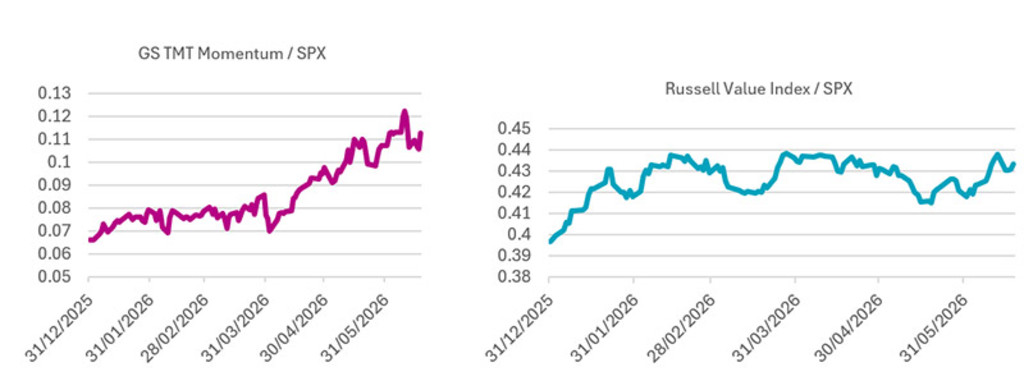
Figure 2: June saw non-AI stocks join the rally
Past performance is not guarantee of future results. The value of your investment may fluctuate.
Source: Bloomberg, CLSA. Data to 18 June 2026. SPX refers to S&P 500 index. GS TMT Momentum refers to Goldman Sachs Technology, Media, and Telecom Momentum index
In portfolio terms, that argues for a tilt toward quality growth and AI-linked names, but with more respect for rate sensitivity and less bravado in the most expensive corners of the market. Cyclicals and value should weather that better than long-duration Tech. None of this is a crash call; it’s a call for broadening, rotation, and a little humility about the most crowded trade in the world. Enjoy the party; just stand near the door.
This article was originally published in our Fundamental Equity Quarterly for Q3.
Footnote
1BMO Capital Markets estimate, June 2026
最新のインサイトを受け取る
投資に関する最新情報や専門家の分析を盛り込んだニュースレター(英文)を定期的にお届けします。
重要事項
当資料は情報提供を目的として、ロベコ・ジャパン株式会社(以下「当社」)が独自に作成、または当社のグループ会社(Robeco Institutional Asset Management B.V.およびその関連会社を含む)から提供された資料を当社が編集・翻訳したものです。資料中の個別の金融商品の売買の勧誘や推奨等を目的とするものではありません。記載された情報は十分信頼できるものであると考えておりますが、その正確性、完全性を保証するものではありません。意見や見通しはあくまで作成日における弊社の判断に基づくものであり、今後予告なしに変更されることがあります。運用状況、市場動向、意見等は、過去の一時点あるいは過去の一定期間についてのものであり、過去の実績は将来の運用成果を保証または示唆するものではありません。また、記載された投資方針・戦略等は全ての投資家の皆様に適合するとは限りません。当資料は法律、税務、会計面での助言の提供を意図するものではありません。 ご契約に際しては、必要に応じ専門家にご相談の上、最終的なご判断はお客様ご自身でなさるようお願い致します。 運用を行う資産の評価額は、組入有価証券等の価格、金融市場の相場や金利等の変動、及び組入有価証券の発行体の財務状況による信用力等の影響を受けて変動します。また、外貨建資産に投資する場合は為替変動の影響も受けます。運用によって生じた損益は、全て投資家の皆様に帰属します。したがって投資元本や一定の運用成果が保証されているものではなく、投資元本を上回る損失を被ることがあります。弊社が行う金融商品取引業に係る手数料または報酬は、締結される契約の種類や契約資産額により異なるため、当資料において記載せず別途ご提示させて頂く場合があります。具体的な手数料または報酬の金額・計算方法につきましては弊社担当者へお問合せください。 当資料及び記載されている情報、商品に関する権利は弊社に帰属します。したがって、弊社の書面による同意なくしてその全部もしくは一部を複製またはその他の方法で配布することはご遠慮ください。 商号等: ロベコ・ジャパン株式会社 金融商品取引業者 関東財務局長(金商)第2780号 加入協会: 一般社団法人 資産運用業協会