Sector Lead
• インサイト
How emerging markets are unlocking value in the energy transition
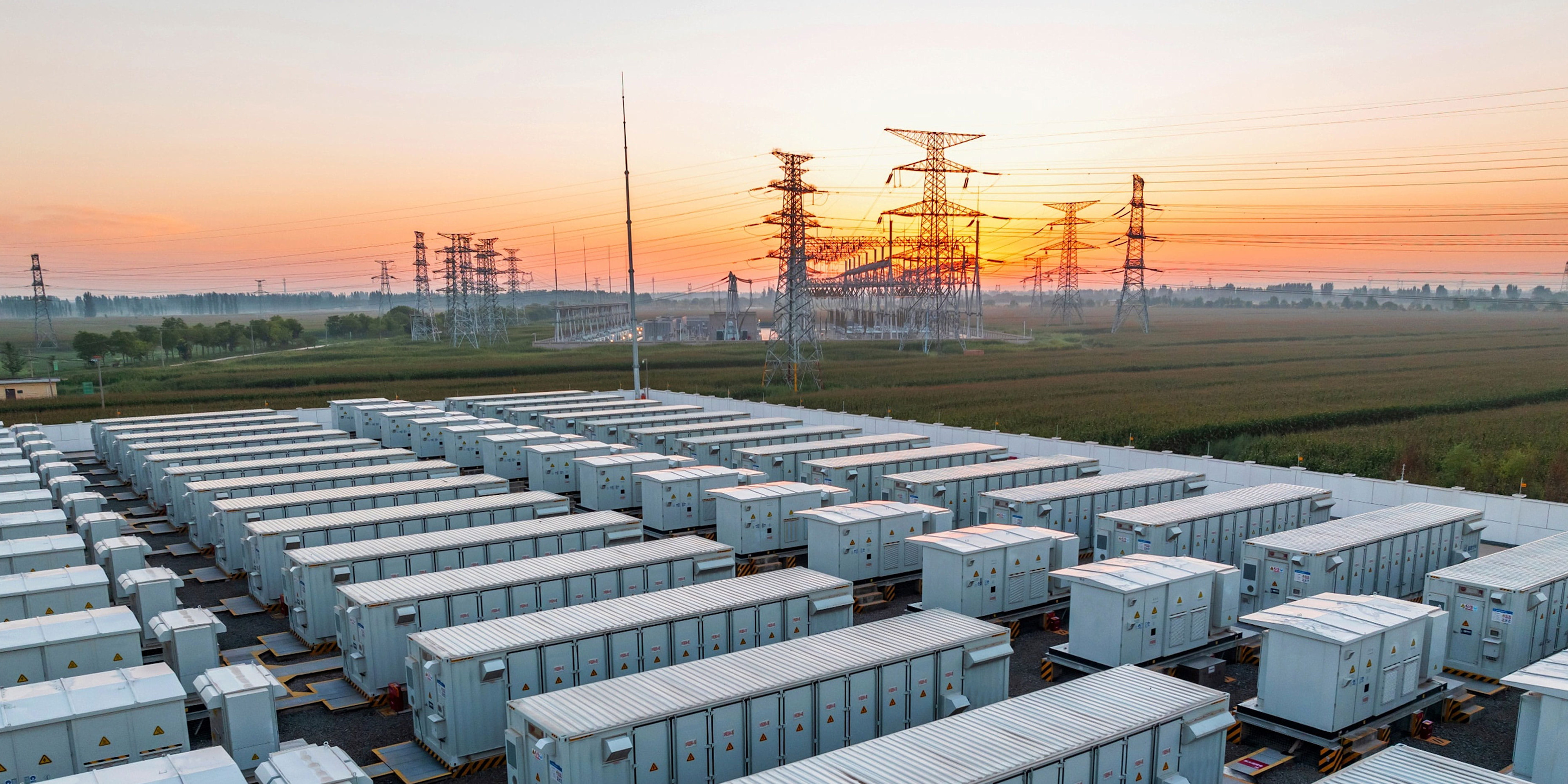
Energy storage is emerging as a critical enabler of the energy transition and a growing opportunity for emerging market companies.
執筆者


Portfolio Manager
まとめ
- Energy storage is becoming a critical link in the energy value chain
- Value and profits are shifting to premium services in the storage ecosystem
- Emerging markets are well positioned to capture transition and storage growth
The global energy sector is currently undergoing its most significant structural realignment since the Second Industrial Revolution, creating an entirely new energy transition value chain in the process. While renewable penetration continues to accelerate, its ability to supply enough energy to meet growing electricity demand is being hamstrung by technological issues as well as slow permitting and grid integration complications. Renewable variability (or intermittency) is probably the most well-known of renewables’ drawbacks.
On the flip side, too much price volatility has also been problematic for the energy sector. Renewables’ supply is usually high during the day when demand is lower, and low when demand is high (e.g., in the early evenings). Moreover, such supply imbalances also lead to extreme price volatility, which neither utilities nor consumers want. Renewable surpluses can also lead to system voltage overload, grid instability and the risk of a complete system shutdown. To avoid damaging surges, renewables must be shut down completely (curtailment), resulting in lost revenues, lower utilization rates of costly assets, and a weaker return on invested capital for grid operators.
Unstable grids and politics
Intermittency and instability issues are now converging with macro-economic issues. Tariffs, supply chain disruptions, and regional conflicts have impacted energy infrastructure – reducing access to energy resources, stoking inflation, and endangering economic growth for countries globally, particularly oil and gas-importing countries in emerging markets and the EU.
To reduce energy dependence and increase resilience, governments are prioritizing renewable installations on domestic grids and championing the services of local providers (rather than cheaper Chinese imports).
Immature political institutions and maturing grids that are unable to cope with increasing demand for grid additions also create bottlenecks. Much of the existing transmission and distribution infrastructure was built decades ago for centralized power generation which flowed from coal or gas plants to consumers. Connecting clean tech with old infrastructure is tricky and costly, leading to permitting delays in both emerging and developed markets alike. Emerging markets face additional financing burdens, lack clear regulatory/institutional approval processes.
Downstream electricity demand is rising and complicating matters further, driven by electrification trends and the expansion of AI data centers. Hyperscalers are particularly ravenous energy eaters, whose demand can’t wait for grid upgrades or multi year permitting processes. As a result, many countries and companies (emerging and developed) are turning to stationary energy storage as a cheap, fast, and efficient alternative.
Battery storage – solving multiple challenges
Energy storage addresses several of the energy transition’s most acute challenges. By absorbing excess renewable generation when supply exceeds demand and releasing it during periods of scarcity, storage directly reduces curtailment and smooths power price volatility, improving the economics of renewables and grid stability. Storage also provides a stop-gap solution to permitting problems and build out constraints. Strategically deployed batteries can relieve grid congestion, provide local capacity and defer multi year transmission upgrades that are delayed by complex permitting processes in both developed and emerging markets. In this way, storage acts as a flexible, fast to deploy complement to traditional grid infrastructure.
At the same time, storage plays a critical role in addressing hyperscalers and AI driven power demand. Data centers require large volumes of firm, uninterrupted electricity on short timelines that unstable grids increasingly cannot deliver. Co located storage enables on site generation, peak management and reliability under ‘Bring Your Own Power (BYOP)’ models, allowing digital infrastructure to grow despite grid constraints.
Figure 1 – Storage solutions, booming in emerging and developed markets

Source: BloombergNEF, October 20251
Underappreciated opportunities
Despite its growing importance, equity markets have tended to focus on battery cell manufacturing – the most visible but also the most commoditized part of stationary storage. China has perfected the art of manufacturing green tech at scale, reducing prices and increasing adoption. But it’s also created overcapacity and compressed margins across the energy and battery value chain.
Value and profits are migrating toward higher margin, more differentiated segments of the energy ecosystem. For example, power electronics that help convert voltages from diverse sources (like batteries and renewables), preventing surges, dips and jams. Thermal management systems which function as thermostats and cooling systems that keep grids from overheating, triggering explosions, fires and outages are another high-margin area. Both are particularly important for the hyper-amplified energy needs of hyperscalers data centers. Advanced battery management systems that monitor battery cell health, optimize performance and extend asset life are also services demanding premium prices. All represent attractive opportunities that are still relatively underpenetrated and underappreciated by markets.
Why emerging markets are central to the storage story
Emerging market companies enjoy dominant positions across the energy value chain including mining of battery critical minerals, electrical equipment manufacturing, power electronics, semiconductors, and increasingly energy management software. Moreover, many EM companies in upstream and downstream segments are actively pursuing vertical integration in order to leverage cost advantages, local networks, and faster execution capabilities. Stationary energy storage represents a natural extension of these strengths – at home and globally.
Dependence on imported fossil fuels leaves many countries exposed, making renewables paired with storage capacity the safest long term solution for energy security. That’s why government policies and financing frameworks increasingly favor domestic providers of energy and grid infrastructure, offering procurement programs, capacity auctions, local-content incentives and financing to support the growth of local champions.
From insight to investment
Capturing opportunities in energy storage and the wider climate transition in emerging markets require moving beyond the typical EM names to uncover sources of undiscovered value. This demands deep expertise across emerging market economies, energy-transition technologies and complex storage value chains. Robeco’s Emerging Markets Climate Transition (EMCT) strategy brings this breadth and depth together, supported by Robeco’s large, regionally diverse investment and research team and decades of experience in emerging markets, sustainability and the climate transition. This platform enables the strategy to navigate EM’s diverse regulatory environments, uncover trends and attractive companies, and manage the financial materiality of ESG issues that are often more acute in emerging economies.
Figure 2 – EMCT strategy – attractive exposure along the storage value chain

The companies referenced are for illustrative purposes only in order to demonstrate the investment strategy on the date stated. The companies are not necessarily held by the strategy nor is future inclusion guaranteed. This is not a buy, sell or hold recommendation, nor should any inference be made on the future development of these companies. Source: Robeco, March 2026.
Footnote
1 BloombergNEF, Global energy storage boom: Three things to know. October 2025. Global annual storage additions (gross). Excludes pumped hydro. Buffer refers to headroom not explicitly allocated to a region.
新興国がもたらす機会とは?
新興国の投資機会を深掘りするニュースレター(英文)に登録しましょう。
重要事項
当資料は情報提供を目的として、ロベコ・ジャパン株式会社(以下「当社」)が独自に作成、または当社のグループ会社(Robeco Institutional Asset Management B.V.およびその関連会社を含む)から提供された資料を当社が編集・翻訳したものです。資料中の個別の金融商品の売買の勧誘や推奨等を目的とするものではありません。記載された情報は十分信頼できるものであると考えておりますが、その正確性、完全性を保証するものではありません。意見や見通しはあくまで作成日における弊社の判断に基づくものであり、今後予告なしに変更されることがあります。運用状況、市場動向、意見等は、過去の一時点あるいは過去の一定期間についてのものであり、過去の実績は将来の運用成果を保証または示唆するものではありません。また、記載された投資方針・戦略等は全ての投資家の皆様に適合するとは限りません。当資料は法律、税務、会計面での助言の提供を意図するものではありません。 ご契約に際しては、必要に応じ専門家にご相談の上、最終的なご判断はお客様ご自身でなさるようお願い致します。 運用を行う資産の評価額は、組入有価証券等の価格、金融市場の相場や金利等の変動、及び組入有価証券の発行体の財務状況による信用力等の影響を受けて変動します。また、外貨建資産に投資する場合は為替変動の影響も受けます。運用によって生じた損益は、全て投資家の皆様に帰属します。したがって投資元本や一定の運用成果が保証されているものではなく、投資元本を上回る損失を被ることがあります。弊社が行う金融商品取引業に係る手数料または報酬は、締結される契約の種類や契約資産額により異なるため、当資料において記載せず別途ご提示させて頂く場合があります。具体的な手数料または報酬の金額・計算方法につきましては弊社担当者へお問合せください。 当資料及び記載されている情報、商品に関する権利は弊社に帰属します。したがって、弊社の書面による同意なくしてその全部もしくは一部を複製またはその他の方法で配布することはご遠慮ください。 商号等: ロベコ・ジャパン株式会社 金融商品取引業者 関東財務局長(金商)第2780号 加入協会: 一般社団法人 資産運用業協会