


Visione

Conflitto in Medio Oriente: Commento di mercato (settimana del 9 marzo)

Benvenuti nella seconda parte del nostro blog, dove proponiamo analisi approfondite e commenti in tempo reale sul conflitto in Medio Oriente in continua evoluzione. Si tratta di una situazione in costante sviluppo, caratterizzata da un elevato grado di incertezza, poiché l’entità e la durata del conflitto non sono ancora note. Il nostro obiettivo è tenervi aggiornati sulle nostre valutazioni man mano che gli eventi si susseguono.

MONDAY, MARCH 9

  • 15:30 CET

    Multi-Asset: Winners and losers in the energy shock

    By Peter van der Welle, Multi-Asset Strategist

    The appointment of Khamenei’s son as the new Iranian leader and the prospect of a prolonged conflict delivered a major shift for oil markets. The 32% jump in oil prices so far since the Middle East turmoil erupted also exposes the fault lines in the global energy system. Oil prices typically spike as market participants demand a very large premium to insure against unexpected declines in oil spare capacity. Selmi et al. (2020* ) find that the use of spare capacity reduces the initial reaction of oil prices only moderately. The oil market wants to have more certainty that the Iranian conflict will remain limited in scope (no further attacks of Iranian proxies on refineries) and duration (weeks). However, as things stand, the market may not get what it wants even as talks about a release of strategic reserves among G10 members are underway.

    Beyond import reliance: broader measures of energy vulnerability
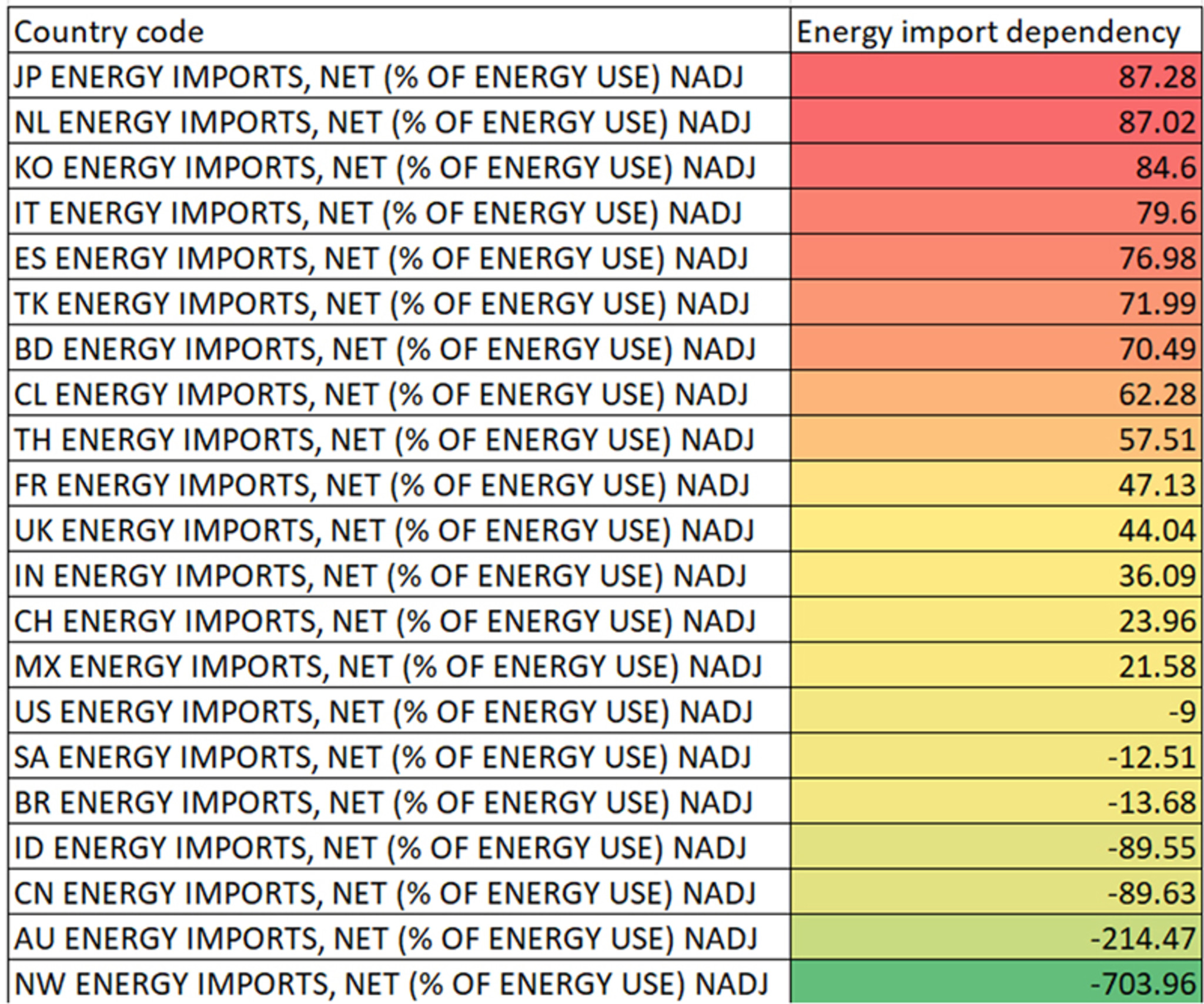
    As oil prices likely remain elevated near term, net energy exporters like the US and Norway have seen their currencies appreciate while currencies of net energy importers like Korea and the Eurozone remain under pressure. Net energy import dependency remains a useful compass to assess the fault lines. Looking at net energy imports as a percentage of domestic energy use, Japan (87%), the Netherlands (87%), Korea (85%), Italy (80%) and Spain (77%) sit at the more exposed end of the spectrum, while the US (9%), Brazil (14%), Australia (214%) and especially Norway (704%) remain structurally shielded.

    Substantial cross-country variation in energy import dependencies

    Source: LSEG Datastream, Robeco, March 2025.

    Yet, unconditional import reliance does not paint the full picture of cross-regional dispersion in energy dependency. Financial markets now also have to scrutinize the energy intensity of economies, the degree of energy import substitutability (via renewables), oil subsidy levels and the pace of inflation pass-through from energy import prices to end users to assess the implications for fiscal as well as monetary policy.

    Renewable energy: buffer or bottleneck?
    Economies with high renewable energy shares should, in theory, buffer external oil shocks. Renewable energy shares in major European economies have risen considerably in recent years (Germany now services around 25% of its energy use from renewables). Yet, renewable output only offsets fossil demand if grids can absorb and distribute it. Grid congestion and curtailment continue to inhibit substitution, forcing reliance on fossil backup when renewable generation peaks cannot be utilized. The result is a lingering vulnerability despite ambitious renewable build-out.

    Regional winners and losers in the energy shock
    Regionally, the asymmetry in relative terms of trade is clear. Asia is most directly at risk, as at the time of writing the Strait of Hormuz remains virtually closed and 83% of oil transiting the Strait of Hormuz is flowing toward Asian buyers. Europe comes next, constrained by limited substitutability and swift pass-through rates to end users. Australia, Norway and the US remain relative winners, supported by domestic production, low energy intensity (the US manufacturing share of GDP has steadily declined in recent decades), and the potential for shale drillers’ responsiveness if higher prices persist.

    *Selmi, R., Bouoiyour, J., & Miftah, A. (2020). Oil price jumps and the uncertainty of oil supplies in a geopolitical perspective: The role of OPEC’s spare capacity. International Economics, 164, 18–35. https://doi.org/10.1016/j.inteco.2020.06.004

Principali contributori

  • Client Portfolio Manager
  • Portfolio Manager
  • Client Portfolio Manager

    Meena Santhosh

  • Head of Quant Client Portfolio Management
  • Strategist, Investment Solutions
  • Client Portfolio Manager
  • Head of Asia-Pacific Equities
  • Head of Multi Asset & Equity Solutions, Co-Head Investment Solutions
  • Strategist
  • Portfolio Manager and Co-Head of Robeco’s Global Equity team
  • Client Portfolio Manager

Continuiamo la conversazione

Tieniti aggiornato sugli eventi in rapida evoluzione che riguardano investimenti sostenibili, factor investing, trend e credito.

Non perdere l'occasione di aggiornarti

Robeco punta a consentire ai propri clienti di raggiungere i loro obiettivi finanziari e di sostenibilità grazie a soluzioni d’investimento e risultati di livello superiore.

Sei un investitore privato? Visita il sito web Robeco dedicato ai Clienti privati.

Disclaimer Clienti Professionali
Le informazioni e le opinioni contenute in questa sezione del Sito cui sta accedendo sono destinate esclusivamente a Clienti Professionali come definiti dal Regolamento Consob n. 16190 del 29 ottobre 2007 (articolo 26 e Allegato 3) e dalla Direttiva CE n. 2004/39 (Allegato II), e sono concepite ad uso esclusivo di tali categorie di soggetti. Ne è vietata la divulgazione, anche solo parziale. Al fine di accedere a tale sezione riservata, si prega di confermare di essere un Cliente Professionale, declinando Robeco qualsivoglia responsabilità in caso di accesso effettuato da una persona che non sia un cliente professionale. In ogni caso, le informazioni e le opinioni ivi contenute non costituiscono un'offerta o una sollecitazione all'investimento e non costituiscono una raccomandazione o consiglio, anche di carattere fiscale, o un'offerta, finalizzate all'investimento, e non devono in alcun caso essere interpretate come tali. Prima di ogni investimento, per una descrizione dettagliata delle caratteristiche, dei rischi e degli oneri connessi, si raccomanda di esaminare il Prospetto, i KIIDs delle classi autorizzate per la commercializzazione in Italia, la relazione annuale o semestrale e lo Statuto, disponibili sul presente Sito o presso i collocatori. L’investimento in prodotti finanziari è soggetto a fluttuazioni, con conseguente variazione al rialzo o al ribasso dei prezzi, ed è possibile che non si riesca a recuperare l'importo originariamente investito.