
Portfolio Manager

• Podcast
Podcast: Will listed property bounce back in 2026?
Listed real estate continues to trade at a discount to the broader equity market, while dividend yields have been steady at attractive levels. Does the sector offer sufficient investor appeal over the coming years?
Autores/Autoras

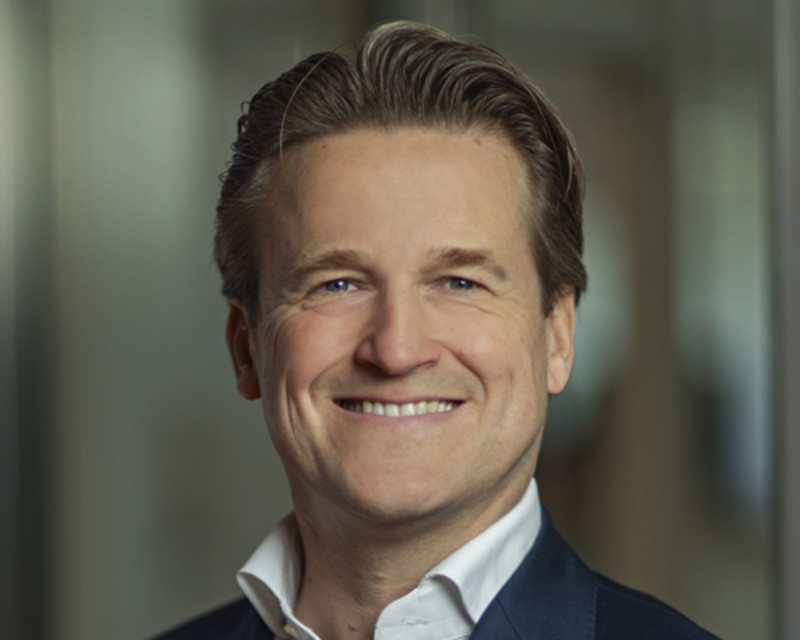

Portfolio Manager
This podcast is for professional investors only.
Quote: “Small movements, we think, are less relevant. If it's massive changes, especially in the long-term interest rate environment, that has an impact on valuation and hence also the performance of real estate stocks.”
Welcome to a new episode of the Robeco podcast.
Erika van der Merwe (EM): The property sector reflects the big shifts in how we work, live and connect from data centers, powering the digital age to the buildings shaping our cities and the homes in which we live. Listed real estate continues to trade at a discount to the broader equity market, while dividend yields have been steady at attractive levels. Does the sector offer sufficient investor appeal over the coming years? My guests to shed light on this are Frank Onstwedder and Folmer Pietersma, who are portfolio managers for Robeco’s Sustainable Property Equities strategy. Welcome. Good to have you in the studio.
Frank Onstwedder (FO)/Folmer Pietersma (FP): Thanks for the invite. Thank you, Erika.
EM: We have a cup of coffee just about every day.
FP: So you know everything already?
EM: Not quite. Well, let's start with that. With the basics, then. What exactly are you buying when you invest in listed property?
FP: Listed property that includes REITs, so real estate investment trusts, which are basically fiscal-efficient vehicles where you invest directly in retail offices, data centers, as you mentioned, or industrial names. So that's roughly 75% of the universe. And then you've got, for example, companies that are either developers or real estate operating companies that are closely related to REITs but don't have the fiscal treatment similar to REITs.
EM: So presumably your universe is a global universe and index. So given that, and presumably various sectors and subsectors, given that, what shapes the risks and opportunities within this universe, what is it that you're watching every day and tracking? Frank?
FO: So the most important thing for buying listed real estate is of course, when to buy. And that will depend on the supply and demand of real estate. So that's the key thing that we're developing on the fundamental side: supply and demand. And then the question is: how much do you pay for it? So the valuation of that combination of supply/demand, that's what we are looking for in stocks that we invest in. We invest globally, we have a very concentrated portfolio. There's like at least a thousand different stocks that we can invest in, in the listed real estate sector. But of that, we choose like around 50 of the best ones of them available.
EM: To what extent are interest rates relevant for your daily analysis? Because that always comes up when you read up on the sector. And yet when I chat to you offline, you seem to be less focused on that.
FP: It has definitely an impact in terms of the valuation yields and of course, the interest costs that the typical real estate companies pay. But small movements, we think, are less relevant. If it's massive changes, especially in the long-term interest rate environment, that has an impact on valuation and hence also the performance of real estate stocks. But we think it is important that we look at it, and it's definitely important when we do the analysis. Like, is the corporate balance sheet safe? Does the company have a low gearing for example? Does the company spread out their maturities? So make it a little bit insulated from changes in the interest rate environment. So that's what we look at from a corporate, company level. If you look at it top-down, then you look at what's driving the interest rate movements? Is it because of a strong economy? Is it purely because of inflation? And then we think of, OK, how should we position in that particular region if interest rates start to move, and what sectors do we like then in that type of environment? So yes, it has an impact long-term. Short-term I think, as Frank mentioned, it's more about supply and demand and also the long-term trends in the industry.
EM: And there again, so it depends on the sub sector, and with listed equity you've got various subsectors. I think you yourselves have developed a framework with which you analyze sectors.
FO: Yes, so of course real estate, the real estate companies are landlords to the real economy. So in a way you can more or less invest in anything that's available in the real economy via real estate. So that is a broad choice that we can pick from, which also means that you do have to be selective. And that's something that we specialize in. So we have defined three different trends, which are beneficial to real estate holdings. And those three trends are proptech, sustainable cities, and lifestyle. So those are the segments within the real economy that we think are being reflected in real estate stocks and where real estate can actually benefit from the trends that we see in the global economy.
FP: Yes, and they are impactful, right. So technology is obviously impacting the proptech segment. The data center, the e-commerce logistics. Demographics impact the lifestyle segment, which Frank mentioned. So how people live and where they, for example, do they rent their accommodation? Do they buy their homes? Senior housing, for example, is an important trend within lifestyle, driven by the tsunami of people that get older and demand senior housing. And then, of course, ESG is still important in this world, definitely for real estate. We think real estate is roughly responsible for about 30+% of carbon emissions. So, ESG and SI investing is still important. And we think that drives demand for sustainable cities, that's the third trend within our funds. And there we invest in offices and retail assets or companies, that focus sharply on reducing carbon footprint in their portfolios.
EM: Well, let's look at some of those opportunities then. So with AI now being a major driving force, as you said, property being the landlord to the economy, it's reflected no doubt in your sector. We've seen demand, for example, for data centers ballooning. So that's one element. From a property perspective, this entails the industrial space with a serious twist of technical innovation. Is this an appealing space for you or is everyone clamoring to get in there?
FO: There's a lot of interest in this space, that's for sure. We've seen private equity investing heavily expanding their data center exposure. But actually, and this is true for more or less the whole real estate sector, the listed real estate sector, is that via the listed real estate sector, you can get exposure to some of the higher-quality assets within each space. And that also applies to the data center industry. So there's a couple of companies listed. Big ones are Equinix1 , Digital Realty, for example. Those are the two major data center companies. And they have some really good exposures to data centers in general, but in particular, they have some really good exposure to very network-dense, highly interconnected data centers where we think that on the long term, most demand from AI will be focused on, and where people, where the tenants will pay the highest rents to be in that space.
FP: Currently you see indeed a lot of supply from the hyperscalers, which is not sort of in our universe. So the Amazon2, the Microsoft, for example, they build out large hyperscalers. That's more for modeling purposes in terms of AI. In the listed sector, we focus more on the AI inference. And that's what Frank mentioned, that's more the interconnection data centers. So that's basically two kind of categories: the hyperscale, the bulky data centers, you could basically build them everywhere as long as you've got power.
EM: Some more commoditized…
FP: Yes, that's what we think, it's more commoditized. We focus more on the, indeed, location-specific, where the subsea cables are landed in particular regions in the world, where there's a lot of tenants in one data center. So that's why they call it co-location. And they all need to be connected and have low latency. So they have to be very, very close to make the whole internet work, basically. So that's a different category, and we focus more on that latter one.
FO: And they have to be close to the consumer, to the end consumer. So whenever you pick up your phone and you start watching videos or playing games, or maybe at some point with AI, do different applications, you need that data to be relatively close to you. So the Netflixes of the world, everybody who has content. In the end, they want to be close to that end consumer. And there's only so many places, again coming back to supply and demand, where you can have those assets.
FP: And more importantly, last week we visited a new data center which was opened at Schiphol. It's from Digital Realty. And I also hear that it's tough to build a data center, especially because power is tough to get…
EM: A constraint, right?
FP: Yeah, it's a constraint. To be honest, nobody really wants a data center in their backyard. There's a lot of, regulation, etcetera, etcetera. So it's not easy to build a data center, and especially not in these sort of urban locations where it is important to have data centers, as Frank mentioned, because you want to be close to the customers, basically.
EM: And to be clear, the speakers are not offering investment advice in mentioning some of the names, you’re really just highlighting the sector, but also in particular the qualities that you're looking for. So really players that are gatekeepers and sort of first movers, huge moats in that subsector.
FP: Absolutely. And that's only one, right. So this is within the proptech theme we play, so that's driven by technology. But technology also drives demand for e-commerce logistics and especially last-mile logistics. So that's another trend we capture in that proptech theme. So there's a lot of different ways you can invest in.
EM: Moving across to the office space. This is also something that everyone has been affected by. We've seen the sector's been through a major shift since Covid. So what's the picture right now? We see certain industries and even certain companies insisting on staff returning to the office. What is this doing to the office sector?
FO: A lot. There's clearly a return to the office mandate out there, and in some markets it's higher than in others. But there is definitely that move back to the office. People do see that the human interaction is really needed to make sure that corporate culture is going to be ingrained. Not just in the people that already work there for a long time, but especially, of course, for young talent that needs that interaction as well. So you see big trends there. But to get the people back into the office, because it's not easy, right? Everybody's now used working from home, as well, and it has a lot of benefits to people. So you need to have to have a bit of a hybrid environment to work in, and you need to have a very attractive environment to come to the office. You already mentioned the coffees that we have. What you see is, companies are providing more and more amenities to the office workers to entice them back into the office. That's an interesting part, which also means that you have a big divergence in attractiveness of office buildings. So a lot of older office buildings are going to be more or less obsolete, right? Because there is a reduction in office space needed versus pre-Covid. So you have a lot of obsolete space. That space will have to be demolished, converted maybe, into residentials, in markets where there's enough density in the urban population. But then on the other hand, you have the newer, higher-end offices, and they attract higher rents than they have attracted ever before. So you see this divergence in the market and also in valuations. So if you look at the US market overall, for example, as a market where there's a lot of data available, office prices in general on average have declined by about 30-40% since pre-Covid. But the highest-quality office buildings, which – again coming back to the listed real estate – is often the real estate where actually listed real estate companies are involved in, they're still at relatively high levels of values. So that's still an attractive investment opportunity
FP: Also interesting to see, Frank mentioned the US, the US is sort of lagging in a way in terms of the return to office. Whereas in Asia it was sort of over already a couple of years ago, everybody went to the office. Europe sort of in the middle. And then in the US, you now see finally more people coming back, or have to go back, to the office. So the US is lagging a little bit, and in other regions you already have seen sort of basically back to pre-Covid levels in terms of office presence.
FO: Which is a good point, which is what you then see in the vacancies or the occupancy of the office space, where, for example, in Japan occupancy or vacancies are around 3-4% only. So there's a lot of price tension in rents. And you see, as Folmer mentioned, people have always come to the office in Japan and they will, still. So there you see much more price tension on the rental rates than for example, we've seen in the past few years in the US, where vacancy rates have gone up to as high as like 15-20% overall, and with exceptions in particular in markets on the West Coast. Some of them we visited a few weeks ago, where, for example, in San Francisco, the vacancy rates are still close to like 30% because a lot of the tech companies that are either, you know, still working from home or actually reducing the need for space because they are using AI more than other companies.
FP: Yeah, we see a lot of transactions, right? A lot of lease volumes because of all the AI companies that basically are active in San Francisco.
EM: Hang on. Are you saying that they're using AI to reduce staff?
FP: No, sorry. AI companies have to hire people to do their work for the AI company. And they basically rent space, office space, in for example, San Francisco. San Francisco is, I think, 70% of all the leasing activity in terms of AI companies that takes place in San Francisco.
FO: So they are the ones that lease, but actually other tech companies are reducing. So for example, a company, you know, many companies that build software as a service from the West Coast as well. And just an example is like Salesforce3, that announced sizable job cuts because they are using AI to make their company more efficient. So it's a story of two halves there.
EM: It’s like having to be super selective by region, by sector, by minuscule subsector.
FP: It's always a local business, real estate. Like New York is much stronger, for example, than – definitely in the past – San Francisco or Los Angeles for that matter. And of course, the US is completely different than Japan, for example, Tokyo. Markets completely differ and often it has to do with indeed the supply and demand, and that can be completely different per city.
EM: Well then moving to residential. Folmer, I think you mentioned the senior housing tsunami. But just generally speaking, we keep hearing about a global housing shortage. How is that shaping the overall opportunity? It's not just about accommodation for the elderly.
FP: It’s indeed a huge problem, I think, worldwide. So there is not enough housing and definitely not enough affordable housing. What we typically play, we focus on rental accommodation. So it's often more affordable to rent an accommodation instead of buying a home, especially with high mortgage rates in the US, for example, mortgage rates around 6+%. So not everybody definitely can buy a home. But you could rent accommodation, especially if you want to live for maybe 2-3 years in a particular region, it's more convenient to rent your apartment. So that rental space is a big opportunity, we think. And you can not only do that in the US, of course, but also in the rest of the world. So that's a crucial part. And that's mainly catered to the people that are somewhere between 20- to 40-years old. These are typically your renters. So that's one part. There's a smaller part, but still interesting or fascinating, that’s student accommodation, which is even shorter-term. And then you mentioned it already on the other side of the curve, of the age cohort, that's your typical senior housing resident. They want to be close to where there's hospitals, or at least service. And family is also indeed an important factor. And you want to be served, there should be assistance if you need sort of medical attention. And you want to have a good and nice last couple of years of your life, and that should be convenient, so people choose a rental accommodation in a senior housing complex, for example. That's definitely well developed in the US. So that's also what we play there.
EM: So these criteria also, they’re characteristics also what you're looking for in a REIT that offers that kind of quality and characteristics.
FP: Yeah, quality of the real estate asset is really important for the long term. One part where we do a lot of analysis when we select companies, is look at your real maintenance cost. That's of course not something you have every month, but you need to invest a lot in your buildings. Every real estate, as it needs a lot of maintenance capex in order to make that building good enough for future rent growth. And that's often overlooked, we think, by the market. So we spend a lot of time on that.
EM: Has that become more onerous because of ESG requirements, to keep the carbon footprint of the building down?
FP: As well, yeah.
FO: But it's always been a key component to real estate, of course, right? The capex needed to keep the properties up to date.
EM: Then taking a step back, just from a portfolio perspective, what is the role of listed real estate in a diversified balanced portfolio? And then to ask you, in your opinion, what do you think is the appropriate portion to allocate to property?
FO: I guess if you start from the highest level, real estate is a huge asset class, of course. There's estimates out there that about a third of all asset values in the world is basically in real estate. So if you include equities, bonds, gold as well, about a third would be in real estate. Of that one third, only a small part actually is commercial real estate, which is high quality that you can invest in for institutional purposes. And about 10% of that, 10-15% of that, is listed. And that's even higher quality. So via listed real estate, you can get exposure to some of that highest-quality real estate available in the market, which gives you exposure to about a third of all the asset value in the world. But then in a high-quality package that you can buy. The second thing, of course, if you buy listed real estate in the shape or form of a mutual fund or an ETF, you get a very diversified portfolio. So people sometimes say, I've already enough real estate because I own my own house. Yes, it makes sense. And yes, it's real estate, but it is not diversified obviously, if you have one asset and we've seen what can happen with house prices, you know, they tend to go up longer-term but there can be pretty big downdrafts as well in that segment. If you invest in a listed real estate product, you get a very diversified product over all these different asset classes all over the world.
EM: So you've listed all the wonderful qualities of listed real estate, but it hasn't quite had its place in the sun in recent years. Still trading at a discount to the broader market. Does it imply that there could be an entry point without giving investment advice? What do historical trends tell us about sensible entry points for the sector?
FO: Maybe a step back, sort of like, why did it not perform as well as some other segments in the market? I think that's something that we've seen historically as well. If there's a lot of growth that you can invest in, and people expect that growth to continue, so I think this cycle it's been the AI, some of the big tech companies, but also new developments. People are focused on defense, robotics, on quantum computing. All these segments, of course, you can only invest your euro one time, basically. So you have to pick out of all those different categories, the one that you expect most of. And in the past few years, we've seen that real estate has had some headwinds from higher interest rates, as Folmer mentioned in particular, the speed with which interest rates have moved up was a surprise to many. And it's something that is reflected in the P&L of a real estate company. So the alternatives were, to many investors, more attractive. But that, of course, at some point leads to a mismatch in valuations. And if the growth in other segments is going to decelerate, then with real estate, you have that underlying certain growth that comes out of your rental contracts. Maybe not the highest growth, but longer-term, that should be a growth percentage of like 2.5-3.5% on top of a sector which is currently attractively valued, as you mentioned, with an attractive dividend yield, could get you to very attractive returns from a longer-term perspective.
EM: Folmer and Frank, thank you so much. Good to see you.
FP/FO: Thank you Erika. Thanks very much. See you later.
EM: And thanks to our listeners. If you've enjoyed this episode, please subscribe and share the podcast link within your network. Stay tuned for more market perspectives in our next episode. This podcast is available on all major podcast platforms, and on the Robeco website. Until next time.
Voice: Thanks for joining this Robeco podcast. Please tune in next time as well. Important information. This publication is intended for professional investors. The podcast was brought to you by Robeco and in the US by Robeco Institutional Asset Management US Inc, a Delaware corporation as well as an investment advisor registered with the U.S. Securities and Exchange Commission. Robeco Institutional Asset Management US is a wholly owned subsidiary of ORIX Corporation Europe N.V., a Dutch investment management firm located in Rotterdam, the Netherlands. Robeco Institutional Asset Management B.V. has a license as manager of UCITS and AIFs for the Netherlands Authority for the Financial Markets in Amsterdam.
Footnotes
1 2 3The companies shown on this slide are for illustrative purposes only. No inference can be made on the future development of the company. This is not a buy, sell, or hold recommendation.
Disponibles en