

Head of SI Thought Leadership and Climate & Biodiversity Strategist
• 市場觀點
Physical climate risks are reshaping asset prices and investment strategies
The impact of climate change is becoming more important to investors, with physical risks expected to affect asset prices even over the near term, the Robeco Global Climate Investing Survey 2026 shows.
作者


概要
- Two-thirds of investors think physical climate risks will impact asset prices
- Respondents believe this is already happening within the next five years
- Nearly half eye potential returns from adaptation and resilience solutions
Global warming’s increasingly destructive effects, seen in the wildfires that led to a quarter of a million people in Europe being evacuated this summer and the extreme heatwaves affecting industry and labor productivity, are now top of mind for investors. It provided one of the most striking responses in the sixth annual Robeco survey of 300 financial firms in the investment industry.
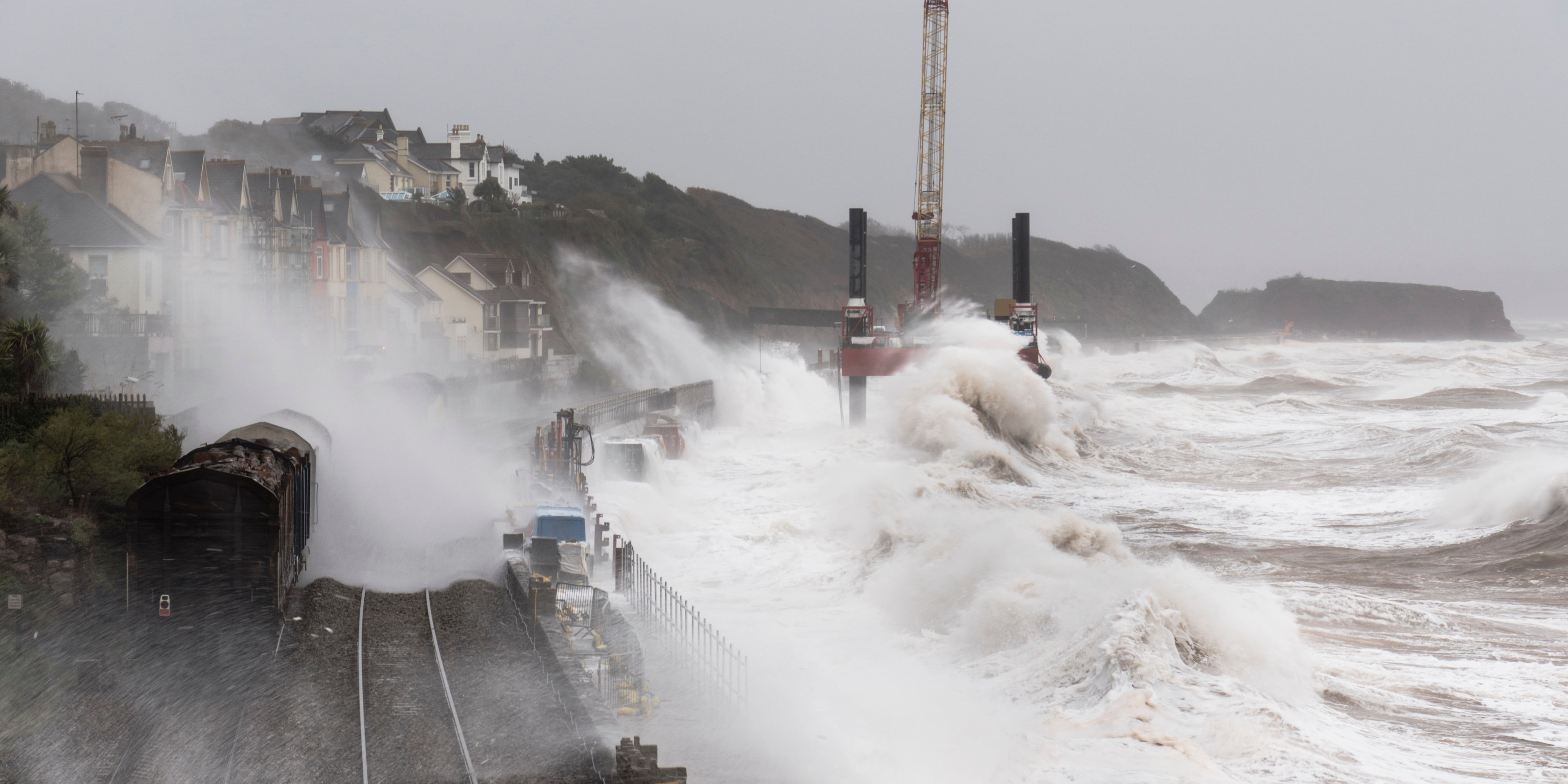
Physical risks are classified as either acute , such as the storms, droughts, forest fires and floods that now occur regularly all over the world, or chronic, such as rising sea levels, thawing permafrost, ocean acidification and falling crop yields that may have significant long-term economic and societal consequences.
Financial impacts are already evident, including billions in insurance claims for weather damage, with insurance cover being pulled in certain markets such as housing in Florida, California and Louisiana, along with costly disruptions to infrastructure such as railway lines from extreme heat or cold.
“Physical climate risk is no longer only a long-term sustainability consideration,” says Lucian Peppelenbos, Climate and Biodiversity Strategist at Robeco. “Investors increasingly expect it to affect valuations, capital allocation and security selection within conventional investment horizons.”
In the 2026 survey, 66% of investors said they expect physical climate risks to have a moderate to significant impact on asset prices over the next five years, rising to 82% over 10 years and 87% over 20 years.
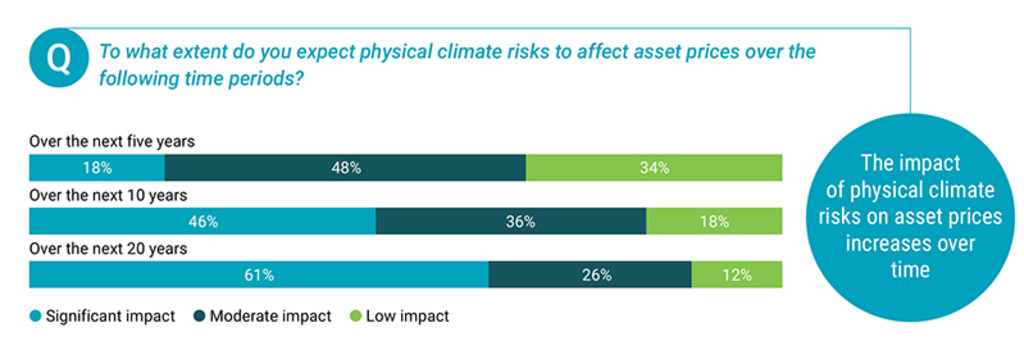
Source: Robeco Global Climate Investing Survey 2026.
Regionally, European and APAC investors are more likely to expect physical risks to have an impact on asset prices and investment activities than their peers in North America.
A similar picture emerges when investors were asked to what extent they expected physical climate risks to have an impact on investment activities within their firm. Some 64% said it would have a significant or moderate impact on risk budgeting and 63% said it would affect strategic asset allocation. It also has implications for a majority of respondents (above 50%) for tactical asset allocation, capital market assumptions, asset manager selection and stock picking.
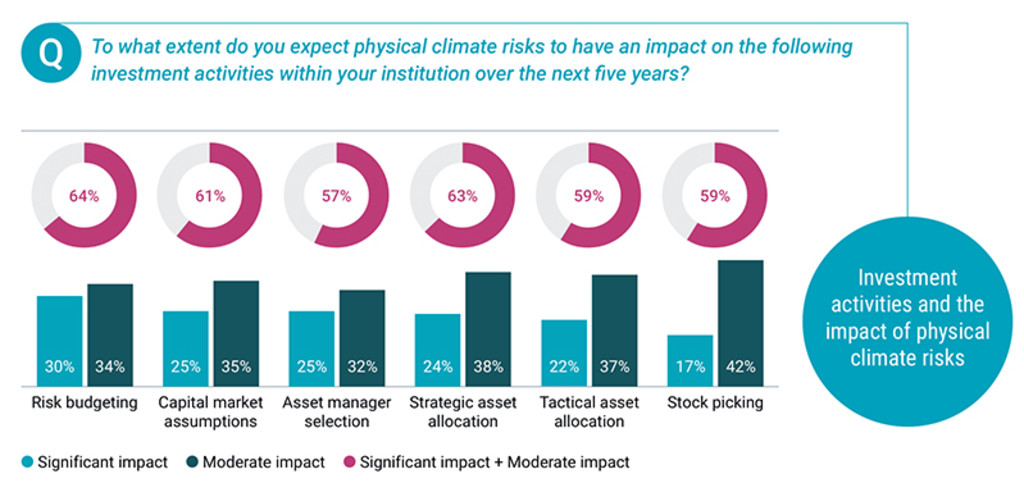
Source: Robeco Global Climate Investing Survey 2026.
The very presence of physical risks was also a major factor in 47% of investors thinking that not enough is being done to meet the climate goals of the Paris Agreement in limiting global warming to below 20 C. Only 19% think an orderly reduction in emissions to try to achieve net zero by 2050 is now possible.
But there is still continued investor interest for the potential solutions to climate change, through two principal avenues – climate adaptation and resilience, and climate mitigation. Climate adaptation and resilience methods range from rebuilding sea defences to acquiring more firefighting or flood alleviation equipment, and even rehousing coastal populations into inland settlements. Climate mitigation is mainly focused on existing solutions, led by renewable energy.
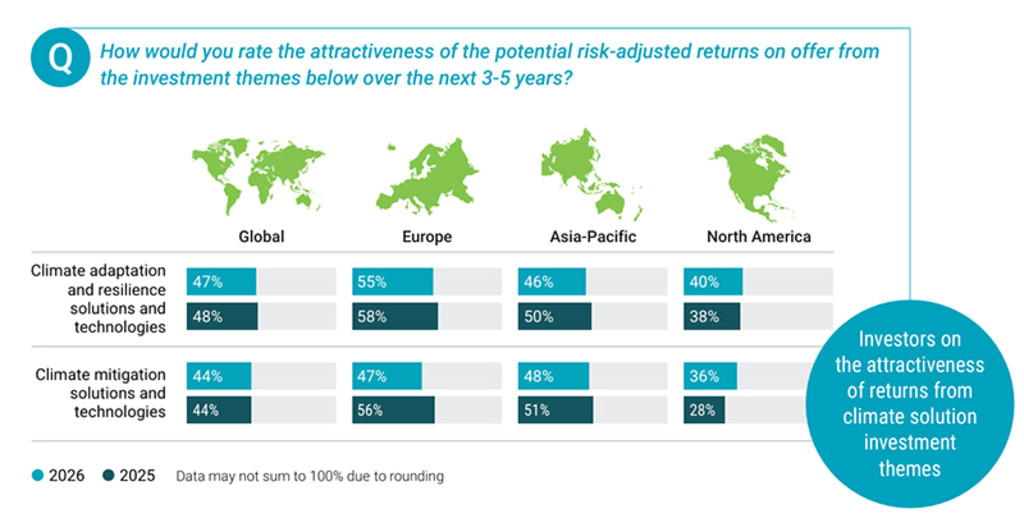
Source: Robeco Global Climate Investing Survey 2026.
There is a fairly even split on the attractiveness of either method. Nearly half (47%) of global investors say the potential risk-adjusted returns from climate adaptation and resilience solutions and technologies over the next 3-5 years are ‘very or somewhat attractive’, while 44% would say the same for climate mitigation solutions and technologies.
There is perhaps understandably more interest in adaptation and resilience solutions in Europe – which saw severe wildfires across Spain, France and Greece in 2026 – where 55% rate them as attractive, although this was down on the 58% citing this last year. Only 46% of APAC and 40% of North American investors were interested in this avenue.
“The opportunity extends beyond companies selling adaptation solutions,” Peppelenbos says. “Investors also need to assess which businesses can protect their assets, supply chains and cash flows as physical hazards intensify. This shifts the investment question form identifying solution providers alone to assessing which companies are emerging as resilience leaders.”
Stay informed on Climate investing
An attractive growth theme
Over half of global investors (55%) agree that climate adaptation and resilience will become an increasingly attractive growth theme for equity investments over the next 3-5 years. The most widely held investments are currently in water management systems (41%), vaccines or drugs for new diseases (40%), climate-resilient energy technologies and systems (39%), and climate-resilient infrastructure and transportation (38%).
However, only 21% think there is a sufficient investment universe of listed companies producing adaptation and resilience solutions to enable them to scale up their public market exposure to this theme. There is also uncertainty over the ability of adaptation companies to achieve competitive risk-adjusted returns, although the numbers citing this as a barrier fell to 39% of investors from 58% in 2025.
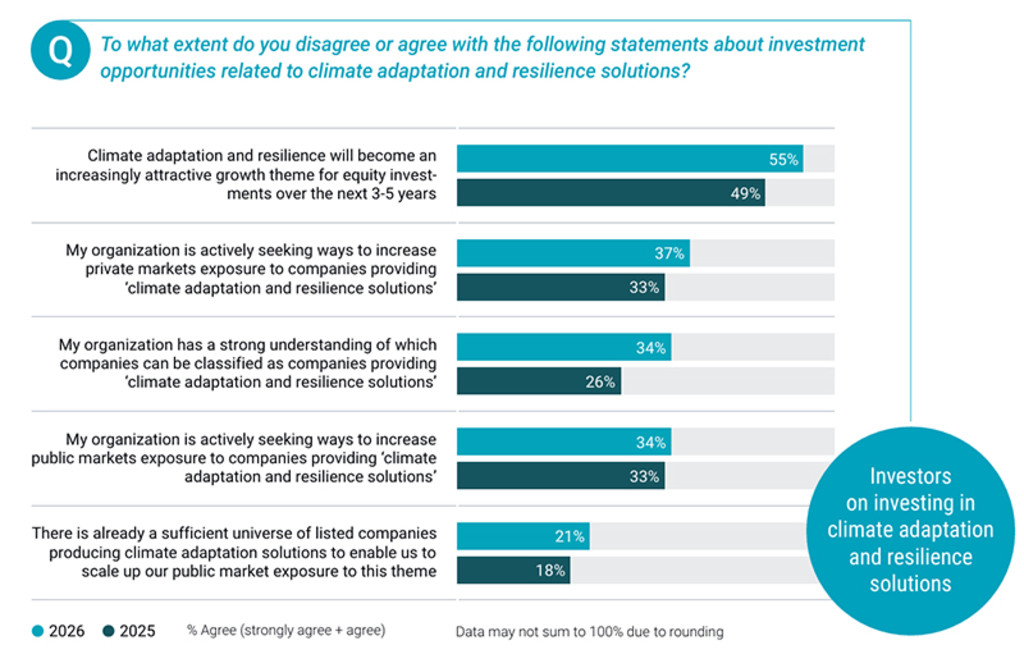
Source: Robeco Global Climate Investing Survey 2026.
Mitigation is still strong
Meanwhile, support for climate mitigation strategies is largely unchanged. Over half of investors (59%) believe that demand for renewable energy or low-carbon technologies will remain strong, regardless of any political backlash and backtracking on net-zero goals.
Just over a third said they plan to increase investments in renewable energy, electricity grid modernization and battery technologies in the next two years, though policy uncertainty is cited as a significant barrier by 45% of investors globally and 48% in Europe. Electric vehicles are affected by government policies on phasing out petrol-driven cars, while grid modernization requires government support to build the infrastructure.
A more selective opportunity set
In other mitigation solutions, 37% of European investors plan to increase investments in sustainable real estate in the next two years, while 38% in APAC will raise their exposure to carbon capture and storage.
“Mitigation remains investable, but the opportunity set is becoming more selective,” Peppelenbos says. “Demand for renewable energy, grids and storage is supported by strong drivers and structural demand. For other mitigation solutions, policy uncertainty makes selectivity and rigorous assessment increasingly important to investment outcomes.”
“For investors, the survey points to a broader climate agenda in which physical-risk assessment, corporate resilience and selective exposure to mitigation and adaptation solutions increasingly need to be considered together.”

Global Climate Investing Survey 2026
Investors commit to net zero goals amid energy security and climate risks
重要資料
本網站僅供《證券及期貨條例》(香港法例第571章)及其附屬法例所界定之專業投資者瀏覽及使用。 投資涉及風險。過往表現並不代表未來表現。本網站所載資料僅供參考之用,並不構成任何投資建議,亦非作出買賣任何證券或採納任何投資策略之要約或招攬。投資者不應僅憑本網站提供之資料作出投資決定,在作出任何投資決定前,應徵詢獨立意見(包括有關稅務影響之意見)。投資者應確保完全理解投資產品的相關風險,亦應考量自身投資目標及風險承受水平。投資乃閣下之個人決定。除非銷售投資產品的中介人已向閣下告知該投資產品適合閣下,並已解釋其符合閣下投資目標之原因,否則閣下不應投資。請參閱相關發售文件或其他法律文件,以獲取包括風險因素在內的進一步詳情。 本網站由荷寶投資管理香港有限公司發布,該公司受香港證券及期貨事務監察委員會(「證監會」)規管(中央編號:APU851)。本網站未經證監會審閱。 無法保證任何投資產品可實現其投資目標。概不就任何投資產品之表現或投資回報作任何聲明或承諾。投資的價值或會波動。本網站所載過往表現、推算或預測,均不應視作未來表現之保證或指標,且概不提供任何明示或暗示之保證。本網站內容建基於相信為可靠之來源,惟因應資料傳遞技術特性及須採用多項數據來源(包括第三方內容),故概不保證其準確性。所述觀點僅乃截至上述日期,或會隨市況變化而改變,可予更改而毋須另行通知。該等意見可能有別於其他荷寶投資專業人士之意見。因使用本材料或當中所載任何評論、意見或估算而引致之直接、間接或相應損失,荷寶概不承擔法律責任。荷寶並無責任更新本網站或任何網站內容。未經荷寶事先書面許可,不得複製、分發或刊發本網站任何材料。 除非另有說明,資料來源:荷寶。