


Portfolio Manager
• 市場觀點
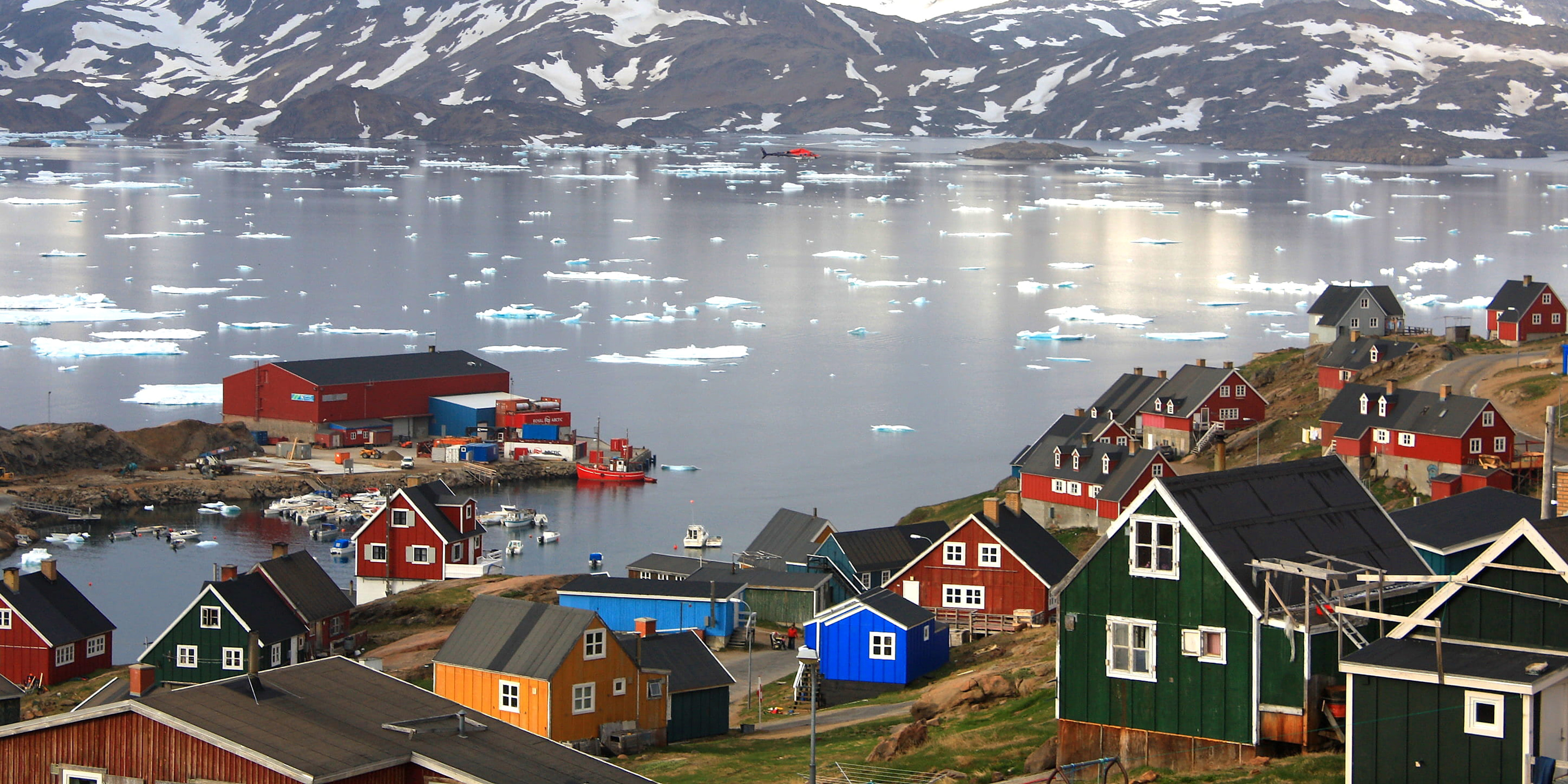
Why Greenland is less Golden Dome and more gold rush for rare earths
The Trump administration continues to tout control over Greenland as a matter of national and global security, but Greenland is less about strategic defense than about securing new kinds of ‘precious’ metals – the rare earths and minerals that underpin future technologies and economic growth.
作者


Co-Portfolio Manager
概要
- Greenland has a treasure trove of rare resources buried under the ice
- Rare minerals and metals are needed to drive high-tech economy
- US move part of a long-term plan to counter China’s rule on rare resources
When US officials talk about taking control of Greenland, they frame it in terms of national security. Trump and members of his administration have repeatedly stated that the US acquisition of Greenland is vital for his ‘Golden Dome’ project, a global anti-missile system which will house ground-based missile interceptors to complement those launched from space. However, policy and funding initiatives so far reveal a much more plausible motive – procuring metals and minerals to protect US strategic autonomy and future economic growth.
Greenland sits on sizeable endowments of rare earth elements, critical minerals and specialty metals – some with sci-fi names such as dysprosium, yttrium and terbium in addition to the more recognizable transition metals of graphite, copper, zinc, and nickel.
Together, they serve as key inputs for the magnets, lasers, sensors and semiconductors needed for a long list of technologies driving a future, high-performance economy – from AI data centers, EVs and autonomous driving, to robotics, drones, and factory automation. That list also includes the wind turbines, solar cells, and battery storage that undergird smart, resilient energy grids.
China has spent two decades building its dominance over critical mineral supplies. It now commands 60-90% of mining and over 90% of refining capacity. This dominance has been repeatedly weaponized over the past two decades, most recently in 2024 and 2025, where export bans triggered global price spikes and exposed the vulnerability of high tech supply chains. It also sharpened Washington’s focus on securing critical mineral independence.
Figure 1 – China dominates critical mineral production

Source: IEA, Global Critical Minerals Outlook 2025.
Greenland – a long-term prize
Although largely self-governing in terms of domestic affairs, Greenland is still a territory of Denmark, which retains control over foreign policy and defense. Moreover, the two economies are deeply integrated. Legal, economic, and strategic ties to Denmark, an EU member mean that any of Greenland’s resources could be claimed by the EU. A 2023 survey found that 25 of 34 minerals classified as ‘critical raw materials’ by the European Commission are found in Greenland.
Moreover, the EU Critical Raw Materials Act sets 2030 targets to mine 10%, process 40% and recycle 25% of the EU’s needs for ‘strategic raw materials’, while capping single‑country dependence at 65%. That puts it in direct competition with the US which also seeks to secure raw materials to keep its economy globally competitive and reduce foreign dependence. Like the EU, the US is also taking legislative action to shore up mineral supplies.
The US Inflation Reduction Act (2022) includes FEOC (Foreign Entities of Concern) restrictions which disqualify electric vehicles from federal tax credits if their batteries contain FEOC components (2024) or FEOC‑sourced critical minerals (2025). The IRA has helped jumpstart domestic mining and refining capacity as well as secure reliable supplies from mineral-rich allies like Australia, and now perhaps, Greenland.
China too is interested in Greenland, having expressed interest in Greenland as part of its ‘Polar Silk Road’ which aims for access to Arctic Sea trade lanes and footholds in Arctic resources. Chinese companies have also attempted to buy Greenland mining assets, but so far these efforts have drawn pushback from Denmark, the US, and Greenland itself.
什麼是趨勢?
訂閱我們的電子報,即可掌握所有最新的主題投資趨勢。
Securing the future
Control over rare earths, critical metals and other specialized materials effectively determines the pace at which electrification, intelligent power grids, factory automation and other AI-powered technologies can advance. So regardless of how the Greenland geo-politicking plays out, there is a rush for rare earths that won’t end any time soon.
Figure 2 - Global demand for transition metals, by sector

Source: Robeco, Bloomberg, Robeco 2026.
Production constraints mean higher prices
While demand-side factors are increasing, future supplies are uncertain, creating pricing power for dominant upstream players. The process of building a mine, let alone making it operational, is notoriously long and fraught with complications. Several structural factors shape this reality; new mines take between 15 and 25 years to reach full production; China continues to dominate downstream refining for many critical materials.
Although the US and Europe are reshoring key parts of their industrial base, these efforts are costly and progress is slow. That’s why Greenland is of long-term strategic importance rather than a quick fix. The result is a persistent imbalance between rising demand and constrained supply, leading to widening copper deficits, lithium prices stabilizing at higher levels, improving margins for rare-earth producers, and sustained premiums for domestic suppliers. Investors are naturally drawn to this backdrop, as scarcity itself becomes an investable theme.
Figure 3 – Mineral mines are decades in the making

Source: IEA, The Role of Critical Minerals in Clean Energy Transitions, 2021 and updated analysis from the Global Critical Minerals Outlook 2025.
Investment implications
Demand for materials is now accelerating driven by powerful forces such as electrification, the expansion of AI, rapid advances in robotics and rising industrial automation. Persistent supply constraints, amplified by geopolitical tensions, continue to strengthen pricing power across the sector. Despite these pressures, valuations in the minerals-materials ecosystem are appealing, offering the opportunity for significant and long-lasting upside potential as earnings from companies in the space continue to grow.
Looking ahead, the case for acting now is compelling. Just as oil defined the last century, materials will shape the next. The geopolitical focus on Greenland is merely a visible symptom of a broader reality – economies cannot decarbonize, digitize, automate, or maintain security without reliable access to strategic materials and the technologies required to process them.
Robeco Smart Materials
The Smart Materials strategy provides smart exposure to these powerful drivers of future economic growth. Its investments cover the full spectrum of materials and manufacturing technologies – from upstream providers of transition metals and strategic minerals all the way to downstream applications such as batteries and energy storage, building efficiency solutions, electrification systems, and advanced manufacturing components.
This broad positioning sets the portfolio apart from pure mining plays, traditional cyclical chemicals, or narrow AI focused equity strategies. Instead, it targets the critical bottlenecks and enablers within these value chains – areas where scarcity and pricing power tend to persist. It also recognizes the strategic value of recycling, investing in companies that recover and re process scrap to procure for precious minerals.
重要資料
本網站僅供《證券及期貨條例》(香港法例第571章)及其附屬法例所界定之專業投資者瀏覽及使用。 投資涉及風險。過往表現並不代表未來表現。本網站所載資料僅供參考之用,並不構成任何投資建議,亦非作出買賣任何證券或採納任何投資策略之要約或招攬。投資者不應僅憑本網站提供之資料作出投資決定,在作出任何投資決定前,應徵詢獨立意見(包括有關稅務影響之意見)。投資者應確保完全理解投資產品的相關風險,亦應考量自身投資目標及風險承受水平。投資乃閣下之個人決定。除非銷售投資產品的中介人已向閣下告知該投資產品適合閣下,並已解釋其符合閣下投資目標之原因,否則閣下不應投資。請參閱相關發售文件或其他法律文件,以獲取包括風險因素在內的進一步詳情。 本網站由荷寶投資管理香港有限公司發布,該公司受香港證券及期貨事務監察委員會(「證監會」)規管(中央編號:APU851)。本網站未經證監會審閱。 無法保證任何投資產品可實現其投資目標。概不就任何投資產品之表現或投資回報作任何聲明或承諾。投資的價值或會波動。本網站所載過往表現、推算或預測,均不應視作未來表現之保證或指標,且概不提供任何明示或暗示之保證。本網站內容建基於相信為可靠之來源,惟因應資料傳遞技術特性及須採用多項數據來源(包括第三方內容),故概不保證其準確性。所述觀點僅乃截至上述日期,或會隨市況變化而改變,可予更改而毋須另行通知。該等意見可能有別於其他荷寶投資專業人士之意見。因使用本材料或當中所載任何評論、意見或估算而引致之直接、間接或相應損失,荷寶概不承擔法律責任。荷寶並無責任更新本網站或任何網站內容。未經荷寶事先書面許可,不得複製、分發或刊發本網站任何材料。 除非另有說明,資料來源:荷寶。


