
Strategist
• 市場觀點
Trump’s tariff tango: Navigating the twists and turns of US trade policy
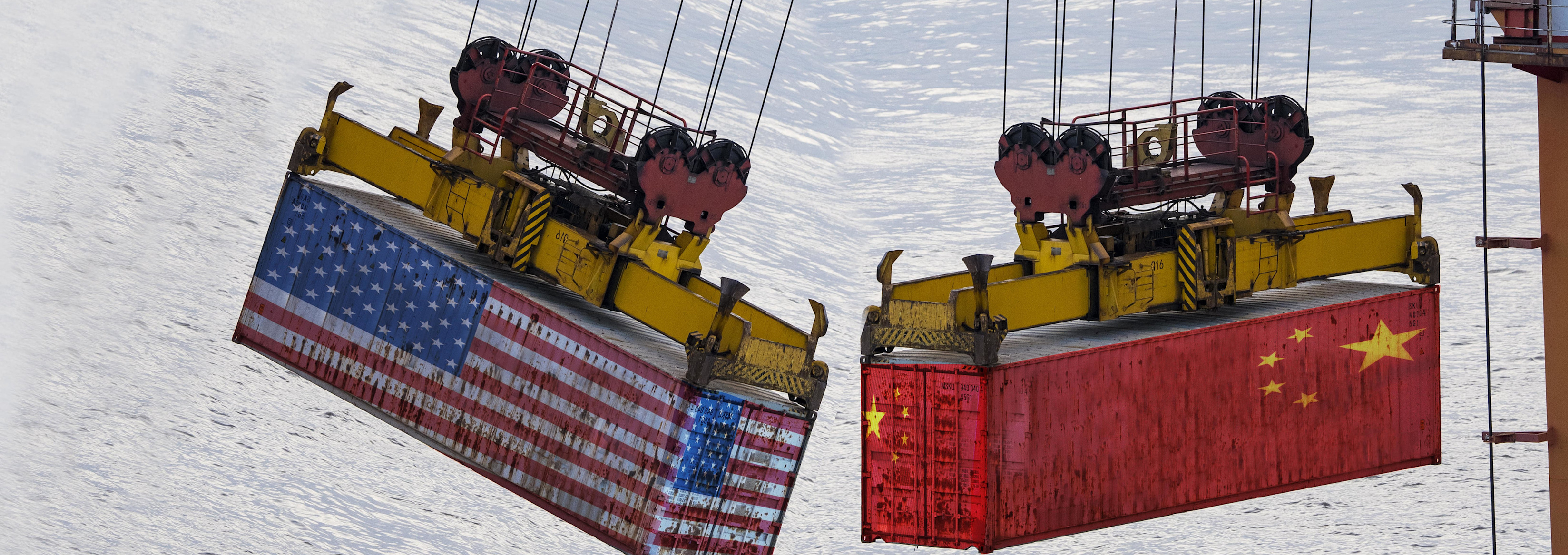
President Trump has proven he is a tariff man indeed, viewing tariffs as a key lever to achieve his overarching policy goal to usher in what he sees as a “golden age for America”. On 2 February, he approved 25% tariffs on Canada and Mexico and 10% on China. Canada and Mexico have vowed to retaliate, raising the odds of a drawn-out tit-for-tat trade war. China has fired back by announcing tariffs of up to 15% on coal, oil and LNG from the US, next to starting an antitrust investigation into Google.
作者



概要
- Trump imposes 25% tariffs on Canada and Mexico and 10% on China
- Moves sparks market volatility and rush into gold and the US dollar
- US trade policy uncertainty reaches the highest level in 40 years
The move marks a new phase of global trade policy uncertainty which may hamper technology spillovers, trade flows and ultimately backfire on US economic growth and inflation. The Peterson Institute estimates that the recent tariffs announcement on China, Canada and Mexico would be equivalent to an incremental tax increase for the typical US household of USD 1,200 a year1.
While the freshly appointed Treasury Secretary Scott Bessent has been a proponent of a more gradual approach toward raising tariffs, Trump reiterated his threat to enact across-the-board tariffs that are “much bigger” than 2.5%. The Smoot-Hawley Act saw tariffs increase up to 60% in the early 1930s, the highest ever recorded in American history, but Trump has threatened to impose tariffs on US trading partners as high as 100%.
The swift execution of his tariff threat spurred equity market volatility, with the usual safe havens of gold and the dollar rallying. After Trump abruptly pulled the threat of sweeping tariffs on Colombia earlier last week following a deal on deported migrants, the market was convinced that Trump’s bite would be softer than his bark.
However, the announcement of the latest tariffs on Canada and Mexico indeed suggests Trump’s bite predominantly serves border security, migration control and the flow of fentanyl into the US. On Monday, Mexican President Claudia Sheinbaum said the US administration will hold off on tariffs for a month in exchange for Mexico’s increased efforts to restrict drug flow across the Mexican-US border. The news led to a swift reversal of the earlier rally in safe havens.
Asset market implications
Tariffs negatively impact global trade volumes as higher import prices reduce demand for foreign goods. Our research shows that a slowdown in global trade volumes is typically associated with a stronger US dollar and higher gold, as well as US Treasury bond prices and equity markets trading lower. The 2018/2019 tariffs announcements during the first Trump administration showed that the S&P 500 as well as its Chinese counterpart the CSI300 traded around 2% lower in the subsequent 20 trading days.
With markets now forced to second-guess Trump on further actions, US trade policy uncertainty has reached the highest level in 40 years, second only to the US-China trade war peak in mid-2019. We expect market volatility to remain elevated in the near term, reflecting a significant risk of another high impact trade announcement toward China, Europe, and/or Japan.
The swift deal between Trump and his Canadian and Mexican counterparts again underlines the mercantilist nature of the new US presidency. Countries with a high trade surplus with the US, like Germany, may adopt Mexico’s footsteps, and take a pragmatic approach by buying more US LNG and ramping up defence spending further above 2% of GDP. Yet, the EU works by consensus, and more autarkic countries like France could prove to be a spanner in the works for the EU to form a strong, unified front in trade negotiations.
In Asia, China’s President Xi Jingping may struggle to convince the US to enter into a revived trade agreement. The country did not live up to the Phase One agreement struck in 2020, where China promised to buy an additional USD 200 billion in US goods and services. If the Chinese leadership fails to convince the US administration, Trump might step up the escalatory ladder, necessitating China to ramp up domestic policy stimulus and weaken the yuan versus the dollar to offset the potential hit on its exports to the US.
獲取最新市場觀點
訂閱我們的電子報,時刻把握投資資訊和專家分析。
Broader economic implications
We continue to watch the impact of these tariffs on inflation and the development of trade negotiations by assessing three main transmission channels. First, US consumers might substitute tariffed import goods with cheaper, more available domestic goods, potentially denting the inflationary impact of tariffs.
Second, currency market fluctuations play a critical role. During the first trade war of 2018/2019, the strengthening dollar sizably offset the inflationary impact of the US tariffs on Chinese goods, whereas China mitigated the erosion of its competitiveness by weakening the yuan against the dollar. Third, the duration of the tariffs put in place matters. Judging by the actions from the White House last week, markets need to price the call optionality of any tariffs enacted.
Positioning
We saw complacency about the risk of tariffs announcements at the end of last week, bringing along more pronounced downside risks. This followed existing susceptibility to a trade shock judging by the gap that opened last year between historically elevated P/E multiples and US earnings revisions. A stronger dollar for longer erodes US multinationals external competitiveness, creating a potential earnings headwind.
We observe that forward earnings growth projections for the US started to rollover after Trump announced the first round of tariffs on China in July 2018. Robeco Sustainable Multi-Asset Solutions therefore trimmed its equity exposure last week, while increasing our positions in gold and the US dollar. The evolving trade relations between the US and China will remain at the heart of global trade uncertainty.
In trade, it takes two to tango. Yet, so far, the moves between the two superpowers have been out of step.
Footnote
重要資料
本網站僅供《證券及期貨條例》(香港法例第571章)及其附屬法例所界定之專業投資者瀏覽及使用。 投資涉及風險。過往表現並不代表未來表現。本網站所載資料僅供參考之用,並不構成任何投資建議,亦非作出買賣任何證券或採納任何投資策略之要約或招攬。投資者不應僅憑本網站提供之資料作出投資決定,在作出任何投資決定前,應徵詢獨立意見(包括有關稅務影響之意見)。投資者應確保完全理解投資產品的相關風險,亦應考量自身投資目標及風險承受水平。投資乃閣下之個人決定。除非銷售投資產品的中介人已向閣下告知該投資產品適合閣下,並已解釋其符合閣下投資目標之原因,否則閣下不應投資。請參閱相關發售文件或其他法律文件,以獲取包括風險因素在內的進一步詳情。 本網站由荷寶投資管理香港有限公司發布,該公司受香港證券及期貨事務監察委員會(「證監會」)規管(中央編號:APU851)。本網站未經證監會審閱。 無法保證任何投資產品可實現其投資目標。概不就任何投資產品之表現或投資回報作任何聲明或承諾。投資的價值或會波動。本網站所載過往表現、推算或預測,均不應視作未來表現之保證或指標,且概不提供任何明示或暗示之保證。本網站內容建基於相信為可靠之來源,惟因應資料傳遞技術特性及須採用多項數據來源(包括第三方內容),故概不保證其準確性。所述觀點僅乃截至上述日期,或會隨市況變化而改變,可予更改而毋須另行通知。該等意見可能有別於其他荷寶投資專業人士之意見。因使用本材料或當中所載任何評論、意見或估算而引致之直接、間接或相應損失,荷寶概不承擔法律責任。荷寶並無責任更新本網站或任何網站內容。未經荷寶事先書面許可,不得複製、分發或刊發本網站任何材料。 除非另有說明,資料來源:荷寶。