
Head of SI Thought Leadership and Climate & Biodiversity Strategist

• 可持續投資難題
SI Dilemma: Keeping on course for net zero by 2050
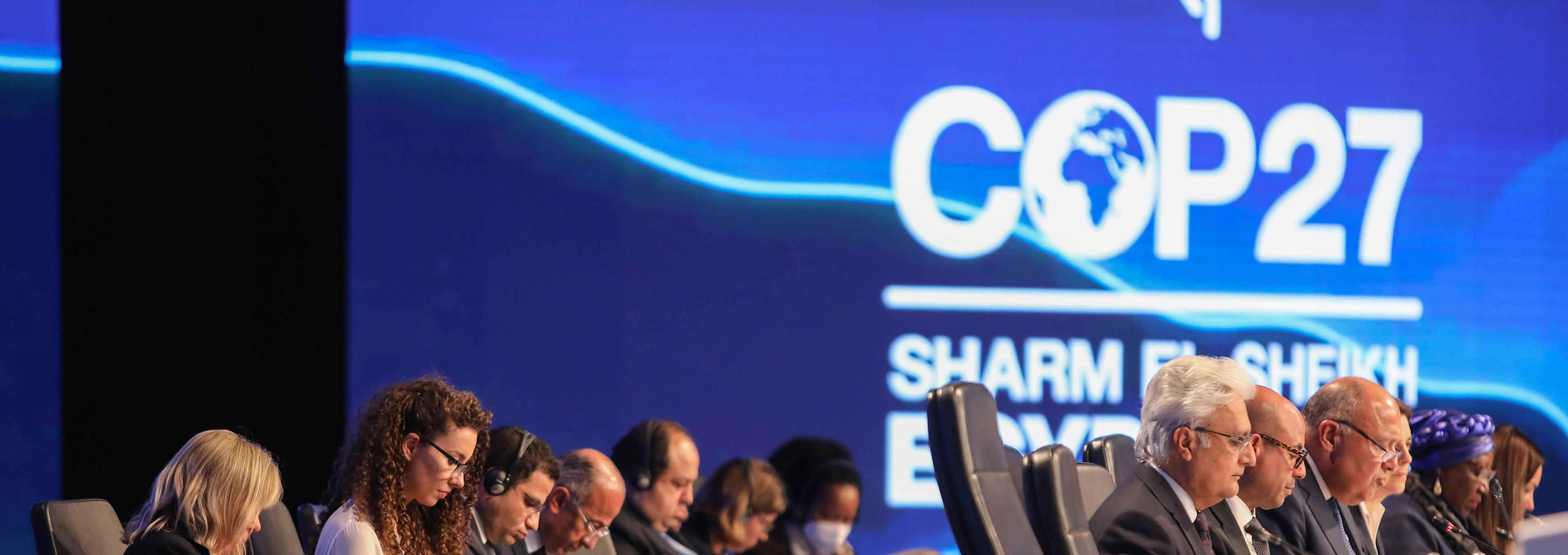
The COP27 climate summit delivered a few wins but was disappointing overall. How do we keep on course for net zero in the absence of global cooperation? In our view, the net-zero transition will continue to gain traction, because paradoxically it appears that the lack of global cooperation is helping accelerate the energy transition.
作者



概要
- A few wins from COP27 focus on climate finance
- Innovation and investment can help contain global warming to well below 2 °C
- Strong signals that the transition is gaining traction despite world’s problems
The COP27 climate summit took place as countries around the world face crises involving energy and food, inflation, war, and debt stress. With two of the critical parties to successful negotiations – the US and China –not on good speaking terms, the EU’s leadership has also lost credibility due to its return to coal and massively expanded subsidies to fossil fuels. All this in a year in which climate change continues to have a deep impact across the globe, triggering famine in East Africa, industry lockdowns in China and Europe, and making half a million people homeless from floods in Pakistan.
In this context, COP27 focused on two key issues. The first is climate finance. For years already, industrialized countries have broken their promises to support the Global South in carrying the costs of adaptation and mitigation. This year’s summit also addressed loss and damage: rich economies are called upon to take responsibility over the damage that their historical emissions are causing in vulnerable countries. Here, the summit delivered a historic result – the creation of a loss and damage fund – though we believe it will still take much negotiation before it is operational. In the short term, more climate finance may become available from the multilateral financial institutions that are to be reformed as per agreement in Sharm el-Sheikh.
The summit’s second focus was to advance the implementation of the Paris Agreement. Here, it seems we should be grateful that the lack of progress wasn’t an explicit step backwards. The goal of 1.5 °C barely survived the negotiations, and no agreement was reached on the phasing-down of unabated fossil fuels. In sum, a painful standstill.
So, after this COP, where are we now on the road to net zero by 2050? At Robeco, we see the glass as being half full. Certainly, the summit did not yield much in terms of concrete solutions, while global emissions are still on the rise and climate policies still fall short. The summit leaves us heading for 2.5 °C of global warming.
But five years ago, we were heading for 4 °C of global warming. So, there has been progress: a change of course. In this sense, the ratcheting mechanism of the Paris Agreement, in which climate ambitions are periodically beefed up, is doing its job. The proof of the pudding will be next year’s summit in Dubai, when countries will submit new plans based on the global stock-taking of progress so far. As climate policy expands, such as in the US this year, exponential change could be unleashed, as market forces and human ingenuity seek to create value from the transition to net zero.
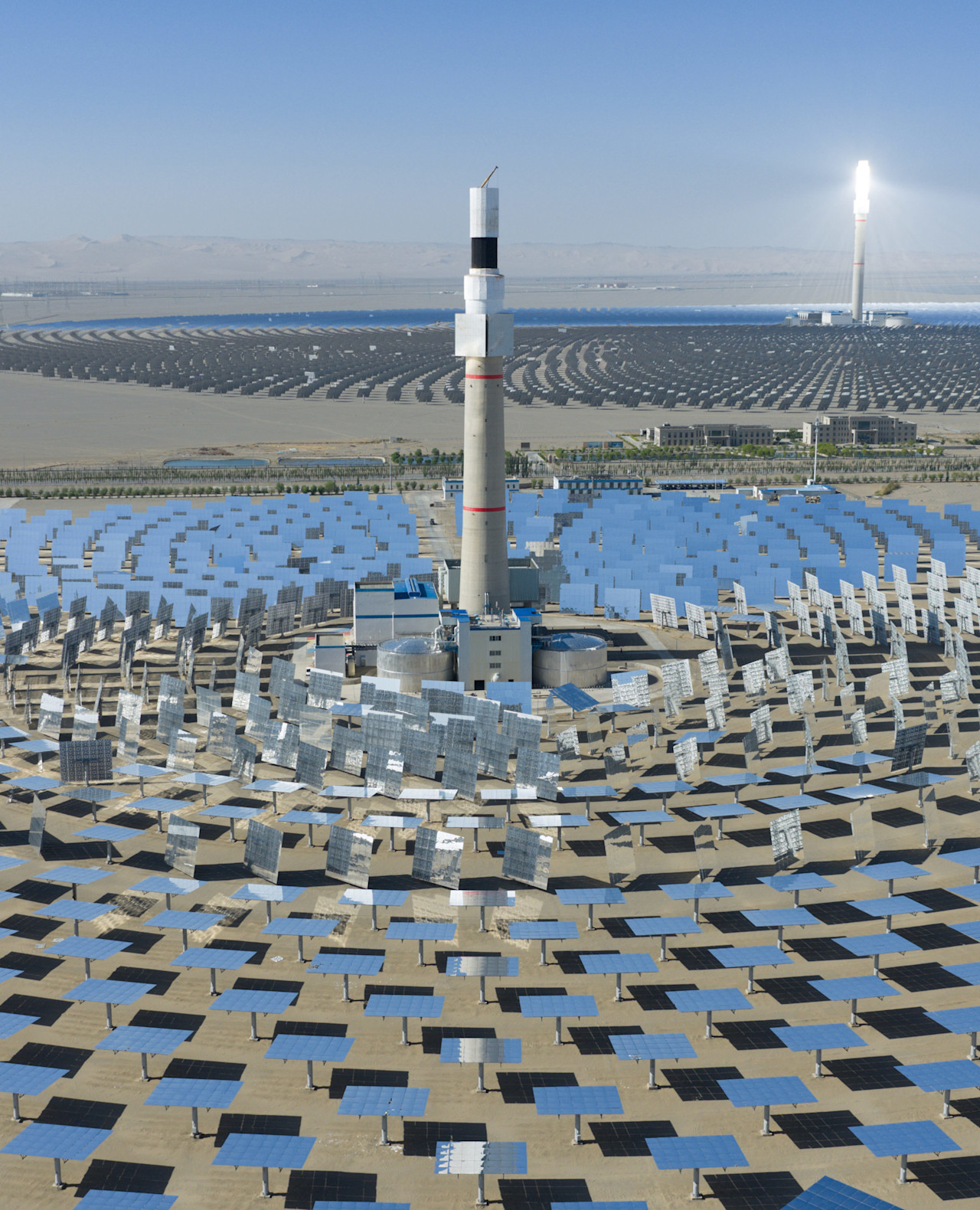
Take the transition away from unabated fossil fuels. It advanced this year in the midst of the energy crisis. Despite the massive return to coal-fired power in Europe, the International Energy Agency (IEA) is forecasting a mere 1% increase in emissions from energy this year – much less than the increase in 2021. This is because the deployment of renewable energy and electric vehicles has strongly expanded globally. Hence, hidden in the usual statistics on increased global emissions, we can see an accelerated switch to cleaner energy.
了解最新的可持續性市場觀點
訂閱我們的電子報,探索塑造可持續投資的趨勢。
Fast-forwarding fossil fuel use
In its latest World Energy Outlook, the IEA concludes that peak fossil fuel usage has been fast-forwarded to before 2030, as countries seek energy security through investments in renewables and energy efficiency. Such policies have been adopted this year across top emitters including the US, EU, India, Australia, South Korea, Japan and China. In particular, the US’s Inflation Reduction Act, with its USD 369 billion support package, will accelerate technological innovation as it enables US-based companies to better compete with Chinese suppliers of renewable technologies.
We see these milestones adding up to a tipping point, where the net-zero transition gains so much traction that it will continue to unfold and gain pace. While keeping global warming limited to 1.5 °C would be an achievement beyond any historical benchmark, innovation and market forces tend to be exponential, not linear, so who knows?
Investing in the transition
What does this mean for investors like Robeco? We are keeping course on net zero by 2050 and continuing to invest in the transition. Our portfolio decarbonization currently stands at -43% against our baseline year-end in 2019. We started the year at -35%, which means that during 2022 we continued to decarbonize, despite the re-carbonization of the market triggered by the increased benchmark weight of the Energy sector.
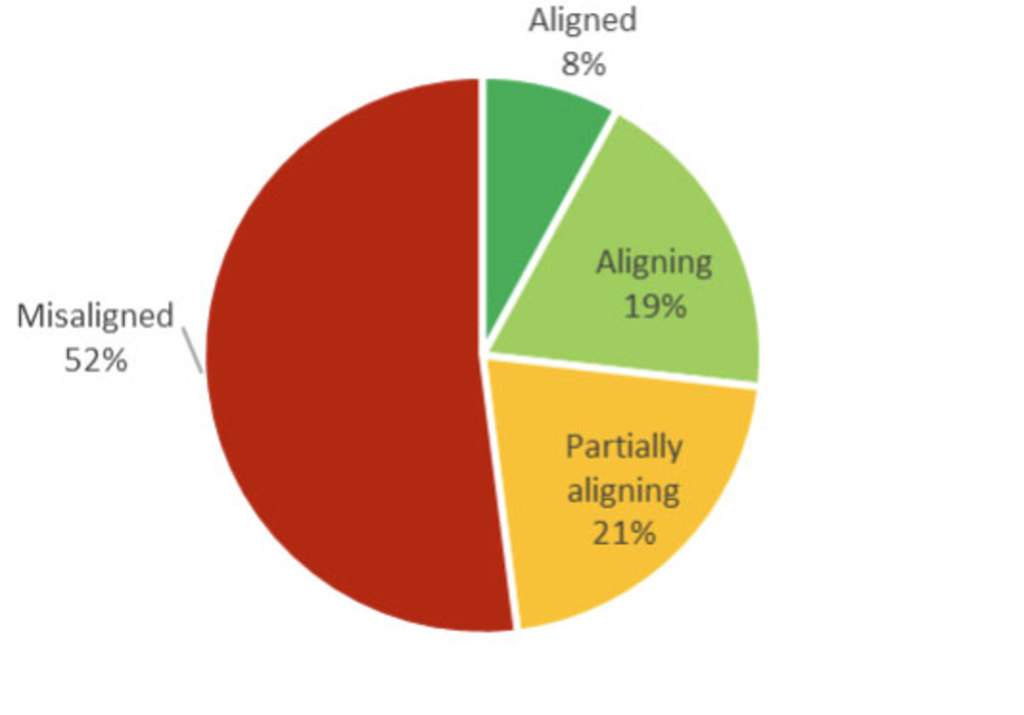
We should note, however, that such figures provide only a partial picture. Portfolio decarbonization can be the result of one or a few individual issuers entering or exiting our portfolios. It is equally important to look at the companies themselves and how well they are managing their transition. This is measured by our climate traffic light. It assesses how well the top 250 emitters in our investment universe are aligning with the goals of the Paris Agreement.
In our analysis from this year, we see robust transition strategies amongst 27% of companies, while 21% are clearly working on it, and 52% are not doing enough. The latter group is where we focus our engagement and where we may vote against management.
Paris Alignment of top-250 emitters in the Robeco Climate Traffic Light
Transition in the real economy
So far, our decarbonization performance has largely been the result of the investment strategy of our funds. Our investment teams have picked stocks that they assess as creating value, and while doing so have remained comfortably within their carbon targets. This can only continue if the real economy transitions to net zero. This requires climate action across all sectors of the economy, spearheaded by ambitious policy and regulation.
Our role as investors is to engage with investee companies and policy makers, and to direct capital towards companies that are developing climate solutions and away from assets which are at risk of becoming stranded.
The good news is that, in the middle of rising global emissions, political antagonism and yet another disappointing climate summit, we see strong signals that the transition in the market is clearly underway.
SI Debate
重要資料
本網站僅供《證券及期貨條例》(香港法例第571章)及其附屬法例所界定之專業投資者瀏覽及使用。 投資涉及風險。過往表現並不代表未來表現。本網站所載資料僅供參考之用,並不構成任何投資建議,亦非作出買賣任何證券或採納任何投資策略之要約或招攬。投資者不應僅憑本網站提供之資料作出投資決定,在作出任何投資決定前,應徵詢獨立意見(包括有關稅務影響之意見)。投資者應確保完全理解投資產品的相關風險,亦應考量自身投資目標及風險承受水平。投資乃閣下之個人決定。除非銷售投資產品的中介人已向閣下告知該投資產品適合閣下,並已解釋其符合閣下投資目標之原因,否則閣下不應投資。請參閱相關發售文件或其他法律文件,以獲取包括風險因素在內的進一步詳情。 本網站由荷寶投資管理香港有限公司發布,該公司受香港證券及期貨事務監察委員會(「證監會」)規管(中央編號:APU851)。本網站未經證監會審閱。 無法保證任何投資產品可實現其投資目標。概不就任何投資產品之表現或投資回報作任何聲明或承諾。投資的價值或會波動。本網站所載過往表現、推算或預測,均不應視作未來表現之保證或指標,且概不提供任何明示或暗示之保證。本網站內容建基於相信為可靠之來源,惟因應資料傳遞技術特性及須採用多項數據來源(包括第三方內容),故概不保證其準確性。所述觀點僅乃截至上述日期,或會隨市況變化而改變,可予更改而毋須另行通知。該等意見可能有別於其他荷寶投資專業人士之意見。因使用本材料或當中所載任何評論、意見或估算而引致之直接、間接或相應損失,荷寶概不承擔法律責任。荷寶並無責任更新本網站或任何網站內容。未經荷寶事先書面許可,不得複製、分發或刊發本網站任何材料。 除非另有說明,資料來源:荷寶。