
Head of Emerging Markets team

• Visione
Navigating the 2026 Latin American power shift
Regime change in Venezuela is set to trigger a political realignment in Latin America, with countries facing a choice of remaining in the ‘global south’ or placing themselves within a renewed US trade and security sphere. The opportunities for long-term emerging markets investors in this period of flux are real and imminent.
Relatori




Portfolio Manager
Top keywords
Sommario
- The Monroe doctrine 2.0 will influence elections in Peru, Brazil and Colombia
- A political reset may result in a more constructive economic cycle in coming years
- The geopolitical realignment could benefit long-term investors
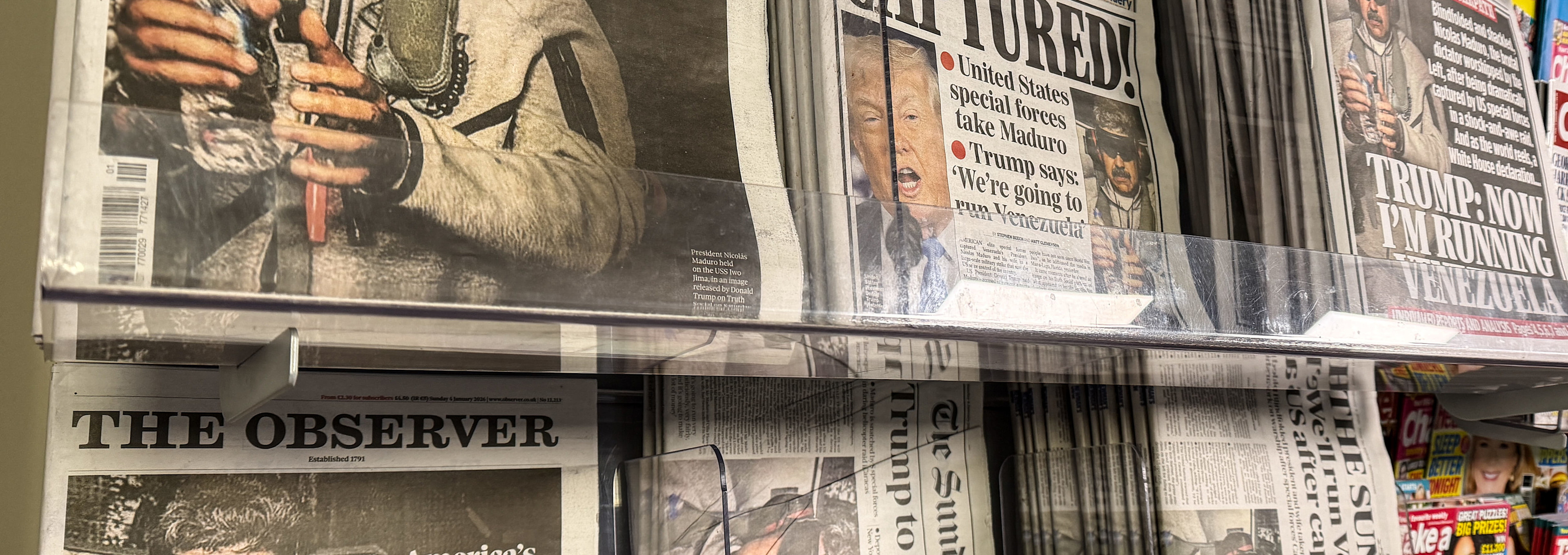
The geopolitical lightning strike that occurred on 3 January 2026 – when US special operations forces apprehended Nicolás Maduro in Caracas – has altered the political risk landscape in South America. This represents the most significant shift in the Western Hemisphere’s power dynamics since the end of the Cold War – the reset of the Monroe doctrine for the 21st century.
As the US begins a period of influence and potential control in Venezuela, three influential economies on the continent – Peru, Colombia, and Brazil – are headed for general elections that will decide if South America integrates into a US-aligned security and resources corridor or retreats into a defensive, multipolar Global South bloc.
While Mexico is not holding general elections this year, it remains a central pillar in the Monroe doctrine 2.0 landscape, serving as both a primary diplomatic critic and a pivotal economic node in the new regional order. The 2026 US-led operation in Venezuela has placed Mexico in a precarious position, balancing its constitutional commitment to non-intervention against its deep economic integration with the US.
The Venezuelan incursion could turn upcoming elections in South America into a referendum on the US’s newly decisive strategic stance. Open-source data and current polling suggest that the ‘pink tide’ – the trend toward left-wing or left-leaning governments in the region – is receding, replaced by a sharp ideological divide centered on security and national sovereignty.
Peru enters its election cycle in April 2026 with a fragmented field of over 35 registered candidates. The primary voter concern is crime, which has made hardline platforms increasingly popular. Lima’s Mayor Rafael López Aliaga (Renovación Popular) has positioned himself as a Bukele-style leader, advocating for immediate mining expansion and a purge of Bolivarian left influence. He is currently competing with Keiko Fujimori for the conservative base, while political outsider and comedian Carlos Álvarez leads several anti-establishment polls.
The country hosts over 1.5 million Venezuelan migrants. Any stabilization in Caracas that facilitates repatriation could provide fiscal relief for Peru’s social services. A right-wing victory would likely accelerate the Chancay Port logistics hub development while tightening security ties with Washington to counter regional instability. Despite years of executive revolving doors, Peru remains an EM favourite due to its independent central bank and solid copper and gold reserves. Peru is the safe play in the current scenario, as even if political rhetoric heats up, the mining engine won’t stop.

Scoprire opportunità emergenti
Per chi punta a investire in un’ottica di lungo periodo in un portafoglio ampiamente diversificato, l’esposizione ai mercati emergenti è fondamentale.
Colombia’s moment of truth
Colombia is the most directly impacted by the fall of Maduro. The upcoming election in Colombia is essentially a binary choice regarding the country’s credit rating and its security relationship with the US. The country will hold legislative elections and primaries in March, with a runoff in June 2026. The opposition right (María Fernanda Cabal / Abelardo de la Espriella) are campaigning on a total realignment with the US. Their platform proposes privatizing parts of Ecopetrol, reviving aggressive counternarcotics efforts and leveraging the Caracas transition to dismantle the safe havens previously used by ELN and FARC dissidents.
Iván Cepeda on the left, is the likely successor to Petro’s legacy. His platform emphasizes environmental sovereignty and has characterized the US incursion as a violation of international law. An opposition win in Colombia would likely lead to a security dividend, potentially ending Colombia’s 60-year internal conflict by removing the Bolivarian support structure for armed groups. It could trigger a massive compression in sovereign bond spreads and currency appreciation, as it signals a return to fiscal orthodoxy and a strengthened security partnership with the US.
Can Lula resist the right wing tide?
In Brazil, election campaigns officially begin in August with general elections in October 2026. Brazil is the region’s heavyweight and President Lula’s popularity has been tested by his stance against US unilateralism. Lula is facing the Moby Dick effect: an attempt to rally the nation around the flag of national sovereignty to counter US influence. At the same time, the discontent with deteriorating economic conditions, and a deep security and ethics crisis, could curb his attempt to pull off a credible national unity call.
Lula remains a viable contender and is likely to use the US incursion to argue that only a strong, unified Brazil can prevent the region from becoming a playground for superpower rivalries. His platform is built on BRICS expansion, state-led industrialization, and using Brazil’s influence to mediate a non-US controlled transition in Caracas. He views US control of Venezuelan oil as a direct threat to Brazil’s regional hegemony. Brazil’s Center-Right opposition, at the moment led by a pool of Governors (Tarcísio de Freitas / Romeu Zema / Ronaldo Caiado) and the Bolsonaro family, proposes a return to fiscal discipline and fostering private investment, as well as a shift away from the Anti-US rhetoric. Their platform suggests reducing ties with BRICS, while fully ratifying the EU-Mercosur trade deal, and aligning with US nearshoring initiatives to replace Chinese supply chains. They argue that alignment with the US in a post-Maduro era is the fastest way to attract the tech and energy investments needed for Brazil's industrial modernization.
The election in Brazil will determine if the world’s seventh-largest economy remains a leader of the Global South or pivots back toward a US-integrated trade architecture. At the moment, Brazil is a carry trade market for global investors. High interest rates protect the real (BRL) for now, but political polarization in Q3 2026 could create FX volatility as Brazilians decide between state-led growth and market realignment.
Leggi gli ultimi approfondimenti
Iscriviti alla nostra newsletter per ricevere aggiornamenti sugli investimenti e le analisi dei nostri esperti.
The role of Mexico
President Claudia Sheinbaum has emerged as a leading regional voice against the US action in Venezuela, rejecting the intervention as a violation of the UN Charter and a threat to regional peace. Sheinbaum has framed the defense of Venezuelan sovereignty as a direct defense of Mexican sovereignty, explicitly rejecting both US intervention abroad and hints of similar actions at home. The upcoming 2026 review of the United States-Mexico-Canada trade Agreement (USMCA) is expected to be used by the US to pressure Mexico into compliance with the advance of US policy in the region. Despite the high-stakes political rhetoric, Mexico's role as a resource and manufacturing hub is more critical than ever to US interests. Mexico has solidified its position as the US’s largest trading partner, effectively leading the ‘China Exit’ as firms relocate from Asia to North American soil.
The repercussions for the resources sector
The removal of Maduro has created a new set of winners and losers across the region’s key sectors. The prospect of 300 billion barrels of Venezuelan crude returning to market (under US management) caps long-term oil prices, though infrastructure repair will take years due to investment hurdles and sabotage risks. The Lithium-Copper Triangle (Chile/Argentina/Peru) is becoming a strategic priority for US nearshoring, given its relevance for the energy grids and electric batteries that empower the tech and automotive industry. Those countries are already in alignment with US policies and are where we could potentially see preferential trade agreements.
Brazil has solidified its position as the continent’s premier resource powerhouse. Now the leading oil producer in Latin America, Brazil’s output topped 4.0 million b/d as of late 2025, with massive exploration investments shifting toward the Equatorial Margin and the South Basin. Parallel to this energy boom, Brazil has developed new copper, aluminum and lithium mining sites, and currently holds the world’s second-largest rare earth reserves (approximately 21 million metric tons), trailing only China. With Brazil’s highly diversified energy matrix – over 88% of its electricity is derived from cheap renewables like solar, wind, and hydro sources – securing access to Brazil’s resources has become a critical strategic goal for US technology firms looking to stabilize their green-tech and AI hardware supply chains.
While Brazil leads in rare earths, Mexico’s established industrial clusters in automotive and electronics are essential for the US-aligned resource corridor. Moreover, Mexico's own natural resources, particularly oil, remain central to North American energy security, even as the region prepares for the potential return of 300 billion barrels of Venezuelan crude to the market.
Emerging Markets Equities D EUR
- performance ytd (31-8)
- 26,10%
- Performance 3y (31-8)
- 21,25%
- morningstar (31-8)
- SFDR (31-8)
- Article 8
- Pagamento del dividendo (31-8)
- No
I rendimenti passati non sono indicativi dei possibili risultati futuri. Il valore degli investimenti può subire oscillazioni.Annualizzati (per periodi superiori ad un anno). Le performance si intendono al netto delle commissioni e sulla base dei prezzi delle operazioni.
China influence vs. US nearshoring
For the last decade, China has been the primary lender to South America while the US has focused on Mexico and Asia-Pacific. China solidified its influence in South America through massive state-backed initiatives like the One Belt One Road initiative (OBOR). Key examples include the USD 3.5 billion Chancay megaport in Peru, designed to bypass the Panama Canal, and the Bogotá Metro in Colombia. In Brazil, China’s presence has evolved from simple resource extraction to high-tech manufacturing, with firms like BYD and Great Wall Motor taking over former Western automotive plants to create regional EV hubs. These investments were part of a long-term strategy to lock in supply chains for soybeans, copper, and lithium, effectively making Beijing the primary trade partner for two-thirds of the continent.
The 2026 US incursion in Venezuela is fundamentally challenging this dominance, exposing the limits of Chinese economic power when faced with US hard power intervention. As Washington reasserts the Monroe Doctrine, Chinese state-backed firms could face stricter controls by the US-aligned South American nations, where their long-term infrastructure projects – previously considered untouchable – could be subjected to new security screenings for Chinese FDI, similar to the US CFIUS model.
This loss of position is most evident in the energy sector, where China’s status as the top buyer of Venezuelan oil is being forcibly unwound, forcing regional capitals to choose between Chinese credit and US-guaranteed security.
Furthermore, countries that maintain deep ties with China and other Maduro regime allies or that resist US security directives, could face secondary sanctions or trade barriers.
In this new geopolitical era, Mexico remains a linchpin of the North American production region. While the immediate political aftermath of the Venezuela incursion involves sovereignty rhetoric and friction with the Sheinbaum administration, the medium-term trajectory for Mexico remains tied to a structural shift toward a pro-US, integrated trade architecture.
The secured Andean region, in combination with Mexico, forms an attractive destination for US nearshoring. American companies looking to diversify away from Asian supply chains can reach a newly accessible, resource-rich South America that is open for business under a new security umbrella.
Positioning for the new era
The 2026 incursion, in our view, marks the end of a decade of regional stasis. While the immediate aftermath could involve currency volatility and sovereignty discussions, the medium-term trajectory could be a structural shift toward a pro-US investment climate that can foster growth. If the upcoming elections in Colombia, Peru and Brazil confirm this rightward tilt already seen in Argentina and Chile, the region could enjoy a more constructive economic cycle in coming years.
We remain strategically positioned across Latin America in all our EM strategies, via diversified exposure to Chile, Mexico, Peru and Brazil. We have positions in companies that can be impacted by the current developments; these holdings include infrastructure assets in Mexico; copper, lithium and gold miners in South America; and energy and utility companies in Brazil. The region remains attractively valued compared to other emerging markets, which serves as a buffer to any short-term volatility that may arise from this new chapter in global geopolitics.
Footnote
*The Amazonian Shield is one of South America’s major continental shields, occupying the eastern Amazon region. It is associated with control over critical natural resources (minerals, fresh water, forests) and issues of sovereignty, development, and environmental protection in Brazil and neighboring states.