
Portfolio Manager


• Podcast
Podcast : Les marchés émergents tournent à plein régime
Les actions des marchés émergents ont largement surperformé celles des marchés développés depuis le début de l'année, pour la première fois depuis des années. S'agit-il du début d'une période plus prometteuse ou d'un simple rattrapage temporaire ? Et quelles leçons peut-on tirer de l'énorme dispersion des performances au sein de l'univers des marchés émergents ?
Auteurs


Portfolio Manager
This podcast is for professional investors only.
Josh Crabb (JC): If you see a pullback from AI but markets remain strong, then Southeast Asia, which is completely on no one's radar, with the dividend yields now above where the P/Es are for many of the companies and even the likes of India at a stock specific level are going to be interesting. So the plethora of alpha opportunities, irrespective of the market environment is what I think really stands out about Asia.
Welcome to a new episode of the Robeco podcast.
This podcast is for professional investors only.
Josh Crabb (JC): If you see a pullback from AI but markets remain strong, then Southeast Asia, which is completely on no one's radar, with the dividend yields now above where the P/Es are for many of the companies and even the likes of India at a stock specific level are going to be interesting. So the plethora of alpha opportunities, irrespective of the market environment is what I think really stands out about Asia.
Welcome to a new episode of the Robeco podcast.
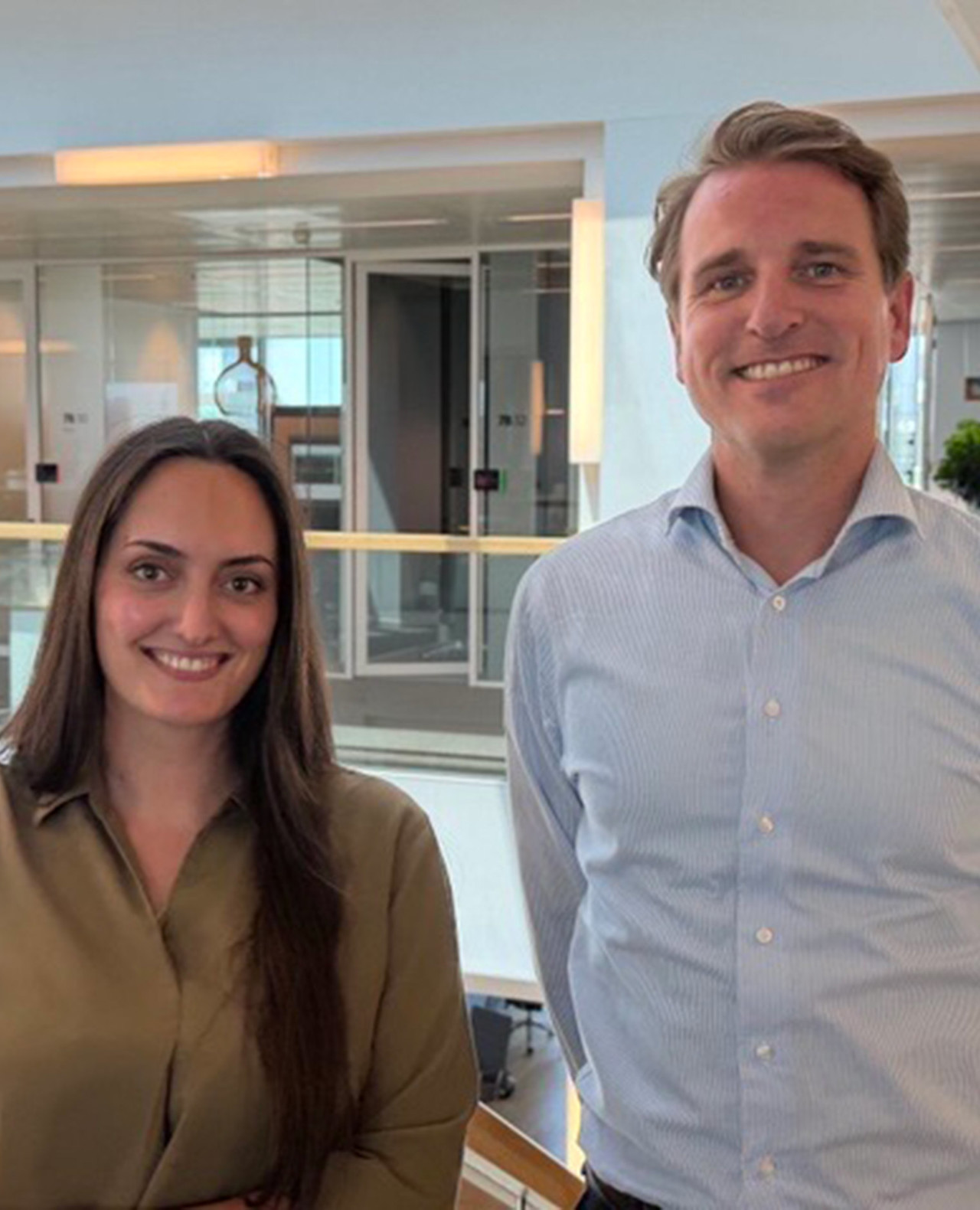
Erika van der Merwe (EM): Emerging market equities have comfortably outperformed developed markets over the year to-date for the first time in years. Now, is this the start of something bigger or just a temporary catch-up? And what lessons are there in the tremendous performance diversion within the emerging market universe? My guests to discuss the evidence on the outlook for emerging markets are Josh Crabb. He's Head of Asia Pacific Equities at Robeco, and Karnail Sangha, who's Portfolio Manager for Robeco Emerging Equities. Joshua and Karnail, great to have you both here. Thanks for joining us.
Both: Thank you. Good morning, Erika.
EM: Josh, you're joining us from Hong Kong. So let’s start with you. Start off with the big picture. What have been the main drivers of this really strong emerging market outperformance compared to the broader market? To some extent, I think there's been a surprise in this given the dire warnings that we had earlier in the year about the implications and impact of US tariff policies on emerging markets.
JC: I think this really starts back to the condition precedent, which is cheap valuations and underweights. So at the beginning, if we go back to the end of last year, what were the catch phrases? “China is un-investable”, “Korea is entering martial law,” and “AI is going to take over the world.” This resonates with things we heard similarly around the internet in 2000. And what we've seen post that is the expectations were a bit high. The over-ownership was a little bit too high and they were too cheap in this part of the world. I mean, you sort of said we've had a year, but the 15 years before that saw this US exceptionalism, outperformance. And if you actually pull up a longer term timeframe, this is basically where it's sort of bottomed out in that period in 2000. So my argument would be that expectations were very, very low. Valuations were very, very low. Ownership was very, very low. We had a few headwinds start to develop in the US. And we had some people realized that things had got a little bit too low here. And that's what's driven it. I think the bigger question is: come January, when at asset allocators, at insurance companies, at sovereign wealth funds, etc., around the world start thinking “Is this a blip of one year?” Because it's the first time we've seen this in 15, and then they're going to pull back the 15 year chart and go, wow, maybe I need to rethink my allocation here.
EM: Karnail, how do you expect that to play out? You, of course, where Josh looks at Asia, the Asia Pacific emerging market region in particular. You look broadly, globally. What I hear from Josh, to a large extent, it's been a catch-up story. Are the fundamentals strong enough to keep that moment going to really persuade the asset allocators to go more heavily towards emerging markets?
Karnail Sangha (KS): Yeah, I think of course, from a top-down perspective, the first thing that you look at is differential in growth rates. If you look at emerging markets economies, they are growing at a very healthy pace. And they are also outgrowing their developed counterparts. So that's very important. If you look on the corporate level you see that earnings are also beating more in emerging markets compared to the developed markets. That's of course another big driver. And there are some idiosyncratic stories out there as well because not all emerging markets are the same. So there are of course some differences. So some pockets of emerging markets are more driven by top-down factors, and some of them are more driven by bottom-up factors as well.
EM: Looking at some of those idiosyncratic factors, you've seen emerging markets, the policy normalization rates coming down, inflation well under control. So therefore the scope to do that, that support to some of the domestic demand growth stories. So that's not true for all markets being the key driver. But – Karnail?
KS: So if you look at – if I can just mention a few countries, then of course the first one that comes up is Korea. So they're from a top-down perspective. We have a new president in place. Of course in the background, you still have the value up theme that is unfolding. And as Josh mentioned earlier, starting valuations were of course very low. So combining that with underweight of Korea in most global investors’ portfolios have created a perfect recipe for that market to outperform. So you see that within Korea the tech names are doing very well, driven by the AI theme, but also defense companies are doing well. And a lot of these large conglomerates that were trading at a large discount are coming out with shareholder friendly policies whereby dividend payout ratios and share buybacks are increasing. So that is Korea. China of course, driven by a lot of tech names, AI names, where there was a big allergy a couple of years back. Now you have investors falling over each other to buy back into Chinese tech names. Government is also supporting. So their stance has also changed. So there are – if you look underneath then you see by country by country you see that there are some country-specific factors at play as well. If you look outside Asia then you look at the Latin American region there. You also see that yeah reforms are coming through, earnings are improving. And some of that is driven by the positive commodity cycle. But again there, the cheap starting valuations do matter, and that's also the case for some Eastern European – sorry to keep on going – but some Eastern European countries as well, such as Poland and Greece that were overlooked for a very long period of time, are now inherently from their own intrinsic – are going into the right direction. So from crisis and default levels are moving into strong growth levels and are attracting a lot of investor attention.
EM: So Josh, compared to 15, 20 years ago, or more, the discussion around emerging markets was very much about cyclical phenomena commodity prices, commodity exports. We still hear some of that. For example, if we are listening to what Karnail said, if you look at Latin American countries, that still is a driving force. But it's so different these days. You've got structural drivers related to tech, related to corporate governance, shareholder-friendly policies. So new drivers and perhaps more lasting ones.
JC: I think that's a good way to look at it. So if we look around the world and we say, maybe the US has a pause and that money looks for a new home – we saw early in the year how the sort of immediate flight and panic of that was the ticket to Europe. But again, if we sort of look at Europe, it's relatively subdued growth. It doesn't have some of the changes that we're seeing in Asia. So I think it's a good example. If you look at what we are seeing – Karnail just talked about Korea. And we saw that sort of process started in Japan. Now this has been here for a long period of time, very, very low valuations. But the changes were occurring. It was changing around the pension system being from a net payer to actually needing to take income out. We saw a generational change in the leadership of these companies. So we've seen a lot of change occurring. And for markets like Korea, and by that in Japan, that change in governance attitude has driven huge amounts of alpha opportunities. Then you can say, okay, well let's look for some of the more growth-orientated opportunities. Then you can move to the likes of Southeast Asia and India. India was very, very overvalued last year. But now it's come back to more reasonable levels. But within that, the stock opportunities are starting to throw up. You've seen the central bank cutting rates. You've seen the GST cuts on 22 September. And these are things that may flow through into sort of consumption. So in a world where we stay where we are with AI driving things, then the Koreas, the Japans, the Chinas, the Taiwans benefit from that type of environment. However, if we see a move back towards where people are a bit more concerned, those buybacks and dividends and the likes of Korea and Japan could be quite interesting. If we see a pullback from AI but markets remain strong, then Southeast Asia, which is completely on no one's radar, with the dividend yields now above where the P/Es are for many of the companies and even the likes of India at a stock-specific level are going to be interesting. So the plethora of alpha opportunities, irrespective of the market environment, is what I think really stands out about Asia.
EM: Yes, I hear you. Karnail, can we talk about the impact of tariffs, of US tariffs? You know, such a shake-up. Even preceding April, the fear of the consequences of this. And yet the impression is that many emerging market countries have adapted really well. In fact, it might have even created investment opportunities.
KS: So actually, if you look from a top-down perspective, the tariffs had almost no impact. So we are still looking at pretty much a stable macroeconomic picture with not much damage from the tariff. Also a very easy monetary environment for these emerging markets, which means that when we have a weaker dollar, they have the opportunity to lower interest rates and stimulate their domestic economies. So I think that's an important factor. Domestic demand opportunities are important, but also inter-regional trade. So you've seen that a lot of trade that was initially going to the US is now either going to China or other emerging markets. So that is a positive. And of course the China plus one strategy that is unfolding as well. So where you see that corporates are not only expanding in China anymore or are now choosing other countries, other emerging market countries still put their capacities in place. And that is creating another snowball effect, of course, investments increasing that's good for the workforce, employment, wages. And that's again translating back into a long-term healthy consumption growth outlook.
EM: Now you've both emphasized the really country-specific stories, different drivers. But part of that story is the fact that there's been a very large dispersion in country performance so far this year. For example, India and Taiwan are up more than 30% so far this year, depending on when you look at the numbers. Brazil and Greece are also performing impressively, but then Thailand, Turkey and South Africa are lagging badly. So it means that this year country selection has really mattered.
KS: If you look at the country allocation, definitely there are big divergences. So India has lagged. That's a combination of macroeconomic slowdown, companies disappointing on their earnings, also starting valuations were very high. And of course the action is elsewhere. So in China, Korea and Taiwan, things are really taking off. So a lot of investor positioning is in and focuses on those countries. India tends to do well of course when there's of course a lot of instability and there's a high risk. Then India is seen as a pretty stable country. But at this point in time the action is elsewhere. And hence India has clearly lagged. Southeast Asia also lagged. So Indonesia in particular. There you had to deal with some top down political issues, new administration in place, investors are worried about the fiscal spending plans. Also, the replacement of the Minister of Finance is creating question marks among the international investment community. So that has also led to underperformance for Indonesia. Hence there you can see country allocation is very important because these countries can move into different directions altogether.
EM: Josh, these things are hard to call. At the beginning of the year we knew elections would have an impact, tariffs would have an impact. There's always the political uncertainty risks, etc. How do you go about this?
JC: About calling the country or?
EM: Yes.
JC: To be honest, we drive the vast majority of our alpha from stock selection. And I think that the further you move away from that, the more difficult the decision becomes because it becomes a 1-0 type of environment. So what we know is Korea's been cheap for a very long time. And I would argue that the catalysts, for example, of that changing have also been around for a long time. So there's always a question about what drives that. And I think it's been quite interesting. Sometimes it's very hard to know what that catalyst can be. So for example, if we think value ups started popping up around this time last year, and then we had the martial law, and that's when everyone just threw in the towel and the market absolutely collapsed. And I think that was interesting because the reason why that happened is not because actually anyone thought that martial law was going to happen in Korea, but they knew it was going to result in a change in government. And the view was that the opposition party at the time was very anti-US, was anti-companies, was pro-labor and therefore it would be a very bad outcome for the stock market. This is why you really have to follow these things quite closely. And again, I think I've said to you before, I was actually in Korea when this happened and I was talking to clients about the value up thing and our experience in Japan, this would mean something. And they said no. And then as I went home, the tanks were rolling down the street. And then the market collapsed. But the interesting observation of that is then he came out and the first thing he said was, I really like value up. The second thing he basically said was “KOSPI 5,000”. So think about this: a left-leaning, anti-company politician saying the stock market up 40% and people sort of ignored it at the time. But it's saw a big change. It saw a change in the attitudes of the people that were against that party. And clearly we've seen what the stock market has done, and that's why it's very important to know the condition precedent, but then to monitor how those catalysts – now that could have gone another way. That sort of change is quite important. So what I would say is we are often – by the type of way that we invest – we may be a little bit too early. That's why it's really important to have your positions around the way that you believe it. Monitor those things and as you see that information come. And as I said before, you had a politician that was coming out saying not what people thought, but the market was quite slow to react because that was not the narrative that they were used to, and that can throw up those opportunities. I think another simple example of this at the moment is what we see in the likes of Indonesia, which Karnail mentioned earlier. Here's a market which is very cheap, and people will talk about the protests, or people will talk about what certain government entities may or may not be doing. But I can tell you that ASEAN with a population of 701 million people, where the geopolitics is playing to their favor because their ability to play off the players against each other, will absolutely grow over time. Now, whether that happens this year or next year, maybe a little bit more difficult to monitor, but you do want to be positioned ahead of it. You do want to be monitoring, because when you start to see those things change in a positive way, people will look back when the market is up 30% or 40%, thinking, what do I do? And that's sort of how we tend to think about it. I would love to say that we'd just call every bottom perfectly, but that's just not the reality. But being positioned, risk-adjusting it at the time, monitoring it and sizing into that as the opportunity comes to fruition is the way you need to tackle those.
EM: Karnail, you too follow a bottom-up approach. So I'd imagine sector and country then would be an outcome of that. But nevertheless I want to ask you, sector perspective. Where is the excitement? You've both mentioned tech, AI-related, consumer-focused, etc., but what's looking still looking exciting?
KS: So still that AI theme of course remains very important. So we rather play the picks-and-shovels approach there. So we own some of these hardware companies and leading actually hardware companies based out of South Korea and Taiwan.
EM: And these aren't new names for you? You've been there for years.
KS: Yes. We've held them throughout. Valuations have run up but still there's some way to go. But that's an important area for us. Financials is another area where we like to be positioned because there we still see a good way to play a lot of these domestic demand stories out there. So middle classes are still expanding and earning and spending of course on consumption goods, but also getting financial products and savings. So that's what we play through the bank. Also think about the small countries: Greece, Indonesia, Vietnam, Mexico or UAE – or even – are there, that we are investing in South Africa is there. So these are great ways to for us to get exposure. Emerging markets are of course rich and natural resources as well. So that's another area that we like, especially countries that are exporting those. And then there are some other smaller themes that are energy storage systems are, of course, gaining a lot of traction. Defense is getting a lot of traction. So there are multiple themes.
EM: So interestingly, quite a degree of overlap in what global investors are looking at sector-wise, which might be different again, from what you would have heard 15, 20 years ago?
KS: Yes. True. But definitely the opportunity here would be larger because if you look at valuations, these emerging markets companies are trading at a much lower compared to these global companies.
EM: So Josh the overlooked AI opportunities may be within emerging markets.
JC: I think it's becoming a pretty well-known story now. I think there were some great opportunities. The likes of the DRAM players in South Korea were trading at floor valuations a year and a half ago, but Nvidia was trading at a peak. Even though the industry structure is not quite as good as is in DRAM as it is as in the GPUs, the valuation differential didn't make sense. One of them needed to be wrong. What we see interestingly now is we've seen that sort of flow through into power generator, and then we've seen that flow through into the components that make the power generations. And even as we saw today, people are talking about the demand for things like aluminum based on the demand for the AI chips. So I feel that there may be opportunities, but they are getting more and more niche. And that's really around the change in the structure, like the natures of what is happening to the data centers and where that's driving new opportunities. But then it's costing other players. So I think the reality is if we do see a downdraft in AI, it will take quite a lot with it. Now this is where the question comes, as we've all seen the capex numbers from the AI players. That's what's filtering down and people are looking for what is the next play. So I think probably one of the bigger questions is, do other companies start to get the EPS benefit out of this? So I was listening to a bank that happened to be an Australian back, which is outside EM, but other companies will be having the same conversations where they're saying so far it's really benefited IT companies and it's really benefited consultants. But then they're getting to a point now – and I think we all appreciate this with how we use these ChatGPT-style programs – that it's starting to have some benefits. And that may mean that you need less people that may be around cost, or it may be around some new revenue opportunities. And that's going to be the key thing, in my view, to keep a view on, because the EPS has not caught up with the capex. Now, historically, if we look at these booms before, there is more room for the upside, but that doesn't mean it doesn't stop here. And that's where we really got to keep that close eye on. Are we starting to see, say, banks get productivity gains, or are we starting to see insurance companies get productivity gains from this? That may ironically be the next stage. It's not a pure play on the AI per se, or trying to find the last possible derivative, but it's about the opportunities, which is what AI has been promising us in terms of productivity gains, in terms of cost gains, or potentially in terms of revenue. And I think that's where the next stage needs to come from.
EM: Hmm. Great. So talking about that next stage, gentlemen, what's your outlook, let's say, for the next year? Of course, it's a difficult call, but the two main themes are the fundamentals, the underlying earnings performance of emerging markets and how that will come through in overall performance. But then also the technical aspect of emerging markets still being under-owned. So what would trigger a further sort of stepping in by investors driving performance? Karnail.
KS: I think all these factors coming together could drive this. So then it's a story of differentials. So I would say macroeconomic growth differential. So you see that growth rates in EM are outstripping DM. It's the differential in earnings growth for emerging market companies. It's the differential in real rates which are much higher in EM: so there's scope for them to reduce. Differential in valuation: so of course valuation is always used as an argument. But if you look at the historical context, the discount is at one of its largest levels ever. And then the under-owned of the asset class. So if you look at the weight of emerging markets in the All Countries World Index, it's around 9%. And currently the positioning is around 5% to 6%. So there's still a long way to allocate toward the Emerging Markets Equity space. So I think that these things are now all coming together – especially now there's a divergence, not a divergence, but some international investors are looking for other investment arenas rather than just the developed markets and the US in particular.
EM: Josh, your view on the prospects for the emerging market component of your Asia Pacific universe?
JC: So I think one of two things happens here, to play both sort of sides of this: one we know US valuations are stretched. So in an environment where the world continues to be okay and people start looking for other things that can do well – we just had that discussion on catch up trades in AI and Asia's benefit part of that. But that can move into other areas. And this is where that valuation differential does stand out. If the world economy is okay and we're starting to see this: PMIs are starting to pick up in parts of Asia manufacturing. So you're actually getting a bit of a synchronization with that strength that's come out of the US. And in that environment, Asia does well. So in a scenario we have a big correction in the US valuations because something goes wrong. Asia is going to go down as well. But it probably goes down less in an environment where global economy continues to do okay, that will start to benefit other parts of the world and that catch-up trade sort of will continue through that process. This is where these things are very hard. We talked about country before, but if you're trying to get down to sort of an equity versus bond sort of call almost, that's where I think it becomes quite interesting as well. So what are the observations we can make on that? We can make the observations that even though the US is close to peaks, Asia or emerging markets are not. So that's number one. Secondly, we can still see quite a bit of cash on the sidelines. So that is something that can be redeployed and it can buy the dip. And lastly it has just been earnings. People have often sort of said that US earnings have been not quite real because sales have disappointed. And it's been financial engineering that's been driving EPS. Whereas this time around actually revenues have been a little bit better. Now you can argue whether that's been artificially inflated by AI demand, but I think those things maybe suggest that there can be a little bit more to this. Now, that's not a super high faith commitment on that. But what I can tell you is that there are lots of companies in Asia that are cheap, that have good dividend yield support, that have strong balance sheets, and there are a number that also have that sort of relatively low variability in earnings, even if you do see a shake-up. So my advice to people is to maintain your – or not my advice because I am not allowed to give advice – but my sort of observation would be that the key here is to maintain some diversification. Markets in Asia and in emerging markets tend to be cheaper, so as a result that's going to be a relatively probably good place to be under sort of most scenarios. And that's sticking within the equity sort of realm.
EM: Josh and Karnail, thanks so much for your insights. So good to hear you again.
Both: Thank you for your time, Erika. Alright.
EM: And thanks to our listeners. If you've enjoyed this episode, please subscribe and share the podcast link within your network. Stay tuned for more investment perspectives in our next episode. This podcast is available on all major podcast platforms and on the Robeco website. Until next time.
Thanks for joining this Robeco podcast. Please tune in next time as well. Important information. This publication is intended for professional investors. The podcast was brought to you by Robeco and in the US by Robeco Institutional Asset Management, US, Inc., a Delaware corporation, as well as an investment advisor registered with the US Securities and Exchange Commission. Robeco Institutional Asset Management US is a wholly owned subsidiary of Orix Corporation Europe NV, a Dutch investment management firm located in Rotterdam, The Netherlands. Robey Co Institutional Asset Management B.V. has a license as manager of UCITS and EFS for the Netherlands Authority for the Financial Markets in Amsterdam.: Emerging market equities have comfortably outperformed developed markets over the year to-date for the first time in years. Now, is this the start of something bigger or just a temporary catch-up? And what lessons are there in the tremendous performance diversion within the emerging market universe? My guests to discuss the evidence on the outlook for emerging markets are Josh Crabb. He's Head of Asia Pacific Equities at Robeco, and Karnail Sangha, who's Portfolio Manager for Robeco Emerging Equities. Joshua and Karnail, great to have you both here. Thanks for joining us.
Both: Thank you. Good morning, Erika.
EM: Josh, you're joining us from Hong Kong. So let’s start with you. Start off with the big picture. What have been the main drivers of this really strong emerging market outperformance compared to the broader market? To some extent, I think there's been a surprise in this given the dire warnings that we had earlier in the year about the implications and impact of US tariff policies on emerging markets.
JC: I think this really starts back to the condition precedent, which is cheap valuations and underweights. So at the beginning, if we go back to the end of last year, what were the catch phrases? “China is un-investable”, “Korea is entering martial law,” and “AI is going to take over the world.” This resonates with things we heard similarly around the internet in 2000. And what we've seen post that is the expectations were a bit high. The over-ownership was a little bit too high and they were too cheap in this part of the world.
I mean, you sort of said we've had a year, but the 15 years before that saw this US exceptionalism, outperformance. And if you actually pull up a longer term timeframe, this is basically where it's sort of bottomed out in that period in 2000. So my argument would be that expectations were very, very low. Valuations were very, very low. Ownership was very, very low.
We had a few headwinds start to develop in the US. And we had some people realized that things had got a little bit too low here. And that's what's driven it. I think the bigger question is: come January, when at asset allocators, at insurance companies, at sovereign wealth funds, etc., around the world start thinking “Is this a blip of one year?” Because it's the first time we've seen this in 15, and then they're going to pull back the 15 year chart and go, wow, maybe I need to rethink my allocation here.
EM: Karnail, how do you expect that to play out? You, of course, where Josh looks at Asia, the Asia Pacific emerging market region in particular. You look broadly, globally. What I hear from Josh, to a large extent, it's been a catch-up story. Are the fundamentals strong enough to keep that moment going to really persuade the asset allocators to go more heavily towards emerging markets?
Karnail Sangha (KS): Yeah, I think of course, from a top-down perspective, the first thing that you look at is differential in growth rates. If you look at emerging markets economies, they are growing at a very healthy pace. And they are also outgrowing their developed counterparts. So that's very important. If you look on the corporate level you see that earnings are also beating more in emerging markets compared to the developed markets. That's of course another big driver. And there are some idiosyncratic stories out there as well because not all emerging markets are the same. So there are of course some differences. So some pockets of emerging markets are more driven by top-down factors, and some of them are more driven by bottom-up factors as well.
EM: Looking at some of those idiosyncratic factors, you've seen emerging markets, the policy normalization rates coming down, inflation well under control. So therefore the scope to do that, that support to some of the domestic demand growth stories. So that's not true for all markets being the key driver. But – Karnail?
KS: So if you look at – if I can just mention a few countries, then of course the first one that comes up is Korea. So they're from a top-down perspective. We have a new president in place. Of course in the background, you still have the value up theme that is unfolding. And as Josh mentioned earlier, starting valuations were of course very low. So combining that with underweight of Korea in most global investors’ portfolios have created a perfect recipe for that market to outperform.
So you see that within Korea the tech names are doing very well, driven by the AI theme, but also defense companies are doing well. And a lot of these large conglomerates that were trading at a large discount are coming out with shareholder friendly policies whereby dividend payout ratios and share buybacks are increasing.
So that is Korea. China of course, driven by a lot of tech names, AI names, where there was a big allergy a couple of years back. Now you have investors falling over each other to buy back into Chinese tech names. Government is also supporting. So their stance has also changed. So there are – if you look underneath then you see by country by country you see that there are some country-specific factors at play as well.
If you look outside Asia then you look at the Latin American region there. You also see that yeah reforms are coming through, earnings are improving. And some of that is driven by the positive commodity cycle. But again there, the cheap starting valuations do matter, and that's also the case for some Eastern European – sorry to keep on going – but some Eastern European countries as well, such as Poland and Greece that were overlooked for a very long period of time, are now inherently from their own intrinsic – are going into the right direction. So from crisis and default levels are moving into strong growth levels and are attracting a lot of investor attention.
EM: So Josh, compared to 15, 20 years ago, or more, the discussion around emerging markets was very much about cyclical phenomena commodity prices, commodity exports. We still hear some of that. For example, if we are listening to what Karnail said, if you look at Latin American countries, that still is a driving force. But it's so different these days. You've got structural drivers related to tech, related to corporate governance, shareholder-friendly policies. So new drivers and perhaps more lasting ones.
JC: I think that's a good way to look at it. So if we look around the world and we say, maybe the US has a pause and that money looks for a new home – we saw early in the year how the sort of immediate flight and panic of that was the ticket to Europe. But again, if we sort of look at Europe, it's relatively subdued growth. It doesn't have some of the changes that we're seeing in Asia. So I think it's a good example.
If you look at what we are seeing – Karnail just talked about Korea. And we saw that sort of process started in Japan. Now this has been here for a long period of time, very, very low valuations. But the changes were occurring. It was changing around the pension system being from a net payer to actually needing to take income out. We saw a generational change in the leadership of these companies. So we've seen a lot of change occurring.
And for markets like Korea, and by that in Japan, that change in governance attitude has driven huge amounts of alpha opportunities. Then you can say, okay, well let's look for some of the more growth-orientated opportunities. Then you can move to the likes of Southeast Asia and India. India was very, very overvalued last year. But now it's come back to more reasonable levels. But within that, the stock opportunities are starting to throw up.
You've seen the central bank cutting rates. You've seen the GST cuts on 22 September. And these are things that may flow through into sort of consumption. So in a world where we stay where we are with AI driving things, then the Koreas, the Japans, the Chinas, the Taiwans benefit from that type of environment. However, if we see a move back towards where people are a bit more concerned, those buybacks and dividends and the likes of Korea and Japan could be quite interesting.
If we see a pullback from AI but markets remain strong, then Southeast Asia, which is completely on no one's radar, with the dividend yields now above where the P/Es are for many of the companies and even the likes of India at a stock-specific level are going to be interesting. So the plethora of alpha opportunities, irrespective of the market environment, is what I think really stands out about Asia.
EM: Yes, I hear you. Karnail, can we talk about the impact of tariffs, of US tariffs? You know, such a shake-up. Even preceding April, the fear of the consequences of this. And yet the impression is that many emerging market countries have adapted really well. In fact, it might have even created investment opportunities.
KS: So actually, if you look from a top-down perspective, the tariffs had almost no impact. So we are still looking at pretty much a stable macroeconomic picture with not much damage from the tariff. Also a very easy monetary environment for these emerging markets, which means that when we have a weaker dollar, they have the opportunity to lower interest rates and stimulate their domestic economies. So I think that's an important factor. Domestic demand opportunities are important, but also inter-regional trade. So you've seen that a lot of trade that was initially going to the US is now either going to China or other emerging markets. So that is a positive.
And of course the China plus one strategy that is unfolding as well. So where you see that corporates are not only expanding in China anymore or are now choosing other countries, other emerging market countries still put their capacities in place. And that is creating another snowball effect, of course, investments increasing that's good for the workforce, employment, wages. And that's again translating back into a long-term healthy consumption growth outlook.
EM: Now you've both emphasized the really country-specific stories, different drivers. But part of that story is the fact that there's been a very large dispersion in country performance so far this year. For example, India and Taiwan are up more than 30% so far this year, depending on when you look at the numbers. Brazil and Greece are also performing impressively, but then Thailand, Turkey and South Africa are lagging badly. So it means that this year country selection has really mattered.
KS: If you look at the country allocation, definitely there are big divergences. So India has lagged. That's a combination of macroeconomic slowdown, companies disappointing on their earnings, also starting valuations were very high. And of course the action is elsewhere. So in China, Korea and Taiwan, things are really taking off. So a lot of investor positioning is in and focuses on those countries.
India tends to do well of course when there's of course a lot of instability and there's a high risk. Then India is seen as a pretty stable country. But at this point in time the action is elsewhere. And hence India has clearly lagged. Southeast Asia also lagged. So Indonesia in particular. There you had to deal with some top down political issues, new administration in place, investors are worried about the fiscal spending plans. Also, the replacement of the Minister of Finance is creating question marks among the international investment community. So that has also led to underperformance for Indonesia. Hence there you can see country allocation is very important because these countries can move into different directions altogether.
EM: Josh, these things are hard to call. At the beginning of the year we knew elections would have an impact, tariffs would have an impact. There's always the political uncertainty risks, etc. How do you go about this?
JC: About calling the country or?
EM: Yes.
JC: To be honest, we drive the vast majority of our alpha from stock selection. And I think that the further you move away from that, the more difficult the decision becomes because it becomes a 1-0 type of environment. So what we know is Korea's been cheap for a very long time. And I would argue that the catalysts, for example, of that changing have also been around for a long time.
So there's always a question about what drives that. And I think it's been quite interesting. Sometimes it's very hard to know what that catalyst can be. So for example, if we think value ups started popping up around this time last year, and then we had the martial law, and that's when everyone just threw in the towel and the market absolutely collapsed. And I think that was interesting because the reason why that happened is not because actually anyone thought that martial law was going to happen in Korea, but they knew it was going to result in a change in government.
And the view was that the opposition party at the time was very anti-US, was anti-companies, was pro-labor and therefore it would be a very bad outcome for the stock market. This is why you really have to follow these things quite closely. And again, I think I've said to you before, I was actually in Korea when this happened and I was talking to clients about the value up thing and our experience in Japan, this would mean something. And they said no. And then as I went home, the tanks were rolling down the street. And then the market collapsed.
But the interesting observation of that is then he came out and the first thing he said was, I really like value up. The second thing he basically said was “KOSPI 5,000”. So think about this: a left-leaning, anti-company politician saying the stock market up 40% and people sort of ignored it at the time. But it's saw a big change. It saw a change in the attitudes of the people that were against that party. And clearly we've seen what the stock market has done, and that's why it's very important to know the condition precedent, but then to monitor how those catalysts – now that could have gone another way. That sort of change is quite important.
So what I would say is we are often – by the type of way that we invest – we may be a little bit too early. That's why it's really important to have your positions around the way that you believe it. Monitor those things and as you see that information come. And as I said before, you had a politician that was coming out saying not what people thought, but the market was quite slow to react because that was not the narrative that they were used to, and that can throw up those opportunities.
I think another simple example of this at the moment is what we see in the likes of Indonesia, which Karnail mentioned earlier. Here's a market which is very cheap, and people will talk about the protests, or people will talk about what certain government entities may or may not be doing. But I can tell you that ASEAN with a population of 701 million people, where the geopolitics is playing to their favor because their ability to play off the players against each other, will absolutely grow over time.
Now, whether that happens this year or next year, maybe a little bit more difficult to monitor, but you do want to be positioned ahead of it. You do want to be monitoring, because when you start to see those things change in a positive way, people will look back when the market is up 30% or 40%, thinking, what do I do? And that's sort of how we tend to think about it. I would love to say that we'd just call every bottom perfectly, but that's just not the reality. But being positioned, risk-adjusting it at the time, monitoring it and sizing into that as the opportunity comes to fruition is the way you need to tackle those.
EM: Karnail, you too follow a bottom-up approach. So I'd imagine sector and country then would be an outcome of that. But nevertheless I want to ask you, sector perspective. Where is the excitement? You've both mentioned tech, AI-related, consumer-focused, etc., but what's looking still looking exciting?
KS: So still that AI theme of course remains very important. So we rather play the picks-and-shovels approach there. So we own some of these hardware companies and leading actually hardware companies based out of South Korea and Taiwan.
EM: And these aren't new names for you? You've been there for years.
KS: Yes. We've held them throughout. Valuations have run up but still there's some way to go. But that's an important area for us. Financials is another area where we like to be positioned because there we still see a good way to play a lot of these domestic demand stories out there. So middle classes are still expanding and earning and spending of course on consumption goods, but also getting financial products and savings. So that's what we play through the bank.
Also think about the small countries: Greece, Indonesia, Vietnam, Mexico or UAE – or even – are there, that we are investing in South Africa is there. So these are great ways to for us to get exposure. Emerging markets are of course rich and natural resources as well. So that's another area that we like, especially countries that are exporting those. And then there are some other smaller themes that are energy storage systems are, of course, gaining a lot of traction. Defense is getting a lot of traction. So there are multiple themes.
EM: So interestingly, quite a degree of overlap in what global investors are looking at sector-wise, which might be different again, from what you would have heard 15, 20 years ago?
KS: Yes. True. But definitely the opportunity here would be larger because if you look at valuations, these emerging markets companies are trading at a much lower compared to these global companies.
EM: So Josh the overlooked AI opportunities may be within emerging markets.
JC: I think it's becoming a pretty well-known story now. I think there were some great opportunities. The likes of the DRAM players in South Korea were trading at floor valuations a year and a half ago, but Nvidia was trading at a peak. Even though the industry structure is not quite as good as is in DRAM as it is as in the GPUs, the valuation differential didn't make sense. One of them needed to be wrong.
What we see interestingly now is we've seen that sort of flow through into power generator, and then we've seen that flow through into the components that make the power generations. And even as we saw today, people are talking about the demand for things like aluminum based on the demand for the AI chips. So I feel that there may be opportunities, but they are getting more and more niche. And that's really around the change in the structure, like the natures of what is happening to the data centers and where that's driving new opportunities. But then it's costing other players. So I think the reality is if we do see a downdraft in AI, it will take quite a lot with it.
Now this is where the question comes, as we've all seen the capex numbers from the AI players. That's what's filtering down and people are looking for what is the next play. So I think probably one of the bigger questions is, do other companies start to get the EPS benefit out of this? So I was listening to a bank that happened to be an Australian back, which is outside EM, but other companies will be having the same conversations where they're saying so far it's really benefited IT companies and it's really benefited consultants.
But then they're getting to a point now – and I think we all appreciate this with how we use these ChatGPT-style programs – that it's starting to have some benefits. And that may mean that you need less people that may be around cost, or it may be around some new revenue opportunities. And that's going to be the key thing, in my view, to keep a view on, because the EPS has not caught up with the capex. Now, historically, if we look at these booms before, there is more room for the upside, but that doesn't mean it doesn't stop here. And that's where we really got to keep that close eye on.
Are we starting to see, say, banks get productivity gains, or are we starting to see insurance companies get productivity gains from this? That may ironically be the next stage. It's not a pure play on the AI per se, or trying to find the last possible derivative, but it's about the opportunities, which is what AI has been promising us in terms of productivity gains, in terms of cost gains, or potentially in terms of revenue. And I think that's where the next stage needs to come from.
EM: Hmm. Great. So talking about that next stage, gentlemen, what's your outlook, let's say, for the next year? Of course, it's a difficult call, but the two main themes are the fundamentals, the underlying earnings performance of emerging markets and how that will come through in overall performance. But then also the technical aspect of emerging markets still being under-owned. So what would trigger a further sort of stepping in by investors driving performance? Karnail.
KS: I think all these factors coming together could drive this. So then it's a story of differentials. So I would say macroeconomic growth differential. So you see that growth rates in EM are outstripping DM. It's the differential in earnings growth for emerging market companies. It's the differential in real rates which are much higher in EM: so there's scope for them to reduce.
Differential in valuation: so of course valuation is always used as an argument. But if you look at the historical context, the discount is at one of its largest levels ever. And then the under-owned of the asset class. So if you look at the weight of emerging markets in the All Countries World Index, it's around 9%. And currently the positioning is around 5% to 6%. So there's still a long way to allocate toward the Emerging Markets Equity space. So I think that these things are now all coming together – especially now there's a divergence, not a divergence, but some international investors are looking for other investment arenas rather than just the developed markets and the US in particular.
EM: Josh, your view on the prospects for the emerging market component of your Asia Pacific universe?
JC: So I think one of two things happens here, to play both sort of sides of this: one we know US valuations are stretched. So in an environment where the world continues to be okay and people start looking for other things that can do well – we just had that discussion on catch up trades in AI and Asia's benefit part of that.
But that can move into other areas. And this is where that valuation differential does stand out. If the world economy is okay and we're starting to see this: PMIs are starting to pick up in parts of Asia manufacturing. So you're actually getting a bit of a synchronization with that strength that's come out of the US. And in that environment, Asia does well. So in a scenario we have a big correction in the US valuations because something goes wrong. Asia is going to go down as well. But it probably goes down less in an environment where global economy continues to do okay, that will start to benefit other parts of the world and that catch-up trade sort of will continue through that process.
This is where these things are very hard. We talked about country before, but if you're trying to get down to sort of an equity versus bond sort of call almost, that's where I think it becomes quite interesting as well. So what are the observations we can make on that? We can make the observations that even though the US is close to peaks, Asia or emerging markets are not. So that's number one.
Secondly, we can still see quite a bit of cash on the sidelines. So that is something that can be redeployed and it can buy the dip. And lastly it has just been earnings. People have often sort of said that US earnings have been not quite real because sales have disappointed. And it's been financial engineering that's been driving EPS.
Whereas this time around actually revenues have been a little bit better. Now you can argue whether that's been artificially inflated by AI demand, but I think those things maybe suggest that there can be a little bit more to this. Now, that's not a super high faith commitment on that. But what I can tell you is that there are lots of companies in Asia that are cheap, that have good dividend yield support, that have strong balance sheets, and there are a number that also have that sort of relatively low variability in earnings, even if you do see a shake-up.
So my advice to people is to maintain your – or not my advice because I am not allowed to give advice – but my sort of observation would be that the key here is to maintain some diversification. Markets in Asia and in emerging markets tend to be cheaper, so as a result that's going to be a relatively probably good place to be under sort of most scenarios. And that's sticking within the equity sort of realm.
EM: Josh and Karnail, thanks so much for your insights. So good to hear you again.
Both: Thank you for your time, Erika. Alright.
EM: And thanks to our listeners. If you've enjoyed this episode, please subscribe and share the podcast link within your network. Stay tuned for more investment perspectives in our next episode. This podcast is available on all major podcast platforms and on the Robeco website. Until next time.
Thanks for joining this Robeco podcast. Please tune in next time as well. Important information. This publication is intended for professional investors. The podcast was brought to you by Robeco and in the US by Robeco Institutional Asset Management, US, Inc., a Delaware corporation, as well as an investment advisor registered with the US Securities and Exchange Commission. Robeco Institutional Asset Management US is a wholly owned subsidiary of Orix Corporation Europe NV, a Dutch investment management firm located in Rotterdam, The Netherlands. Robey Co Institutional Asset Management B.V. has a license as manager of UCITS and EFS for the Netherlands Authority for the Financial Markets in Amsterdam.
Disponibles sur



Découvrir des opportunités émergentes
Pour les investisseurs attachés à une vision à long terme et à une véritable diversification, une exposition aux marchés émergents s’avère essentielle.