Client Portfolio Manager
Discover emerging opportunities
For investors focused on long-term investing with real diversification, EM exposure is critical.




With key inputs for AI infrastructure and renewable energy primarily found within emerging economies in Latin America, Africa and Asia-Pacific, we think EM investors will be beneficiaries of the global race for resources.




Emerging markets have moved into leadership positions in key technologies supporting the AI buildout, like semiconductor manufacturing (see Figure 1a), and the development and manufacture of renewable energy technologies like solar panels (see Figure 1b).
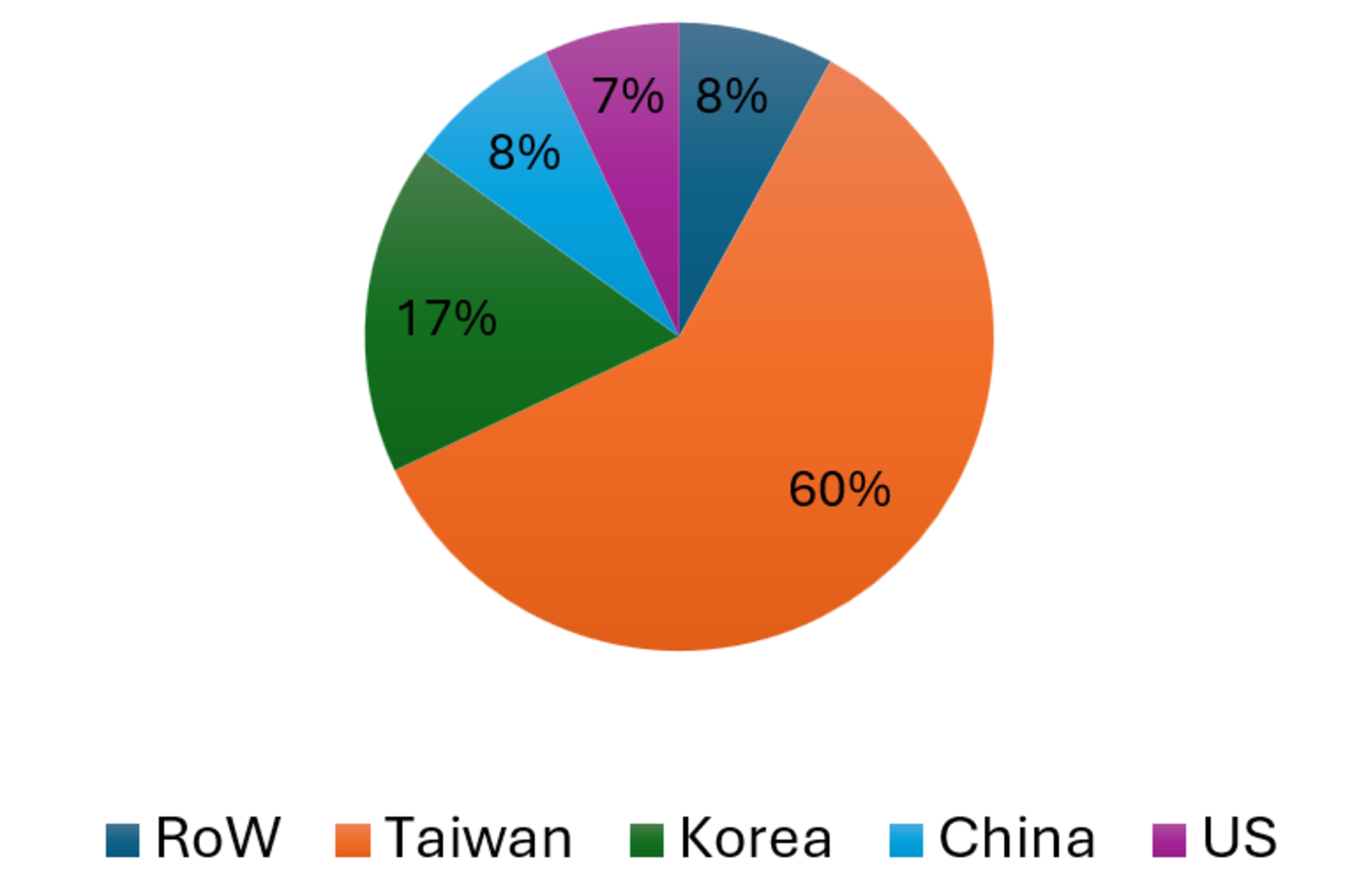
Source: TrendForce/Visual Capitalist (2024-2025 Estimates)
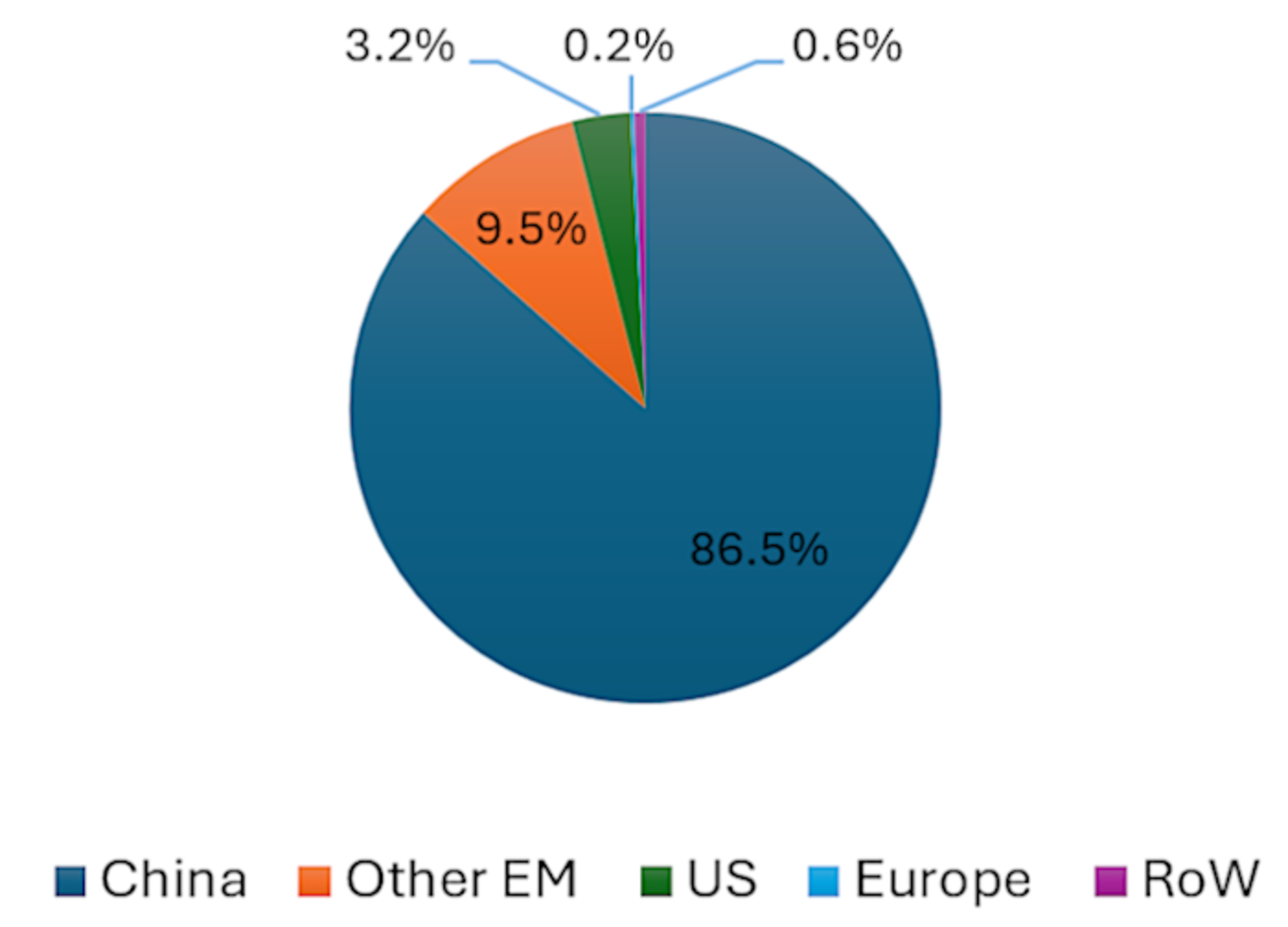
Source: StatRanker. PV module production for 2024

For investors focused on long-term investing with real diversification, EM exposure is critical.
Both of these sectors are attracting vast amounts of capital expenditure in both developed and emerging markets, as Figures 2a and 2b show.
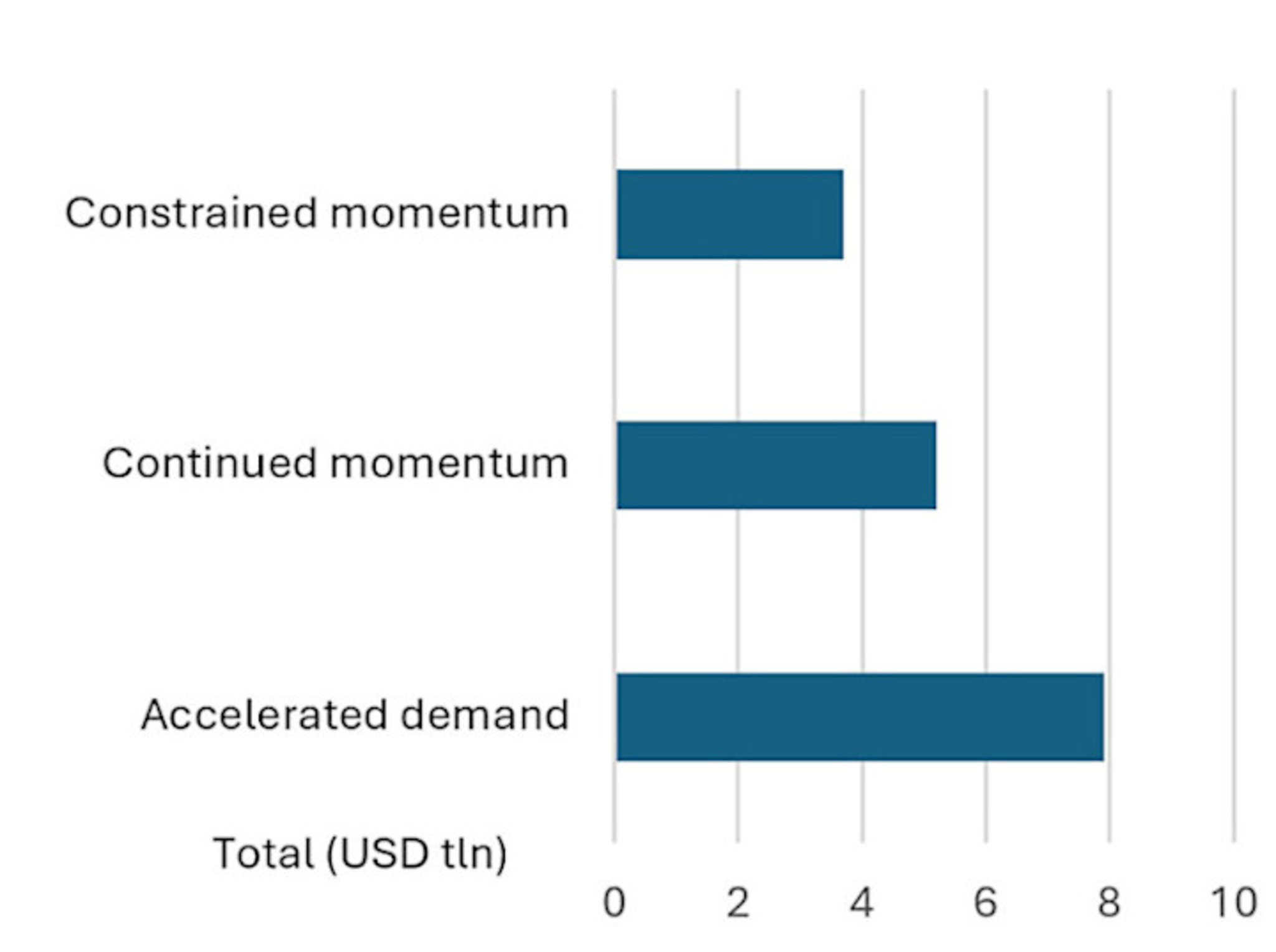
Source: McKinsey projections from April 2025 encompassing data center infrastructure, related IT equipment, and power generation capex to support data centers.
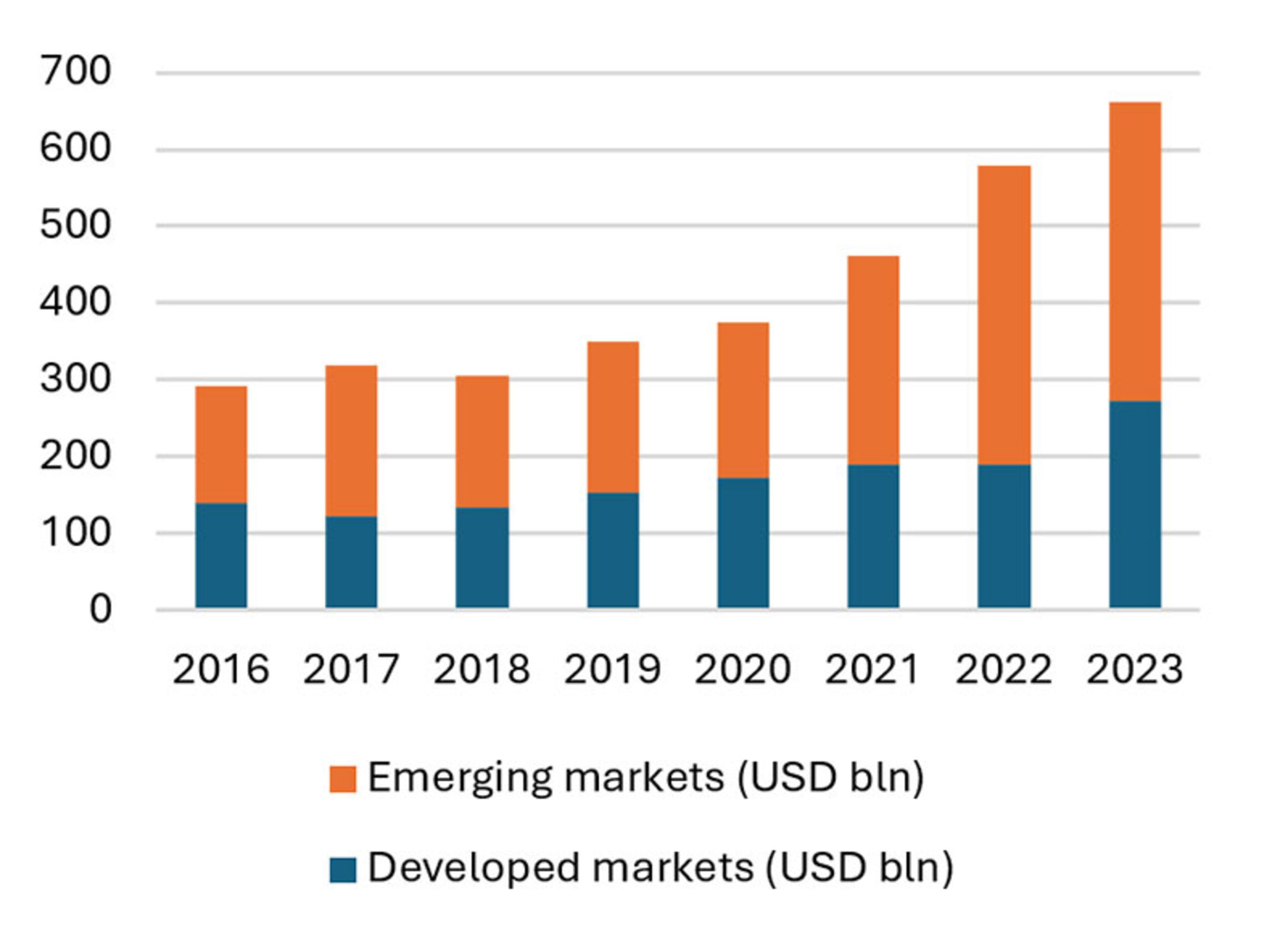
Source: BloombergNEF, Climate Investment Funds, World Bank, March 2025.
For investors focused on long-term investing with real diversification, EM exposure is critical.
The two sectors are also inextricably linked. The AI revolution is contributing to rising electricity demand, which is in turn increasing demand for power generation sources, whether via fossil fuels, nuclear or renewables. The sudden jump in oil and LNG prices sparked by the Iran war in March 2026 has also illustrated the fragility of fossil fuel supply chains and is likely to further accelerate global investment in renewables, electrification and efficiency.
Moreover, the two trends are relying on many of the same mineral inputs to enable the infrastructure buildout (see Table 1), resulting in a surge in demand for these specific materials.
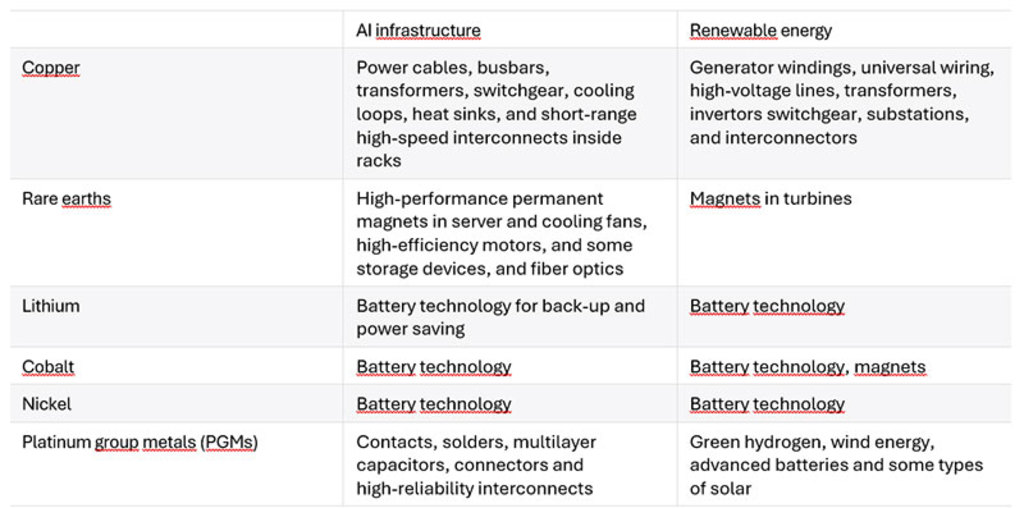
Sources: IEA, UN Task Force on Critical Energy Transition Minerals – December 2025, Artificial Intelligence and the Critical Minerals Crunch – FP Analytics, October 2025.
Of these key minerals, critical to both AI and the energy transition, a significant share of economically viable reserves and production is concentrated in emerging economies (see Figure 3).
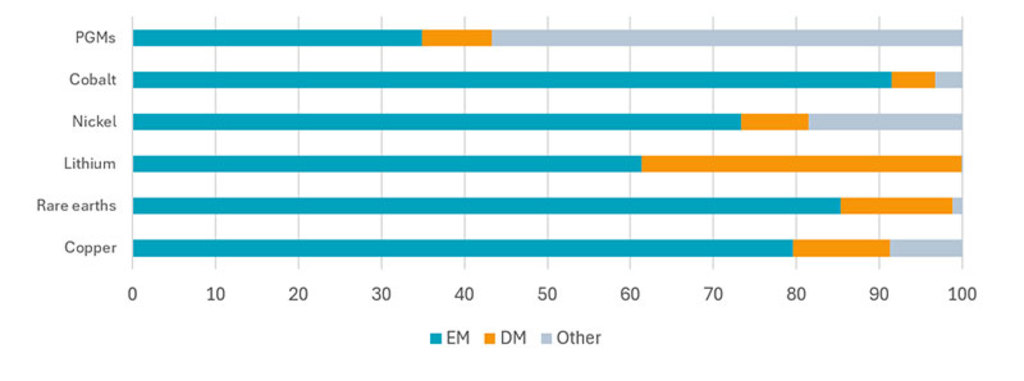
Sources: IEA (2025), Global Critical Minerals Outlook 2025, IEA, Paris www.iea.org/reports/global-critical-minerals-outlook-2025, Licence: CC BY 4.0. ‘Other’ includes Russia and disputed resources
For example, South Africa remains the most reliable global source of PGMs. Chile, Zambia, Indonesia and the Democratic Republic of the Congo (DRC) supply the balance of global copper, while China dominates in rare earths mining and especially in processing. Indonesia is also the swing supplier in nickel, and the DRC dominates cobalt mining. The world’s largest lithium miner is a developed market (Australia), but the rest is produced in Chile, Argentina, China, and various African nations.
The location of these minerals has been given particular significance by the geopolitical tension between the US and China. Trade relations are worsening and the two global powers have established rival technology and military-industrial stacks. In particular, China has built a dominant position in metals and rare earths processing, outcompeting the steel and smelting sectors in the US and Europe, and leaving them dependent on China for the balance of refined supply in many key industrial inputs. This in turn has seen the US classify its mineral supply chain as a national security policy priority,1 rather than an issue that can be left to market forces.
In our view, this new environment is likely to elevate the value of emerging markets’ generous mineral endowment and also give emerging economies more leverage to capture value.
1 New Executive Order Ties U.S. Critical Minerals Security to Global Partnerships - Center for Strategic & International Studies – 15 January 2026
訂閱我們的電子報,深入了解新興市場投資機會。
本網站僅供《證券及期貨條例》(香港法例第571章)及其附屬法例所界定之專業投資者瀏覽及使用。 投資涉及風險。過往表現並不代表未來表現。本網站所載資料僅供參考之用,並不構成任何投資建議,亦非作出買賣任何證券或採納任何投資策略之要約或招攬。投資者不應僅憑本網站提供之資料作出投資決定,在作出任何投資決定前,應徵詢獨立意見(包括有關稅務影響之意見)。投資者應確保完全理解投資產品的相關風險,亦應考量自身投資目標及風險承受水平。投資乃閣下之個人決定。除非銷售投資產品的中介人已向閣下告知該投資產品適合閣下,並已解釋其符合閣下投資目標之原因,否則閣下不應投資。請參閱相關發售文件或其他法律文件,以獲取包括風險因素在內的進一步詳情。 本網站由荷寶投資管理香港有限公司發布,該公司受香港證券及期貨事務監察委員會(「證監會」)規管(中央編號:APU851)。本網站未經證監會審閱。 無法保證任何投資產品可實現其投資目標。概不就任何投資產品之表現或投資回報作任何聲明或承諾。投資的價值或會波動。本網站所載過往表現、推算或預測,均不應視作未來表現之保證或指標,且概不提供任何明示或暗示之保證。本網站內容建基於相信為可靠之來源,惟因應資料傳遞技術特性及須採用多項數據來源(包括第三方內容),故概不保證其準確性。所述觀點僅乃截至上述日期,或會隨市況變化而改變,可予更改而毋須另行通知。該等意見可能有別於其他荷寶投資專業人士之意見。因使用本材料或當中所載任何評論、意見或估算而引致之直接、間接或相應損失,荷寶概不承擔法律責任。荷寶並無責任更新本網站或任何網站內容。未經荷寶事先書面許可,不得複製、分發或刊發本網站任何材料。 除非另有說明,資料來源:荷寶。
警告 — 有不法分子在網站及社交媒體上冒用荷寳 了解更多