

Head of Sustainability Integration


• 可持續投資難題
SI Dilemma: Should investors address social issues?
We recently celebrated the 75th anniversary of the Universal Declaration of Human Rights (UDHR). There can be few worthier causes than the principles that seek to protect us as humans – but should it be an issue for investors? Yes, it should – though we still need to translate it into a business case, and that can be hard amid the emotional strings that it pulls.
作者

概要
- Human rights can be financially material issue for investors and business
- Good human capital management feeds through into higher returns
- EU is helping to lay down frameworks but more clarity is needed
The UDHR, crafted in December 1948, came out of the ashes of World War II and the creation of the United Nations. The world community made a clear statement that the atrocities committed during the war must never happen again, and that human rights should be codified. The final document was translated into 500 (!) languages1 and is still a baseplate for human rights.

The 30 principles of the UDHR. Source: UN
Although the declaration is not legally binding, it did inspire the development of international human rights law and binding treaties, of which at least one has been ratified by all 193 member states of the UN.
Now, it is mostly up to governments to make sure that human rights are respected in their countries. So how can this topic be relevant for investors then? Social issues have been an issue for asset managers ever since the S became the middle letter of ESG. No one doubts that it should be considered in the same vein as environmental or governance issues – though it has often been considered a middle child without the power of the E and G.
When it comes to investors, the relevance of social issues can be considered from two sides. The way in which companies manage their social issues could have a material impact on their financial results or their business models (financial materiality). For example, a mining company should manage community relations well in order to keep its license to operate.
Social issues have been an issue for asset managers ever since the S became the middle letter of ESG
Sadly, there are tragic examples of when it doesn’t, as seen with the Brazilian Brumadinho tailings dam disaster in 2019 when 270 people died. In textiles, the Rana Plaza factory collapse in Bangladesh in 2013 which killed 1,134 people provides another tragic example. Managing labor issues in the supply chain is a key topic for fashion companies.
Telecoms and IT companies also face social issues. In today’s overly connected internet, social media companies should keep consumer data private and protected in order to not run into big reputational risks. Gaming companies have similarly run into problems with failing to protect staff from labor abuse, the subject of a recent engagement theme at Robeco.
SI Debate
The relationship with performance
When compared to climate change, social issues are much broader and contain many different topics. Therefore it is difficult to find a positive relationship between social performance in general and financial performance, though some research is available.
Meta-analysis by Margolis et al. in 20092 reviewed over 200 studies and found a small but positive correlation between corporate social performance (CSP) and corporate financial performance (CFP). While this suggests that good social performance may lead to better financial outcomes, the impact is modest, and varies depending on context and measurement methods. Managing social issues well does not financially penalize companies, but in general it also doesn't offer strong financial incentives to pursue social initiatives.
One social topic that does seem to have financial relevance across all sectors is human capital management. The 100 best companies to work for in the US have exhibited significant excess returns over the market going back to 1997.3 Research by Robeco on Glassdoor ratings finds a similar effect.
So, even though it would not apply across the board, social issues are certainly financially relevant for some sectors, and within social issues, human capital management is the most financially relevant factor across sectors.
What obligations do investors have?
Next to financial relevance, there is also the impact relevance for investors. For companies, the UN Guiding Principles on Business and Human Rights4 describe how countries and businesses should uphold human rights.
National governments have the duty to protect human rights and lay the foundations (laws) for businesses. They should provide effective guidance to enterprises on how to respect human rights throughout their operations, and to encourage, and where appropriate require, businesses to communicate how they address their human rights impacts. Businesses should respect human rights and provide access to remedy.
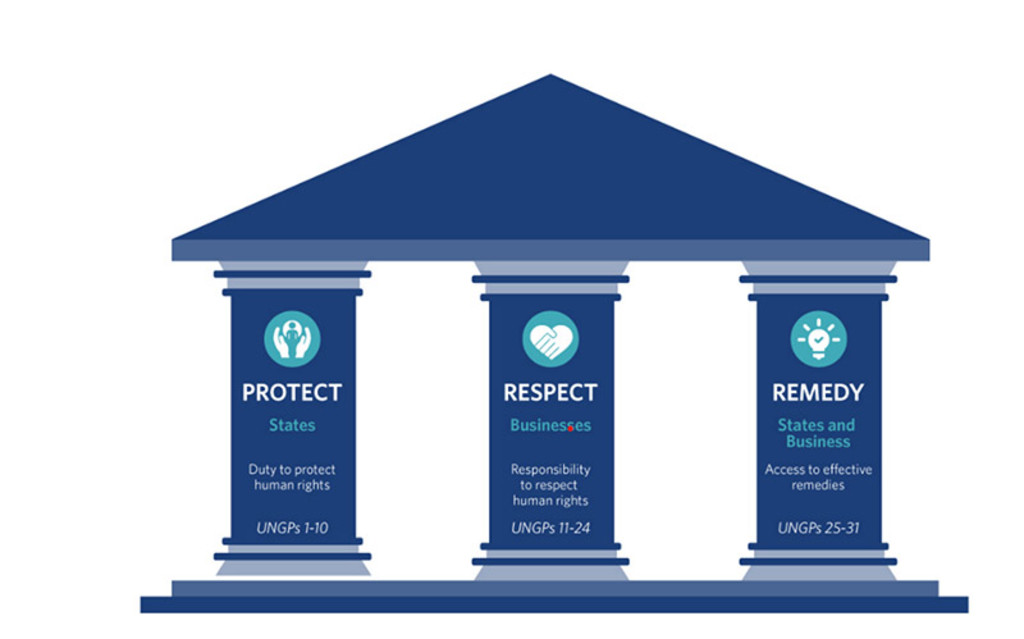
Source: UN Guiding Principles on Business and Human rights
For example, on 25 July, the EU’s directive on corporate sustainability due diligence entered into force. The new rules will ensure that companies in scope identify and address the adverse impacts of their actions on human rights and the environment inside and outside Europe, including their supply chains. More transparency on this topic will lead to more scrutiny from the market in the coming years and thus more relevance for investors.
How can an asset manager respect human rights?
The direct impact that we make as investors is very limited. The reporting and due diligence directives in the EU are still very much focused on the direct impacts of businesses (in their supply chains) and are less relevant for the financial sector. We would encourage the EU to develop sector guidance to make these directives more relevant for us.
The new rules will ensure that companies address the adverse impacts of their actions
了解最新的可持續性市場觀點
訂閱我們的電子報,探索塑造可持續投資的趨勢。
The impact asset managers make is mostly indirect through managing portfolios in listed equities or fixed income securities. Input from our data providers and our in-house research can highlight the major social issues that our portfolios are exposed to, in their own operations and in their supply chains.
Taking action on issues
As investors, we can take action on these issues in a number of ways. We can exclude companies that are implicated in severe social violations, and we can engage with these companies on lifting these violations, but also more broadly on implementing the UN Guiding Principles on Business and Human Rights. At Robeco we do both.
We should structurally integrate financially relevant social issues into investment decision making. And specific social (impact) investment strategies can be implemented, as we do with strategies such the Robeco Gender Equality, Fashion Engagement and Sustainable Healthy Living strategies.
In summary, I strongly believe that investors can and should consider social issues, both from a financial materiality and from a legal (impact materiality) perspective. The (soft) legal requirements, the frameworks and the data is in place to do so – it’s just a matter of will.
Footnotes
[1] https://www.ohchr.org/en/universal-declaration-of-human-rights
[2] Margolis, J. D., Elfenbein, H. A., & Walsh, J. P. (2009). Does it Pay to Be Good… And Does it Matter? A Meta-Analysis of the Relationship between Corporate Social and Financial Performance. SSRN Electronic Journal. https://doi.org/10.2139/ssrn.1866371
[3] Shah et al., Jefferies: The Human Capital Edge: 2024 “100 Best Companies to Work For” Analysis (April 2024)
[4] https://www.ohchr.org/sites/default/files/Documents/Publications/GuidingPrinciplesBusinessHR_EN.pdf
重要資料
本網站僅供《證券及期貨條例》(香港法例第571章)及其附屬法例所界定之專業投資者瀏覽及使用。 投資涉及風險。過往表現並不代表未來表現。本網站所載資料僅供參考之用,並不構成任何投資建議,亦非作出買賣任何證券或採納任何投資策略之要約或招攬。投資者不應僅憑本網站提供之資料作出投資決定,在作出任何投資決定前,應徵詢獨立意見(包括有關稅務影響之意見)。投資者應確保完全理解投資產品的相關風險,亦應考量自身投資目標及風險承受水平。投資乃閣下之個人決定。除非銷售投資產品的中介人已向閣下告知該投資產品適合閣下,並已解釋其符合閣下投資目標之原因,否則閣下不應投資。請參閱相關發售文件或其他法律文件,以獲取包括風險因素在內的進一步詳情。 本網站由荷寶投資管理香港有限公司發布,該公司受香港證券及期貨事務監察委員會(「證監會」)規管(中央編號:APU851)。本網站未經證監會審閱。 無法保證任何投資產品可實現其投資目標。概不就任何投資產品之表現或投資回報作任何聲明或承諾。投資的價值或會波動。本網站所載過往表現、推算或預測,均不應視作未來表現之保證或指標,且概不提供任何明示或暗示之保證。本網站內容建基於相信為可靠之來源,惟因應資料傳遞技術特性及須採用多項數據來源(包括第三方內容),故概不保證其準確性。所述觀點僅乃截至上述日期,或會隨市況變化而改變,可予更改而毋須另行通知。該等意見可能有別於其他荷寶投資專業人士之意見。因使用本材料或當中所載任何評論、意見或估算而引致之直接、間接或相應損失,荷寶概不承擔法律責任。荷寶並無責任更新本網站或任何網站內容。未經荷寶事先書面許可,不得複製、分發或刊發本網站任何材料。 除非另有說明,資料來源:荷寶。