
Head of SI Thought Leadership and Climate & Biodiversity Strategist
• 市場觀點
COP16: Laying the groundwork for nature action
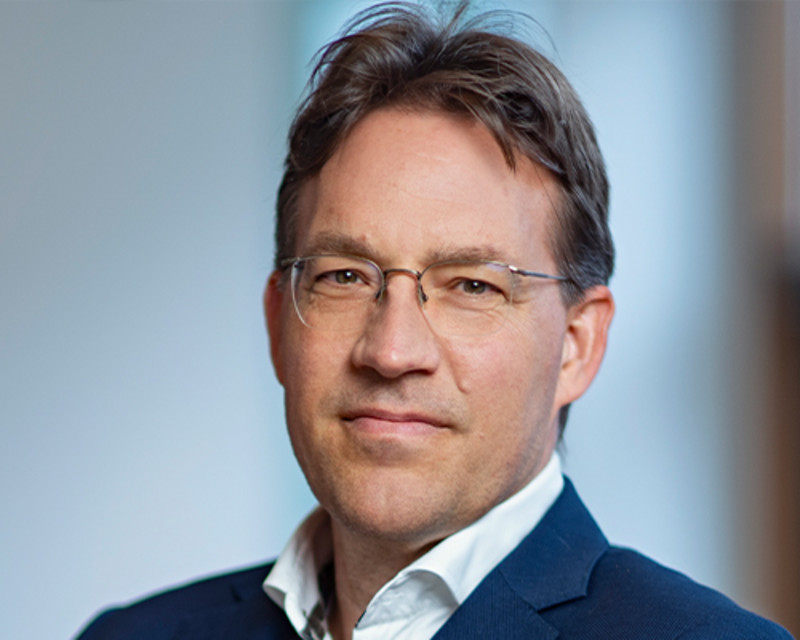
The 16th International Conference of the Parties on biodiversity (COP16) took place during the past two weeks in Cali, Colombia. Representatives of 196 governments gathered to negotiate implementation and financing for global biodiversity targets. Business and finance were notably present, alongside civil society organizations and academics. Robeco’s climate and biodiversity strategist Lucian Peppelenbos attended the conference and shares his key insights.
作者

概要
- Nature finance was put at the core of the negotiations
- Building momentum in business approaches to biodiversity
- Good progress made in overcoming the data challenge
COP16 is the first gathering of the parties since their agreement at COP15 in 2022 in Montreal on the global goal of halting and reversing nature loss by 2030. The focus of the negotiations in Cali was therefore on implementation: setting national targets, creating operational frameworks and mobilizing resources.
The latter topic dominated the outcome of the negotiations. Countries were unable to agree on how to mobilize the USD 200 billion of public finance by 2030 that was agreed upon in Montreal. Developing countries opposed the hosting of these funds in Washington and demanded the creation of a new vehicle.
This lack of agreement blocked progress on other topics as well. After an overnight plenary session, the conference ran overtime and was suspended in the morning of 2 November because too many delegates had already left, and there was no longer a quorum for decision making. Nevertheless, COP16 did yield results in three important areas.
Implementing Montreal
First, COP16 advanced plans for national implementation of the Montreal agreement. Some 119 countries submitted national biodiversity targets and 44 delivered fully-fledged biodiversity action plans. Parties also advanced the design of a joint monitoring framework to track the progress of individual countries, though this did not get final approval due to the suspension of the conference.
Second, COP16 introduced a new nature financing mechanism: a levy on profits made from digital genetic information gathered and made available through open source by scientists. Large companies that are monetizing this data, for example in pharmaceuticals and plant breeding, will be expected to pay a levy of 1% of their profits or 0.1% of their revenues. Half of the funds will go to public conservation efforts; the other half will be distributed to indigenous peoples and local communities. In addition, a new body will be created to include these groups in the governance of the global biodiversity agreement.
Third, COP16 agreed on the identification of the most critical and vulnerable parts of the ocean beyond national jurisdiction. These areas play an important role in marine biodiversity protection and the global target to protect 30% of land and ocean by 2030. The work to identify these marine areas had started already in 2010 but has stalled in the last eight years due to legal and political concerns.
Financing nature
With finance being the key issue in Cali, it was no surprise that Finance Day was one of the busiest days over the two weeks. Forested countries and indigenous peoples rightfully claimed the need to recognize and reward their custodial services.
Numerous announcements were made of new innovative mechanisms, blended finance, nature-for-debt swaps, biodiversity credits, jaguar bonds, and the like. Yet the actual new commitments to the Global Biodiversity Framework Fund, in the order of USD 196 million, fell short of expectations.
The crux is financing the transformation of industries that are currently harming nature and depleting natural resources
One speaker pointed out that the USD 200 billion that parties committed to in Montreal, represents only a tiny fraction of global financial markets, and should therefore be easy to mobilize.
However, the real point of course is about those other financial flows and their associated nature risks and impacts. Financing nature conservation is important. But the crux is nature transition finance – that is, financing the transformation of industries that are currently harming nature and depleting natural resources.
This was the main point that the delegation of investors brought to the negotiating table. On behalf of its members, the Finance for Biodiversity Foundation ensured that transition finance was included in the final agreements, as well as a recognition of the central role of Ministries of Finance and a whole-of-government approach to nature.
Growing momentum in business
COP16 demonstrated that nature is becoming a serious business. From the total of 23,000 participants, an estimated 3,000 were representing companies and financial institutions. This shows the growing momentum since Montreal, where business was notably present for the first time, with around 1,000 delegates.
Admittedly, it is the sustainability teams of companies that are being delegated, rather than the core business, which is in line with the maturity of the discussions that took place in Cali. The discussions centered around developing nature strategies, setting targets and initiating projects, rather than closing investments deals.
Three leading companies announced science-based nature targets, while another 30 published externally reviewed business nature strategies. Investors are not there yet; the first wave of investor-led nature targets is expected to be disclosed in the next six months. While still incipient, the era in which nature was solely the domain of conservationists has passed. Business and finance have nature firmly on their radar screens, and are working to integrate it into their strategies.
Overcoming the nature data challenge
Without doubt, in the numerous finance panels, the phrase most referred to was “the data challenge”. Investors continue to struggle how to capture nature risks and impacts in a way that is useful for investment decision making. Portfolio materiality assessments are already common practice, but portfolio construction requires measurement at the security level, which is still challenging.
The meetings at COP16 point to good progress. Businesses in Cali were already exchanging best practices in following the sector disclosure guides that the Taskforce on Nature-related Financial Disclosure (TNFD) only released last June. Data providers were notably present, and some took the occasion to highlight new geospatial datasets developed in collaboration with nature organizations such as the UK’s Natural History Museum and the Worldwide Fund for Nature (WWF).
This combination of evolving standardized industry reporting, together with asset-level nature datasets, will enable investors to meaningfully advance in assessing nature at the security level. Nature data is progressing to become decision-useful, and we expect to see that reflected in investment portfolios in the coming years.
The human element
The warm hospitality of Cali, and the abundant joy with which the city embraced the topic of biodiversity, was felt by all conference participants. The green zone in the center of the city, where delegates mingled with the local residents, was a testimony to the rich biodiversity in the country and its strong connection to Colombian culture and identity.
Change is not driven by fear or regulation. It is driven by love’
In the blue zone, where the formal negotiations took place, the massive presence of indigenous leaders reminded all delegates of the leading role that indigenous peoples have in looking after the world’s forests and biodiversity reserves.
On stage, Peter Bakker, CEO of the World Business Council for Sustainable Development, said: “Change is not driven by fear or regulation. It is driven by love. While love for catastrophic climate change is difficult, love for nature is easy. Let’s love nature.”
His words rightfully point to the human element that is central to all this. However, equally critical is the need to develop real policies and incentives to bolster the financial materiality of nature and to drive the transition.
COP16 advanced on both aspects, but much more is needed. While not progressing as much as hoped for, COP16 did lay important groundworks for policy action this decade. This will help build further momentum for nature action in business and finance.
獲取最新市場觀點
訂閱我們的電子報,時刻把握投資資訊和專家分析。
重要資料
本網站僅供《證券及期貨條例》(香港法例第571章)及其附屬法例所界定之專業投資者瀏覽及使用。 投資涉及風險。過往表現並不代表未來表現。本網站所載資料僅供參考之用,並不構成任何投資建議,亦非作出買賣任何證券或採納任何投資策略之要約或招攬。投資者不應僅憑本網站提供之資料作出投資決定,在作出任何投資決定前,應徵詢獨立意見(包括有關稅務影響之意見)。投資者應確保完全理解投資產品的相關風險,亦應考量自身投資目標及風險承受水平。投資乃閣下之個人決定。除非銷售投資產品的中介人已向閣下告知該投資產品適合閣下,並已解釋其符合閣下投資目標之原因,否則閣下不應投資。請參閱相關發售文件或其他法律文件,以獲取包括風險因素在內的進一步詳情。 本網站由荷寶投資管理香港有限公司發布,該公司受香港證券及期貨事務監察委員會(「證監會」)規管(中央編號:APU851)。本網站未經證監會審閱。 無法保證任何投資產品可實現其投資目標。概不就任何投資產品之表現或投資回報作任何聲明或承諾。投資的價值或會波動。本網站所載過往表現、推算或預測,均不應視作未來表現之保證或指標,且概不提供任何明示或暗示之保證。本網站內容建基於相信為可靠之來源,惟因應資料傳遞技術特性及須採用多項數據來源(包括第三方內容),故概不保證其準確性。所述觀點僅乃截至上述日期,或會隨市況變化而改變,可予更改而毋須另行通知。該等意見可能有別於其他荷寶投資專業人士之意見。因使用本材料或當中所載任何評論、意見或估算而引致之直接、間接或相應損失,荷寶概不承擔法律責任。荷寶並無責任更新本網站或任何網站內容。未經荷寶事先書面許可,不得複製、分發或刊發本網站任何材料。 除非另有說明,資料來源:荷寶。