
Head of Sustainability Integration


• 可持續投資難題
SI Dilemma: Optimist, pessimist or realist for sustainable development?
It was Winston Churchill who said: “A pessimist sees the difficulty in every opportunity; an optimist sees the opportunity in every difficulty.” I used to be firmly in the optimist category. Problem? Face it head on! Something wrong with the system? Change it from the inside! But what has been achieved so far when it comes to sustainable development? I am slowly becoming more pessimistic. Let’s look at some numbers.
作者
概要
- Carbon intensity of the economy has decreased, but still emissions have grown
- Progress in meeting the Sustainable Development Goals has been too slow
- Sustainable development issues such as improving food are complex and interlinked
For this SI Dilemma column, I will be referring to some of our specialists in Robeco’s SI Center of Expertise who have written about progress in their respective areas: climate change and the Sustainable Development Goals (SDGs).
Despite efforts to move to cleaner technologies in producing energy, and despite a global pandemic, which caused global emissions to reduce for one year, CO2 emissions are back at pre-Covid levels. The carbon intensity of our economies has decreased, but due to economic growth, emissions are still increasing, as can be seen in the graph below. And this graph excludes land use change which is a big contributor to climate change as well.
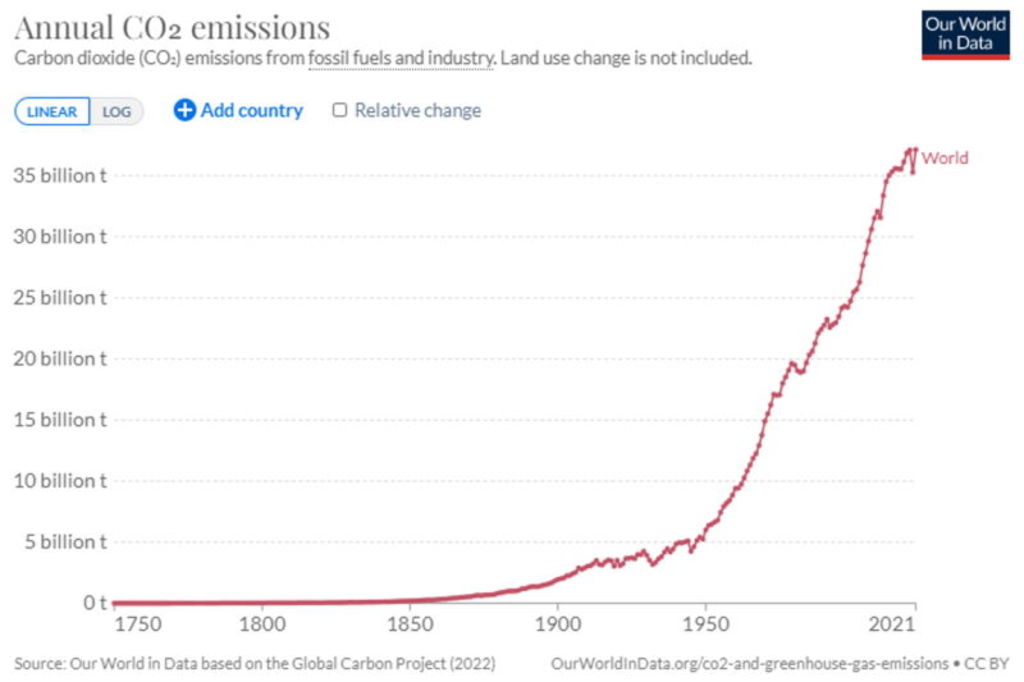
As our climate strategist Lucian Peppelenbos wrote in his column on the Intergovernmental Panel on Climate Change (IPCC) report that was released last year: We are not on track in tackling global warming, but we do hold the answer. With the right leadership, the world can avoid dangerous climate change. That’s still the key message from the UN Climate Science Panel’s IPCC report.
For investors, there is an urgency to respond to the IPCC’s assessment that the financial sector is not sufficiently pricing in climate risk. The IPCC concluded that there must be a massive shift in investments over the next 5-10 years towards low-carbon energy, transport and urban infrastructure.
Another article1 mentions that the COP27 summit at the end of 2022 did lead to plans to create a fund for developing countries to finance decarbonization, but did not produce much in terms of concrete solutions, and climate policies still fall short. If all plans are met, the summit leaves us heading for 2.5 °C of global warming.
Mixed picture on the SDGs
Looking beyond climate change to a broader set of sustainability goals, the UN SDGs, there is a mixed picture. The goals were established in 2015 and should be achieved by 2030. At half time, our SDG strategist Jan Anton van Zanten tallied up the progress.2
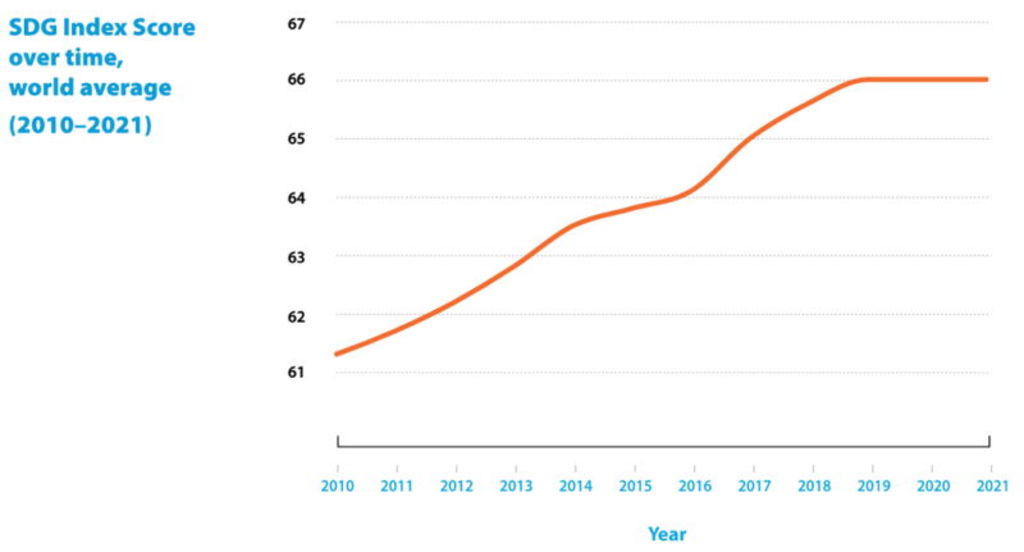
Source: https://dashboards.sdgindex.org/
As can be seen in the SDG index, he concluded that progress is being made over time to achieve the goals, but it has been far too slow, and is now even decreasing slightly. No country is on track to achieve them by 2030, partly due to Covid.
Beyond the pandemic, what is now particularly worrying are the negative trends on environmentally focused SDGs. If we do not address climate change and halt the loss of biodiversity embodied in three of the goals, it is unlikely that we will achieve any of the other SDGs, given that all social systems depend on the natural environment.
Optimist, pessimist or realist?
‘I always like to look on the optimistic side of life, but I am realistic enough to know that life is a complex matter’ – Walt Disney
As mentioned above, these matters are indeed complex and interlinked. For example, solving SDG 2.1 to end hunger and ensure year-round access to safe and nutritious food by all people, in particular the poor and people in vulnerable situations, will be difficult to achieve while also simultaneously solving SDG 15.1.
This seeks to ensure the conservation, restoration and sustainable use of terrestrial and inland freshwater ecosystems and their services, in particular forests, wetlands, mountains and drylands, in line with obligations under international agreements or many of the other climate and biodiversity-related targets. Growing more food to meet SDG 2.1 makes this much less likely.
Better global regulation
In recent years, the financial sector has woken up to ‘sustainability’, and focused on integrating financially material ESG factors into portfolios, to make better-informed investment decisions. However, there are two issues with this. What the IPCC mentions in its report about the underpricing of climate risk also goes for other externalities such as the loss of biodiversity, poor labor conditions, poor governance and poor community relations.
This should be solved by better global regulation, which puts a price on these issues and makes sure that investors and corporates internalize these external costs. If not, then ESG integration (as long as not everyone is doing it in the same way or using the same information) could help to create better investment decisions, but would not directly benefit sustainable development.
Moving to impact investing
Or we need to find a way to go beyond ESG integration and move to impact investing, creating structures that can fund the trillions of dollars in investments needed (in emerging markets) to create sustainable development. A start was made at COP27 with the creation of a loss and damage fund by wealthier countries. But this still needs to be operationalized.
Green, social and sustainability-linked bonds are also good instruments for large investors to create impact on the ground. The end-investor needs to be vocal about their desire to not only optimize wealth, but also well-being. We are not there yet. Only a small part of all assets under management goes to directly funding corporate projects that help sustainable development.
No other option
It felt good to let the ‘pessimistic me’ out of the closet for this column. It is important to take stock of what is happening in the real world from time to time. And there is not a lot of reason for optimism.
At Robeco, we have a 50-strong SI Center of Expertise through which all investment teams integrate financially material ESG information into the investment process. We spend a lot of time and effort in researching, integrating and engaging on sustainability issues as well as supporting our clients on this topic. And there is a handful of asset managers and asset owners that have been doing the same as us for many years.
We will never know where we would be if we had not done that. We know we have had some successes with engagement, most notably in getting some board members elected that had the right knowledge, and were able to start transition processes at some of the companies we invest in. And whereas COP27 left us heading for 2.5 °C of global warming, five years ago, we were heading for 4 °C.
So, to end with another quote from Churchill, which also applies to me: “For myself, I am an optimist – it does not seem to be much use to be anything else.”
SI Debate
重要資料
本網站僅供《證券及期貨條例》(香港法例第571章)及其附屬法例所界定之專業投資者瀏覽及使用。 投資涉及風險。過往表現並不代表未來表現。本網站所載資料僅供參考之用,並不構成任何投資建議,亦非作出買賣任何證券或採納任何投資策略之要約或招攬。投資者不應僅憑本網站提供之資料作出投資決定,在作出任何投資決定前,應徵詢獨立意見(包括有關稅務影響之意見)。投資者應確保完全理解投資產品的相關風險,亦應考量自身投資目標及風險承受水平。投資乃閣下之個人決定。除非銷售投資產品的中介人已向閣下告知該投資產品適合閣下,並已解釋其符合閣下投資目標之原因,否則閣下不應投資。請參閱相關發售文件或其他法律文件,以獲取包括風險因素在內的進一步詳情。 本網站由荷寶投資管理香港有限公司發布,該公司受香港證券及期貨事務監察委員會(「證監會」)規管(中央編號:APU851)。本網站未經證監會審閱。 無法保證任何投資產品可實現其投資目標。概不就任何投資產品之表現或投資回報作任何聲明或承諾。投資的價值或會波動。本網站所載過往表現、推算或預測,均不應視作未來表現之保證或指標,且概不提供任何明示或暗示之保證。本網站內容建基於相信為可靠之來源,惟因應資料傳遞技術特性及須採用多項數據來源(包括第三方內容),故概不保證其準確性。所述觀點僅乃截至上述日期,或會隨市況變化而改變,可予更改而毋須另行通知。該等意見可能有別於其他荷寶投資專業人士之意見。因使用本材料或當中所載任何評論、意見或估算而引致之直接、間接或相應損失,荷寶概不承擔法律責任。荷寶並無責任更新本網站或任何網站內容。未經荷寶事先書面許可,不得複製、分發或刊發本網站任何材料。 除非另有說明,資料來源:荷寶。