
Portfolio Manager


• Previsioni mensili
Perché i mercati osservano l’aumento della spesa per la difesa
L’aumento della spesa per la difesa sarà oggetto di grande attenzione da parte dei mercati per il suo impatto sui bilanci pubblici e sulle diverse asset class, afferma l’investitrice multi-asset Aliki Rouffiac.
Relatori

Sommario
- Le guerre in Ucraina e Iran riportano l’attenzione sull’elevato costo dell’indipendenza in materia di sicurezza
- L’aumento dei disavanzi di bilancio avrà ripercussioni sui titoli di Stato e sui tassi
- I mercati azionari in settori come la cybersecurity e le terre rare possono beneficiarne
Poiché il costo dell’indipendenza in materia di sicurezza in Occidente inizia a raggiungere l’ordine dei trilioni, gli investitori guardano con cautela alle ripercussioni sui disavanzi di bilancio e sulle future politiche sui tassi di interesse, concentrandosi sul valore futuro dei titoli di Stato, afferma Rouffiac, Portfolio Manager del team multi-asset Investor Solutions di Robeco.
Molti settori dei mercati azionari possono tuttavia continuare a beneficiarne, come la cybersecurity e le terre rare, sulla scia del forte rialzo registrato nell’ultimo anno dai titoli delle società manifatturiere legate alla difesa, aggiunge.
“Dopo un anno di guerre dei dazi, i rischi geopolitici sono tornati a crescere, poiché l’inizio della guerra tra Stati Uniti e Iran, a febbraio, ha riportato rapidamente l’attenzione sulla difesa”, sostiene. “Il grande riassetto in atto ha fatto sì che i Paesi si stiano già adattando a numerose tendenze in evoluzione.”
“L’indipendenza in materia di sicurezza resta in cima all’agenda, e sono necessarie catene di approvvigionamento più resilienti per orientarsi in un contesto economico incerto. La deglobalizzazione e il reshoring stanno ridisegnando il potenziale di capacità del settore manifatturiero, che sta assorbendo questo aumento della spesa.”
“In questo contesto in evoluzione, la spesa militare degli alleati europei e del Canada (in base al monitoraggio della spesa per la difesa della NATO) ha superato le precedenti aspettative, con un incremento del 20% nel 2025. La pressione sulla spesa per la difesa è oggi uno dei primi dieci rischi fiscali individuati per le economie avanzate, ed è considerata un problema nel 24% dei Paesi.”
Figura 1: Principali rischi fiscali individuati nelle economie avanzate (percentuale di Paesi)
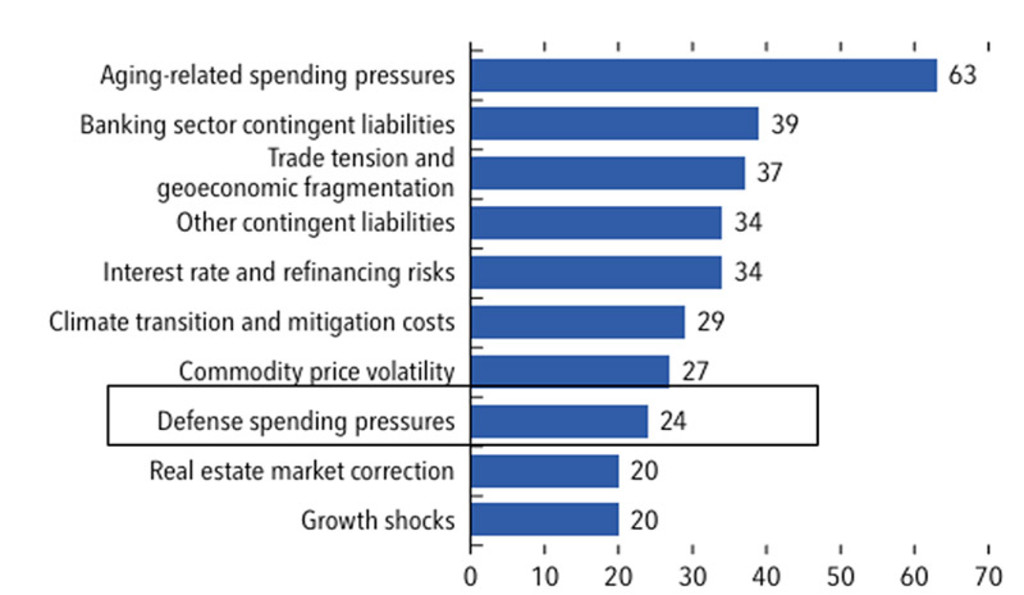
Fonte: FMI, Fiscal Monitor, aprile 2026. I calcoli del personale del FMI si basano sui dati contenuti in 32 report del personale del FMI sulle economie avanzate, pubblicati nel 2025 utilizzando il Fiscal Monitor AI Analyst, una pipeline personalizzata basata su large language model.
Gran parte dell’impatto previsto è specifico per ciascun Paese: le nazioni dell'Europa orientale, più vicine al confine con la Russia, stanno spendendo molto di più rispetto alle loro controparti più a ovest, in rapporto al PIL. Anche i Paesi con un’industria della difesa nazionale relativamente forte, come la Francia e il Regno Unito, tendono anch’essi a spendere di più.
“Soprattutto, è difficile che l’espansione fiscale necessaria per assorbire l’aumento della spesa sarà transitoria in Europa, dove le spese per la difesa tendono a essere rigide”, afferma Rouffiac. “Per il momento, l’attivazione delle clausole di salvaguardia nazionali ha concesso un certo margine ai Paesi europei per aggirare i vincoli delle regole fiscali, ma resta il rischio di aumenti strutturali dei livelli di debito se la spesa non verrà compensata da altre politiche.”
Negli Stati Uniti, finora le stime del costo della guerra in Iran si aggirano intorno ai 30 miliardi di dollari e continuano a salire, mentre l’ultima proposta di bilancio della difesa per il 2027 ammonta a 1.500 miliardi di dollari, un valore superiore al PIL della maggior parte delle economie europee.
Figura 2: I costi della guerra in Iran crescono in una fase in cui i disavanzi sono già elevati

Fonte: Pentagono, CSIS, Penn Wharton, Harvard, maggio 2026.
Implicazioni per i tassi
“Questo livello di spesa rappresenta un aumento rispetto alle proiezioni degli anni precedenti e accresce l’incertezza sui futuri livelli di disavanzo, che probabilmente non sono scontati nei tassi di interesse correnti”, avverte Rouffiac.
“L'aumento della spesa avrà ripercussioni sulle aspettative relative all'inflazione e ai tassi d'interesse, con gli investitori che tenderanno con ogni probabilità a distinguere tra i Paesi con disavanzi fiscali più alti e quelli con disavanzi più contenuti. Allo stesso modo, il recente shock petrolifero ha aggiunto un ulteriore ostacolo, anche se potrebbe essere considerato di breve durata e transitorio in uno scenario di accordo di pace.”
“Nel frattempo, il rischio di tassi più elevati per un periodo più lungo ha sostenuto premi più alti sui titoli di Stato, in particolare per i Paesi importatori di energia. Ciò ha messo in evidenza un ulteriore onere per i bilanci pubblici, proprio in una fase in cui l’espansione fiscale è necessaria per sostenere obiettivi più ambiziosi di spesa per la difesa.”
Leggi gli ultimi approfondimenti
Iscriviti alla nostra newsletter per ricevere aggiornamenti sugli investimenti e le analisi dei nostri esperti.
Impulso al manifatturiero
Uno dei beneficiari dell’aumento della spesa è stato il settore manifatturiero, che può sostenere la crescita futura del mercato del lavoro in Europa e ha portato a un rialzo dei titoli aerospaziali e della difesa dall’inizio del 2025. Secondo Rouffiac, le aree di crescita futura comprendono la cybersecurity, i minerali critici e le terre rare, oltre all’autosufficienza energetica.
“Sono necessari processi di approvvigionamento più efficienti e rapidi – in particolare in Europa – e innovazioni per far fronte all’aumento della domanda e la modernizzazione dell’ecosistema della difesa”, aggiunge.
“Di conseguenza, l’innovazione tecnologica e il capitale privato saranno cruciali in aree come intelligenza artificiale, tecnologie quantistiche e reti di comunicazione di nuova generazione, che la NATO ha identificato come quelle con il maggior potenziale di trasformare la guerra del futuro, in cui la cybersecurity riveste un ruolo centrale.”
“I mercati stanno già scontando questo trend, con l’indice globale dei titoli di cybersecurity in rialzo del 36% dall’inizio dell’anno. Dall’altro lato, i rendimenti azionari globali nel comparto aerospaziale e della difesa sono stati contenuti dopo un 2025 molto positivo, in cui hanno registrato una performance superiore al 50%. Tuttavia, le previsioni di crescita degli utili restano favorevoli, nonostante le valutazioni più elevate.”
Figura 3: I titoli di cybersecurity ne hanno beneficiato
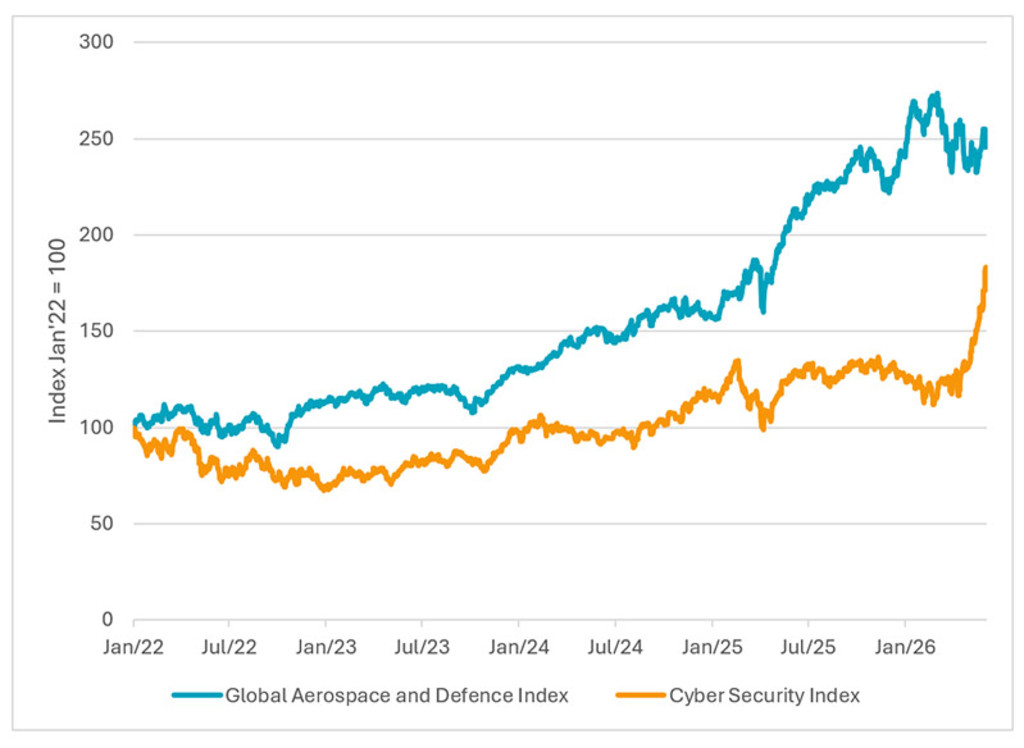
I rendimenti passati non sono indicativi dei possibili risultati futuri. Il valore degli investimenti può subire oscillazioni.
Fonte: Robeco, Bloomberg. Dati a giugno 2026.
Un altro settore che ne ha beneficiato è stato il comparto dei metalli delle terre rare, grazie al loro utilizzo nei sistemi di difesa avanzati, che ne ha fatto salire i prezzi.
“Tuttavia, come abbiamo scritto nel nostro precedente approfondimento, “Autosufficienza energetica nell’era degli shock”, una maggiore dipendenza dall’approvvigionamento e dalle infrastrutture dei minerali critici amplia il concetto stesso di sicurezza e richiede una diversificazione della catena di fornitura per sostenere la crescita futura e le opportunità di investimento”, conclude Rouffiac.