Investment Writer
獲取最新市場觀點
訂閱我們的電子報,時刻把握投資資訊和專家分析。






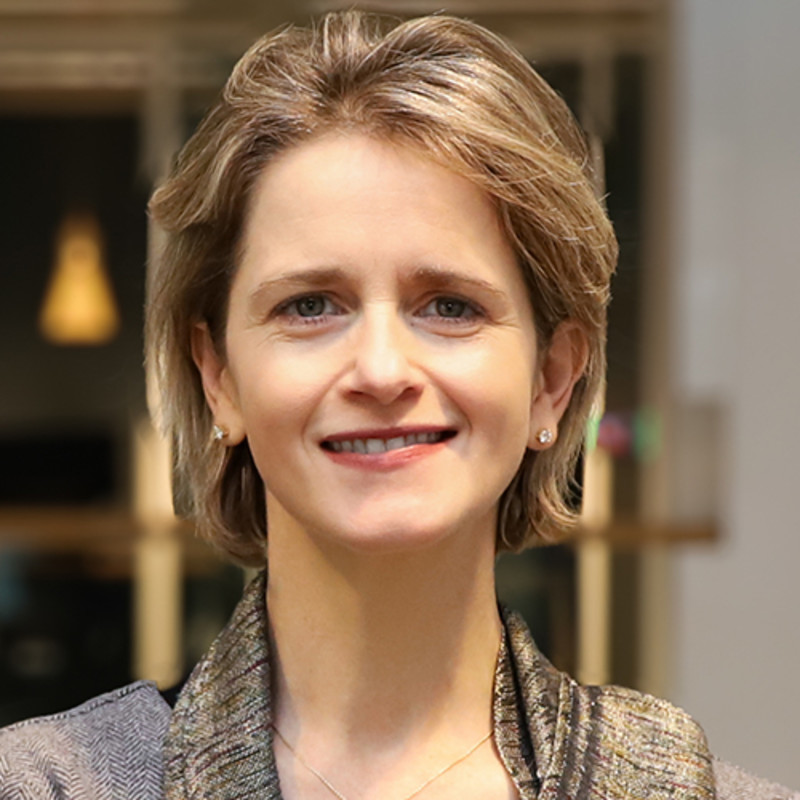
Kees Koedijk is a Professor of Finance at Utrecht University and a Fellow of the Centre for Economic Policy Research in London. He is one of three academics on Robeco’s Advisory Board for the UN Sustainable Development Goals, providing objective feedback on the scoring methodology of our SDG Framework, as well as its application to investment products.
“It began back in the early 2000s while I was a professor of finance at Maastricht University in the Netherlands. At the time, I was also working as an external advisor to the Dutch pension fund ABP and other members of the investment community. One of the issues that kept surfacing was the potential for applying environmental, social and governance (ESG) factors to investments. These issues drove me and fellow colleagues at Maastricht to study their impact at the portfolio level. We found that there was no real difference between the risk/return characteristics of conventional investments and those of sustainable portfolios.”1
“This was a really significant finding because, at that time, most academics and investors believed that ESG would introduce a new portfolio constraint that would limit the investment universe and ultimately a portfolio’s return potential. Our findings to the contrary triggered a lot of attention from institutional investors, think tanks, governments and other institutions, which led to many projects and collaborations on sustainable finance and development in the years that followed.”
“I continue to do research in both traditional as well as sustainable finance topics; more specifically on examining the evidence of sustainable investing’s impact from real-world applications. I’m an academic who appreciates theory and models, but I’m also practical and want to see how things play out in reality. Right now, I’m focused on studying how deliberate choices made by investors can change company actions and limit such things as carbon emissions and climate change.”
“Together with others, I’ve helped launch two separate companies, Global Property Research (GPR) and Finance Ideas, which are focused on applied research. An offshoot of Finance Ideas is the independent Global Real Estate Engagement Network (GREEN) – an alliance of prominent asset owners and investment managers, including Robeco, who are devoted to incorporating ESG criteria into real estate and infrastructure investments. It provides a forum for things such as sharing and comparing building emissions data across developers globally to support recommendations that help improve building design and renovations.”


“Some of the major questions that researchers are currently asking is whether all these sustainability criteria are having an effect on portfolios or real-world outcomes? Are we measuring something that is real, or is it greenwashing? One funny thing I’ve observed is how the sustainable investing market has changed after ESG and the EU’s Sustainable Finance Disclosure Regulation (SFDR) moved in. I am currently working on what the classification of investment products according to their level of embedded sustainability did for market players. Sometimes the press reads it negatively, but I found that investors have used ESG positively in ways that can be measured, such as through fees, performance and behavior. We have not found any tangible evidence of greenwashing.”
“In terms of impact, the key question is whether you can capture it in a proper way while also getting good risk-adjusted returns. I think the SDGs provide a valid, reliable way of working towards that impact question for investment portfolios. This is certainly the case when you have a physical asset like a building or infrastructure from which you can concretely measure the emissions and effects.”
“No, not at all. The prior thinking in finance was that limiting your choice worsens your risk/return trade-off. And everyone thought that integrating ESG factors would limit your choice, reduce your diversification and lower your expected returns. But we found that limiting the number of stocks as a result of incorporating ESG didn’t really produce a big change in risk/return outcomes compared to traditional portfolios.”
“That’s a good thing because it shows that a portfolio’s risk/return profile – which is crucial for investments – is definitely not deteriorating by incorporating ESG. At the same time, you are allowing your product to become more focused and aligned with investor values, priorities or beliefs. We often think that market efficiency means that markets will take care of everything, but this is not the case. You need to maintain your own thesis, your own focus, your own ideals. The market won’t do that for you.”
“Moreover, sustainable investing realigns society and investing, which until now have been moving along different trajectories. If investors want to invest in firms with less of an environmental footprint, or which are aligned with the SDGs, they can without hurting returns.”
“It is very difficult to have continuous and enduring alpha from the same sustainability factors over the long run. At the beginning with the launch of a new sustainable product, you may be able to capture some alpha for a short time, maybe three to four years, because alpha from sustainability does exist. But you must be vigilant because markets are super-efficient. We saw that in our research even as far back as the early 2000s with governance characteristics already being well incorporated into stock prices. This was followed by the ‘E’ and then the ‘S’ factors.”
“Datasets are being updated all the time, and market participants are watching closely and learning quickly. All of this information is being integrated into stock prices. Beyond alpha generation, sustainable products should have other attributes that are important for investors, such as greater value alignment. Sustainable products shouldn’t be bought or sold based solely on the need for alpha generation.”
“I’m positive on the SFDR’s effects. I think it’s great that Europe is taking the early initiative and the lead on this. It really focuses the attention of investors toward more societal and environmental goals. On the negative side, you could argue that it will create a lot of bureaucracy; but on the positive side it provides a competitive edge. It should push investors to rethink and realign their portfolios.”
“I can already see that its moving things positively forward. I sit on a lot of investment advisory boards and even as of two years ago, no one was paying attention to it. However, now they are diving deep, rethinking what they are doing and asking their members and stakeholders what their preferences are.”
“Everyone was looking for a common language and the SDGs provided that. Climate change has shown that we can no longer deny the negative impacts of business activities. Business, governments and investors have to confront these real-world issues because they are not going away. The SDGs are 17 goals that capture and prioritize sizable sustainable challenges that, like climate change, represent a risk to global business.”
“Another attractive aspect is that they were standardized right from the start and are relatively straightforward in terms of their intended goals and metrics to measure progress. That has helped companies, investors and a broad community of stakeholders to put them to use in measuring, managing and reporting on their impact.”
“But the idea and momentum behind considering real-world impact in investments has been building for a long time, it just wasn’t visible. What we are witnessing now is really the tip of the iceberg. Underneath, there is more than two-decades’ worth of work from academics, members of the investment community and other stakeholders. Moreover, climate has also been a big force for change. It’s a sustainability challenge that has evolved into an inexorable global crisis that business, governments, consumers and investors are being forced to confront. That’s increased the focus on what might be the next ‘in-your-face’ sustainability challenge with global ramifications.”
訂閱我們的電子報,時刻把握投資資訊和專家分析。
“There are many companies that are intentionally making specific choices about their impact. Unilever is a great example. It focuses a lot on creating what we call ‘shared value’ among stakeholders. They’ve looked closely at what they are producing and where those things bring positive benefits but also negative effects across their supply chains. They’ve mapped out what they can cut out of the process and what steps it takes to do it. This kind of shared-value creation and the competitive advantages it creates is really gaining momentum among companies championed by business school academics like Porter and Kramer out of Harvard.2 It is a whole new way of looking at your business that many companies are actually undertaking.”
“We are only at the starting phase and we are also seeing pushback. In the US, many argue that a company’s main purpose is to generate shareholder profits. But I think ‘shared-value creation’ should be part of a company’s mission and so measuring impact is going to stay with us.”
“I like the SDGs because they are standardized, forward-looking and focused concretely on specific societal challenges. ESG, on the other hand, tends to be non-standard, backward-looking and much too fuzzy and qualitative. To be honest, as an academic, I would say the jury is still out. The advantage of the SDGs is that there are standardized and a globally accepted framework. The financial world has accepted and adopted them much like the real world. Part of that acceptance comes from its use of simple metrics laid out in straightforward language that resonates with businesses.”
“Like any innovation, there is the possibility to generate alpha, for sure. But that shouldn’t be the product’s prime selling point. Managers shouldn’t forget what they are up against – a highly efficient and adaptive investor market. Any price effects from SDG information could be mitigated very quickly as most investors are moving in the same direction. I think it’s much more important to focus on value alignment and the impact goals. The finance industry has for too long neglected the societal and environmental effects of companies; the SDGs are a tool to help us get back on track.”
“Some will certainly do that, but that shouldn’t stop us from continuing to measure and advocate for company disclosure. We need to take a long-term perspective and realize that this is an enormous challenge for companies that has come to the fore only in the past three to five years. Prior to that, while researchers were interested in studying impact, there was no real push for companies to measure, monitor and disclose anything.”
“It’s now out there, and companies have grasped the importance of the SDGs for their customers, suppliers, investors and regulators. With so many onlookers, companies realize the need to be clear and transparent. That’s why I like Robeco’s SI Open Access initiative; it gets company results out in the open. With time, I am optimistic that companies will get better at measuring and reporting their outcomes.”
1 Bauer, Rob, Kees Koedijk, and Rogér Otten. 2005. “International Evidence on Ethical Mutual Fund Performance and Investment Style.” Journal of Banking and Finance 29 (7): 1751–1767. doi:10. 1016/j.jbankfin.2004.06.035.
2 Kramer, M. R., & Porter, M. (2011). Creating shared value. Harvard Business Review, 89(1/2), 62-77.
本網站僅供《證券及期貨條例》(香港法例第571章)及其附屬法例所界定之專業投資者瀏覽及使用。 投資涉及風險。過往表現並不代表未來表現。本網站所載資料僅供參考之用,並不構成任何投資建議,亦非作出買賣任何證券或採納任何投資策略之要約或招攬。投資者不應僅憑本網站提供之資料作出投資決定,在作出任何投資決定前,應徵詢獨立意見(包括有關稅務影響之意見)。投資者應確保完全理解投資產品的相關風險,亦應考量自身投資目標及風險承受水平。投資乃閣下之個人決定。除非銷售投資產品的中介人已向閣下告知該投資產品適合閣下,並已解釋其符合閣下投資目標之原因,否則閣下不應投資。請參閱相關發售文件或其他法律文件,以獲取包括風險因素在內的進一步詳情。 本網站由荷寶投資管理香港有限公司發布,該公司受香港證券及期貨事務監察委員會(「證監會」)規管(中央編號:APU851)。本網站未經證監會審閱。 無法保證任何投資產品可實現其投資目標。概不就任何投資產品之表現或投資回報作任何聲明或承諾。投資的價值或會波動。本網站所載過往表現、推算或預測,均不應視作未來表現之保證或指標,且概不提供任何明示或暗示之保證。本網站內容建基於相信為可靠之來源,惟因應資料傳遞技術特性及須採用多項數據來源(包括第三方內容),故概不保證其準確性。所述觀點僅乃截至上述日期,或會隨市況變化而改變,可予更改而毋須另行通知。該等意見可能有別於其他荷寶投資專業人士之意見。因使用本材料或當中所載任何評論、意見或估算而引致之直接、間接或相應損失,荷寶概不承擔法律責任。荷寶並無責任更新本網站或任何網站內容。未經荷寶事先書面許可,不得複製、分發或刊發本網站任何材料。 除非另有說明,資料來源:荷寶。
警告 — 有不法分子在網站及社交媒體上冒用荷寳 了解更多