Podcast

Podcast: Geopolitik und KI stärken die Aussichten der Schwellenländer

Aktieninvestitionen bedeuteten schon immer, Unternehmen von Grund auf zu verstehen. Doch wir leben nun in einer Ära, in der Geopolitik stärker ins Gewicht fällt, in der sich Machtverhältnisse verschieben und in der eine Handvoll Technologien ganze Branchen neu gestaltet.

Die zentrale Frage für Anleger lautet daher heute, wie Shareholder Value in einer Welt geschaffen und verteidigt wird, die lauter, schneller und fragmentierter wirkt als je zuvor. Genau das beleuchten wir in dieser Episode.

Autoren/Autorinnen

    Head of Emerging Markets team
    Portfolio Manager and Co-Head of Robeco’s Global Equity team

Transcript

This podcast is for professional investors only.

Wim-Hein Pals (WP): What has changed since 2024, is that the earnings performance in emerging markets is better than in developed markets, and that is driving most of the emerging markets outperformance, we think.

Welcome to a new episode of the Robeco Podcast.

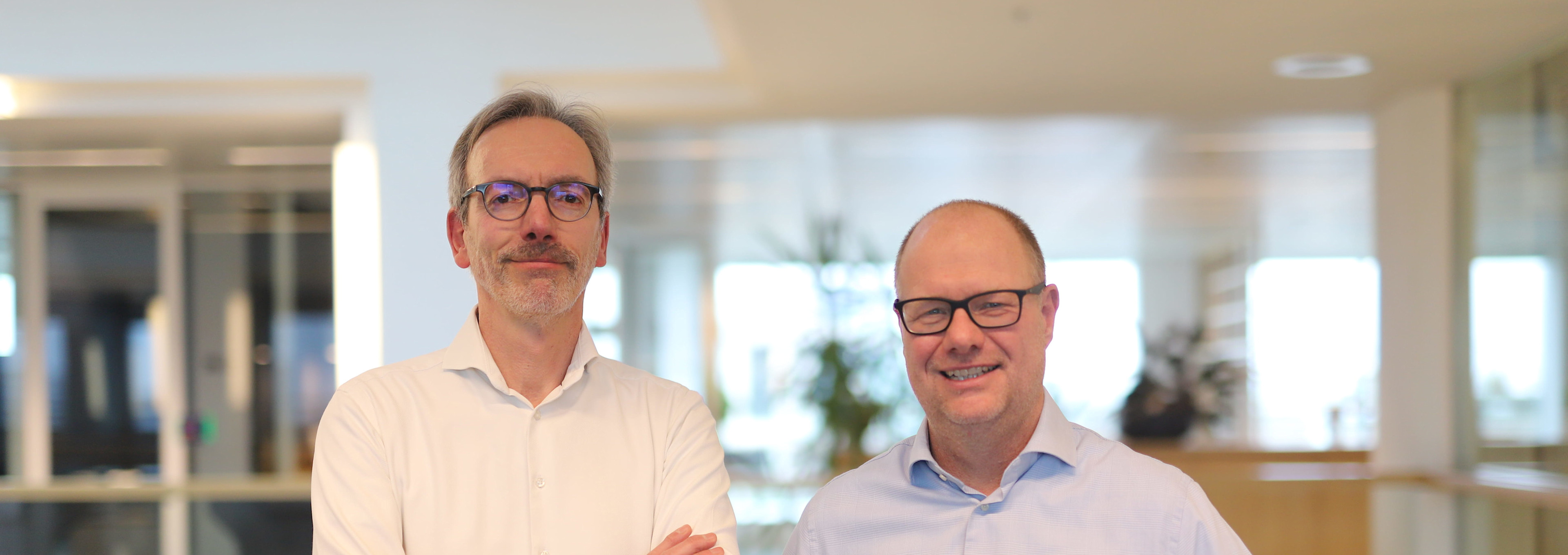
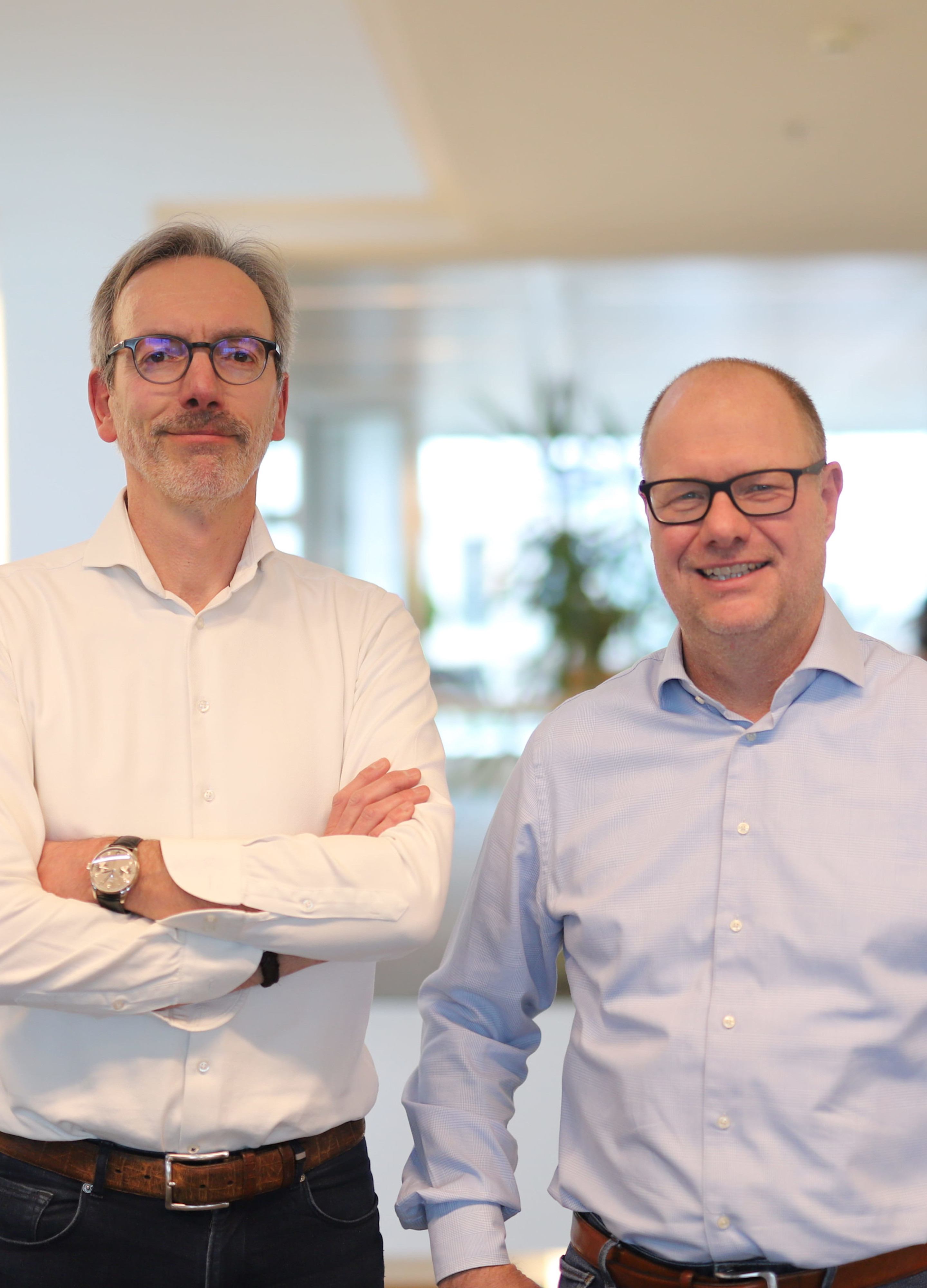
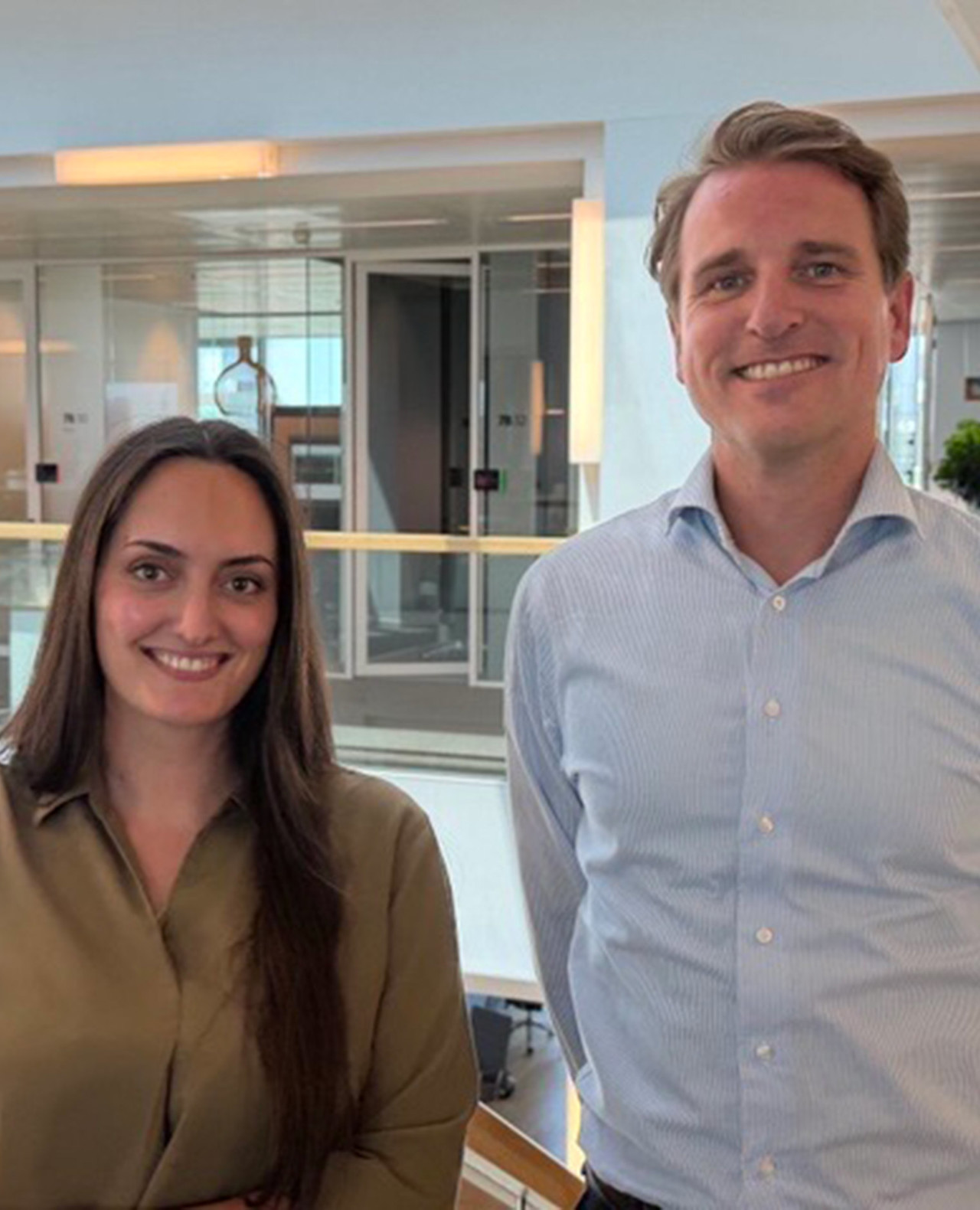
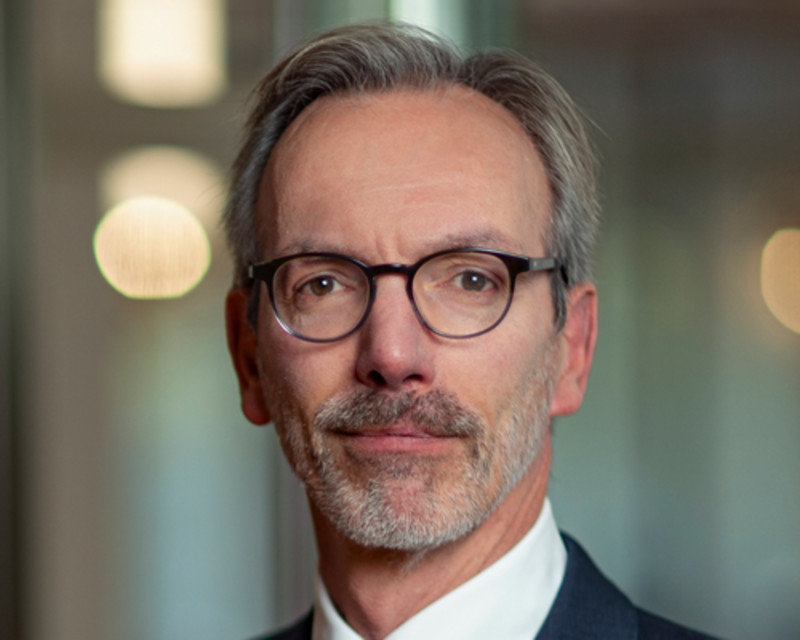
Erika van der Merwe (EM): Fundamental equity investing has always been about understanding businesses from the ground up. But we're now in an era where geopolitics matters more, where power is shifting, and in which a handful of technologies are reshaping entire industries. So the question for investors today isn't just what makes a good company, it's how shareholder value is created and defended in a world that feels noisier, faster and more fragmented than before. And that's what we're exploring in this episode. I'm joined for that by two equity investors who have seen multiple market cycles and bring very different but complementary perspectives on today's investment landscape. Michiel Plakman is Head of Global Equities at Robeco. He's also a portfolio manager of Robeco Global Stars. And Wim-Hein Pals leads Robeco’s Emerging Market Equities capability and he is portfolio manager of Robeco Emerging Market Equities. Welcome. Good to have you both here.

WP/MP: Thanks Erika.

EM: And what a time to be investing. And it's always dangerous to say how much experience you have, but I said that with such respect, that you've seen it, you've got the muscle memory, you're not impressed or intimidated by anything you see. But right now, looking around you, what are the big forces shaping your investment universe, Michiel?
Michiel Plakman (MP): Well, for us, it's clearly geopolitics and what's happening on the geopolitics side. At the same time, a lot is happening on the technology front, in particular with regards to AI or artificial intelligence, which has far-reaching consequences, not just for tech, but also for a lot of other sectors outside technology. And so that's clearly two things that we’re very much focused on.

EM: So that's your global, you've got the global hat on. But that includes also the emerging market universe, that it touches everything right. Yes. So just go a little deeper into some of that because I mean, you know, because of the daily news, we think of the US, we think of China, but there's so much more. What specifically is grabbing your attention, Michiel?

MP: Well, what's most important, I think, is of course the changing nature of US politics, not just within the US, but clearly the relationship between the US, and I would almost say its former allies and trading partners. So clearly this affects everyone. And if you look at the four most important blocs, clearly their relationship with China, their relationship with the EU, but of course also Mexico and Canada, which are super important and are likely to have an effect on investments for, I would like to say the next couple of years, because we're looking two mid-terms and beyond, but potentially for decades to come. And so that's really, really important.

EM: Yeah. Wim-Hein, for you as an emerging market investor, probably a slightly different nuance to this as you look every day to what's happening around you. What's grabbing your attention?

WP: Well, we try to capture the big forces into country allocation as the first performance pillar of our Emerging Markets strategy. And the second one is stock selection within the countries. So these big forces are already described. Geopolitics, but it's not only geopolitics from a top-down point of view within emerging countries. It's also politics, local politics. It is the macro fundamentals. It's earnings. It's valuation. So that's all captured in our country allocation framework which was developed 30-odd years ago. So we have a huge rich database on as far as that goes. And then the stock selection within countries is very much characterized by value with a future. So we are value-tilted investors, so our valuation parameters are always lower than the benchmark. So cheaper price earnings, price cash flow, price-to-book, but with earnings caveat. So we need earnings potential in emerging companies. Otherwise we won't go for the value.

EM: So you've described the framework. Does it feel different today than it did five, ten, 30 years ago?

WP: Well, the big forces are, very important is the investment time horizon as well, for these big forces, right. And relative to three decades ago, the time horizon has shortened, no doubt. So that's why we also introduced within that framework a shorter-term factor within the macro fundamentals. So we don't look at India as the best long-term macro story there is in the world. It might be true, but short term there is so much challenges in India as well, in the domestic Indian situation. So we have to take that into consideration as well. And that's the major change, I think, over the three last decades. The investment horizon has shortened, which comes with opportunities and challenges.

EM: So Michiel, as Wim-Hein has explained as an emerging market investor, his focus is its value tilted, value with a future. You have a quality lens. So you're looking for good-quality companies that are resilient. But in this world there's so much more politicized, shorter time horizons. Does it change or does it make you more or less comfortable applying this quality lens?

MP: I think the quality lens is changing, to be honest. I think where we see the biggest impact of technology changes is in particular on those companies where we thought maybe two or three years ago that they had huge moats. Investors always like to talk about moats, right? And where new technology potentially leads to those moats being a lot less deep, or a lot less wide, than maybe we thought before. So it has a lot of impact, in particular in software and services, which of course are larger sectors in developed markets than they are in emerging markets. So in a way, I think the disruption risk is much higher in developed markets than in emerging markets. And if you look at the CapEx that, for instance, the hyperscale companies are spending or have announced to be spending, I think emerging markets to a large extent are really beneficiaries, right? Look at Korea, look at Taiwan, for instance, whereas probably the picture is a bit more mixed in terms of developed markets. So I think the quality framework is not necessarily changing. But there's a slightly different focus.

EM: Do you need, you say some of these moats are not as stable or predictable as they were in the past, do you need a higher margin for safety before you're confident about investing?

MP: I think it's not so much about a higher margin of safety. I think it's really going through it company by company, business model by business model, to try and realize where's the change real or where is it just perception because it could also lead to opportunity. But I do think it makes it more difficult. I also think we sort of underestimated the impact a little bit last year.

EM: Hmm. Elaborate on that.

MP: Well, in the sense that, if you'd asked me three years ago, I would have said that software business models are probably the best in the world. Very high margins, high recurring nature, sticky customer base. So very unlikely to change. Whereas now that we've seen what some of the new AI tools can do, I'm not so certain. So I do think there's more disruption, and again, that the jury is still out on quite a number of those business models, but that you need to go through them company by company.

EM: Wim-Hein, I think we're combining multiple themes here. We're talking about geopolitics and policy uncertainty, but also AI and technology. You've heard Michiel say creating opportunities in all of this in the emerging market world. I'm sure, you're really there, you've grabbed onto this opportunity. Does this more fragmented world create more opportunities for you as an EM investor?

WP: I think it does. Given that all the major trading blocs want to have their own independent AI infrastructure, right. So the US is building its own. China on the other hand, is building their own. They don't want it to be dependent on the US. So these hyperscalers in the US, they are going to spend hundreds of billions. How much is an uncertainty, is a question mark. But USD 650 billion is the latest number. And that comes with spending in emerging countries and predominantly in Korea and Taiwan. To set up all these data centers, you need to have all these components. The GPUs, the memories. And they come from Koreans and the Taiwanese. So we're very well positioned there. Emerging markets is much broader than just AI, but they are definitely a beneficiary of this whole AI supply chain. But there's this consumer trend which is still existing. Much more consumer power and consumer strength in emerging markets than there is in the mature markets. The mature markets are growing low single digits, not only in consumption, but also from a GDP growth perspective. So we see superior growth in economic terms, in GDP terms, but also in earnings. And that is a very important factor. What has changed since 2024 is the earnings performance in emerging markets is better than in developed markets, and that is driving most of the emerging markets outperformance, we think.

EM: So you’re saying that, you're talking about this aspect of AI, that it will and is unleashing demand and productivity that will spur growth and therefore earnings growth? Is that the point you're making?

WP: Yeah. The earnings growth is evident in the component manufacturers. But that's filtered through to the domestic side of all these economies, into the consumption eventually. And that is really the next trigger. So we want to be positioned not only in AI and the beneficiaries of that, but also in the consumption, so consumer discretionary is a very large overweight in our portfolio as well.

EM: Okay. So we're seeing AI, the AI theme playing out and pointing to so many shortages. So you've got this shock capex expansion, but oh, we're short of energy, we’re short of chips, we’re short of land, we’re short of cooling mechanisms. So to what extent do you think emerging markets can take up this opportunity while also balancing shortages?

WP: Well, they have shortages to a certain extent, but they’re also setting up operations in these developed markets, right. The Koreans and the Taiwanese setting up fabs in the US and in Japan, and thinking about setting it up in Germany as well. So they are spreading their wings, if you wish, from a manufacturing base perspective. And that's also diminishing the geopolitical risk in those companies to a certain extent, because they have now operations in their home country, which might be sensitive to geopolitical developments. And if you spread your manufacturing base, that reduces those risks.

EM: Michiel, do you agree? And beyond that, what are the risks? Well, the dangers that people and investors are not seeing, related to AI. I mean, there's so many aspects to that. So what worries you about AI?

MP: What worries me about AI is that it leads to such efficiency that in the end, it shrinks the investment opportunity, especially from an overall technology perspective. That indeed there are so much efficiencies to be gained that in the end you need less seeds or you need less people. You need less developers. However, so far we've seen no evidence that that is the case, right? So most companies have actually redeployed what they've gained in terms of efficiencies in other segments. At the same time, what I worry about a little bit is sort of the Covid environment where you saw that certain components were not deliverable, or that lead times actually stretched out too far, and that it made that people just stopped ordering altogether just because they could not build cars because they were missing USD 0.50 components on the analog side, for instance. And so what I fear a little bit is that it leads to fallout in demand overall. Because if you cannot get to memory, there's no point in building an entire system. At the same time, I also think it prolongs the cycle. And that I think is helpful for equity markets. So there's both good and bad in this.

EM: And what about the risk of extreme concentration? So there's the obvious form of that, that we've seen in the market. The market is so concentrated. But now you have so much, I believe it's something like a third of the MSCI World is somehow exposed to AI. So if this whole thing collapses, what would that mean for investors?

MP: Well, I don't believe in collapse, so I don't see things collapsing. I see things moderating. But at the same time, we've already seen the market broadening. And I believe that broadening will continue. So it's probably time to have less weight in the Magnificent Seven, even though that is an artificial construct and some are better positioned than others. But leaving that aside, I think the market's clearly broadening beyond the Magnificent Seven. Maybe they've already peaked. And you see strength in a lot of different sectors, also in developed markets, even though it's somewhat disguised because of the weakness of the dollar. But in energy, materials, in industrials, in consumer, in financials. So I think that's overall a very healthy sign.

EM: Wim-Hein, Michiel has spoken about that phrase that you as an emerging market investor love, the US dollar that's been weak over the past year. It's been one of the drivers of your universe's performance. So talk to us about the US, US policy, also the uncertainty related to that and what it means for you.

WP: It means quite a bit, and most positive aspects from an emerging market investor point of view. All the policies of the Trump administration and the Fed point to a weaker dollar, right, going forward as well.

EM: So structurally…

WP: Yeah, at least in 20… for the foreseeable future, right. With the new governor coming in, it might speed up the interest rate cuts or at least we get two, if we have to believe the consensus this year. Two interest rate cuts, that weakens, ceteris paribus, also the US dollar, given that the ECB is more hawkish. So from a euro/dollar perspective that is dollar weakness. With the dollar weakness comes commodity prices that are going up most likely. And that's exactly what we've seen since the end of 2024. Commodity prices moving up. Dollar moving down. And that is good for some of these emerging countries, particularly in Latin America, where we have put more focus in our portfolio from a Latin point of view. So we are now overweight Latin America. Traditionally, we have been overweight Asia. We’re now slightly underweight Asia in our emerging strategy, and we’re overweight Brazil, Peru, Mexico and Chile slightly. So that's the region where we are most bullish on actually at the moment.

EM: Michiel, on the US, you are tracking the MSCI World, round about 70% US exposure. So given what we're seeing, the US still being at the center of the global system, but confidence in policy, consistency in institutions and the US dollar, that confidence is being shaken. How do you react to that?

MP: Well, the US market is still the broadest, most liquid market. There's always really good opportunities to be found. I would say that North America is not our preferred market, overall. I think we have a preference for emerging Asia, precisely of the point mentioned. Particularly component shortages. So we like memory, we like CPU, we like GPU. So quite a heavy overweight in both hardware and semis. That's part US, that's part emerging Asia. So that's probably the preferred region. But again, US is very broad, very liquid. There's always good opportunities to be found. So I'm not a US bear from that perspective. What is more, I do think that we'll see a lot of, let's call it populist measures from the governing party in the US also to make sure that they get into a better position by the time the midterms hit. So between now and November, not so much just the Fed, but we expect quite a lot of stimulus. We already have the Big Beautiful Bill. Undoubtedly we get more in terms of supporting low-end consumer, also because that is a large part of the Republican constituent base. So I also think the US looks good for this year.

EM: Well, let's look more specifically at your positioning. Both of you have given us plenty of clues on that so far. But Michiel, what are you wanting more of and what are you avoiding?

MP: I think you want to be really cautious with, sort of, names that are potentially hit by component shortages. So especially consumer electronics we are very wary of, also because these will not be first in line to get those components. We've also heard that sort of the large fruit company in California is also not getting the components it needs, which tells you how urgent the shortage is, because that would have never happened in the past, right? They would always be first in line to get whatever they need. So we like sort of the base components a lot, and we've already mentioned those, right? So memory, CPU, GPU, that's where we have the biggest positions. And that's also where we feel very comfortable. What is quite interesting is also what it pulls through in terms of energy demand, and especially revival in terms of alternative energy. So we also like that segment a lot.

MP: And Wim-Hein?

WP: Yeah, I talked about Latin America already, right. And within Asia we like Korea. Korea is actually the largest active overweight position in our emerging capabilities. And that's partly because of this technology angle, but also the Korea Value Up program, we have heard of and we've seen over the last couple of years. And that is really working in the sense that there is so much emphasis on shareholder value and shareholder returns among the Korean corporates. That is unheard of. And that is really a pivotal moment since they've introduced that corporate Value Up program. So, get rid of the Korea discount. That is the main purpose of the government, it seems. And also from a Korea stock exchange perspective. So that is actually working. 2025 was a very strong year for Korea, up 80-odd percent in euros. One of the strongest countries in emerging. And that continues year to date. And there is still this Korean discount, because earnings went up almost 80% as well. So the valuation discount has not really diminished. So Korea is still a ‘value with a future’ country, definitely. And that's why we have our maximum overweight in Korea. In the region, there is Indonesia and Vietnam where we have overweight positions. Vietnam is a small China, 15, 20 years ago with a lot of upside. It's off-benchmark. It's not included in the MSCI EM yet, it will in the not too distant future, so we are positioned for that. And Indonesia is a very promising country that has lagged recently. So that's also a ‘value with the future’ medium to short term. Closer to our home, is our overweight in Greece, Poland and Hungary. That’s working very well as they grow above the EU averages and are still trading at very attractive valuations.

EM: Michiel, you've both mentioned Korea certainly was a market darling last year.

MP: Clearly, right, I mean very much driven by memory. But what you notice when you are in Korea, and I came back from Korea a couple of weeks ago, is just the renewed confidence that there is. Also the very broad participation in the market. And clearly, if you look at Korean financials, for instance, they've traded at enormous discounts for a very long time. And what you see on sort of the technology side is also pulled through, the brokers, but definitely also the banks. And I think this broader Value Up program clearly helps to, maybe not entirely close this account, but to help quite a bit in terms of closing the discount that there is relative to other markets.

EM: We've heard the positives, both your enthusiasm regarding Korea. What about the risks, are there risks? Michiel.

MP: Of course. Korea is a very cyclical market. At least the semiconductor or memory part is a very cyclical market. So there will at some point be a downturn. Point is that the shortages that we are seeing currently are unprecedented. So it may take a while, but clearly right, cyclical market, so at some point that will have an effect.

WP: Yeah. There's always a political angle to it, and politics are fluid. So yeah, the corporate Value Up program was initiated by politicians and by the ruling party. But it could also change, right? Politicians are volatile people, as we all know, across the world, including Korea. So that is a risk. There is always this political risk in Korea as well.

EM: So talking about that discount. Wim-Hein, do you still feel that investors are structurally underestimating emerging markets and their potential?

WP: Yeah. And that is going to be a driver for emerging countries and emerging markets going forward as well. The undervaluation in combination with earnings and under-owned as you mentioned. Most institutional investors that follow worldwide global indices are underweight emerging markets. And so there needs to be a lot of buying, additional buying, before they've closed those underweights and let alone going overweight. And that's what we've seen in global flows since the summer of 2025. We see pretty significant and substantial inflows into emerging markets equities. And that is mostly ETFs and passive instruments. But that continues, and it also comes with more flows going into active emerging market funds. And that's what we see currently, year to date, active emerging market funds taking over from the ETF inflows. And that is really the next step. So you have inflows both on ETFs and for active managers.

EM: Bringing it all to a close. Given how things have changed and looking back over decades of doing this. Is there anything recently, Michiel, that's really sort of almost shaken you, or surprised you, or made you reassess how you typically look at things or respond to things?

MP: What I think is really important is that sort of the market structure is changing a bit so that other flows are dominating flows of institutional investors. I mean, Wim-Hein has already mentioned the flows of ETFs, but definitely of course passive flows are very important. But you also have more and more what's called Delta 1 hedging flows, which I think have a huge influence on the market. So investors should not forget that prices are set by demand and supply. And so you need to study both demand and supply. And given that demand flows are structurally different, I think that also makes for a more volatile market that you need to monitor closely. What I would also say is that these sort of geopolitical dislocations also lead to very significant opportunities. And then indeed, we may be at the start of like a decade of changes on that front. A market we haven't discussed is Japan, which I also think is very interesting, not so much from the angles we've discussed here, but clearly a very interesting reflation trade, that I also think warrants a lot of attention from investors.

EM: If you could explain the Delta 1 hedging.

MP: Delta 1 hedging means that you see large brokers or large market participants go long certain baskets, for instance, go long in AI winner basket and short in an AI loser basket, to make money on those baskets or offer those to clients. You see those flows quite a bit. And they're not entirely ETF, they're slightly different, but I would say they're ETF-related, but they can have a huge influence on individual stock performance.

EM: Wim-Hein, any changes for you and how you see life around you?

WP: Well I'm an optimist and I see life very, very optimistic for emerging markets going forward. My words would be: be patient, be humble. And the latest selloff we saw the other week, in AI winners so to speak, in the hyperscalers, was a sort of a wake-up call that investors start to wonder what is the return on invested capital of all those hundreds of billions of dollars I'm going to make? And there is some question mark, rightly so. So to be very selective in the whole AI supply chain is crucial. And I wouldn't chase momentum for the sake of momentum. So don't chase momentum without valuation support, would be my tip.

EM: Wim-Hein and Michiel, thank you so much for being here.

WP/MP: You're welcome. Thank you.

EM: And thanks to our listeners for joining us for this episode. If you've enjoyed the discussion, please subscribe and share the podcast within your network. Stay tuned for more investment insights in upcoming episodes, available on all major podcast platforms and on the Robeco website. Until next time.
Thanks for joining this Robeco podcast. Please tune in next time as well. Important information. This is marketing material intended for professional investors. Capital at risk. The podcast was brought to you by Robeco Institutional Asset Management, a Dutch investment management firm located in Rotterdam, the Netherlands. Robeco Institutional Asset Management B.V. has a license as manager of UCITS and AIFS for the Netherlands Authority for the Financial Markets in Amsterdam. In the US, this is brought to you by Robeco Institutional Asset Management, US, Inc., an investment advisor registered with the US Securities and Exchange Commission.

Emerging Stars Equities D EUR

performance ytd (31-1)
7,86%
Performance 3y (31-1)
16,28%
morningstar (31-1)
4 / 5
SFDR (31-1)
Article 8
Ertragsverwendung (31-1)
No
Fonds ansehen
Frühere Wertentwicklungen, Simulationen oder Prognosen sind kein verlässlicher Indikator für die zukünftige Wertentwicklung.Annualisiert (für Zeiträume, die länger als ein Jahr sind). Die Performance-Zahlen sind abzüglich Gebühren und basieren auf den Transaktionspreisen.

Verfügbar unter


Hören Sie jetzt rein – Podcasts von Robeco

Warnung – Betrügerischer Verweis auf Robeco von Websites und in sozialen Medien Mehr lesen