Investment writer
了解最新的可持續性市場觀點
訂閱我們的電子報,探索塑造可持續投資的趨勢。







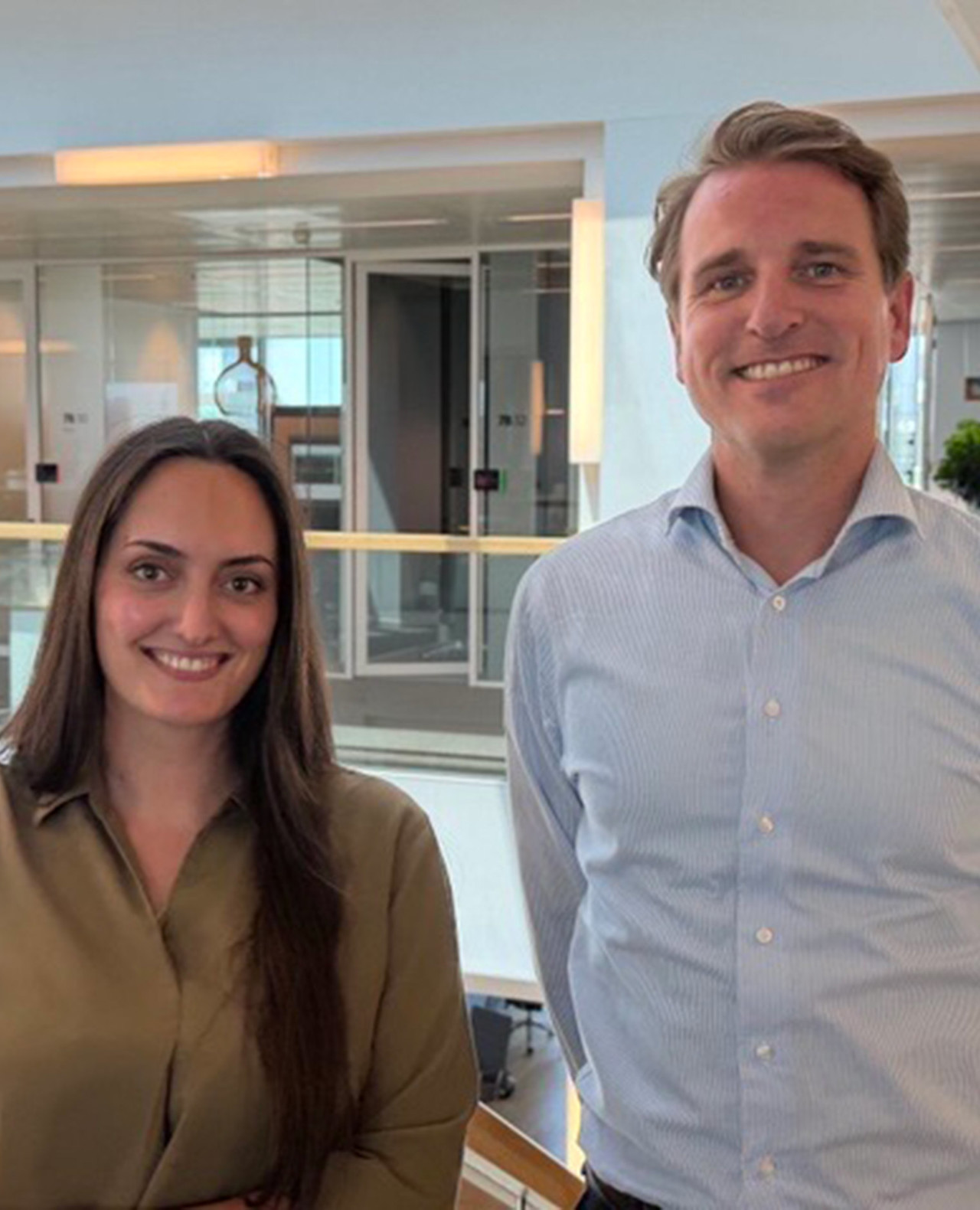
Navigating the murky waters of Scope 3 emissions has become crucial for sustainable investors. The data and regulatory challenges surrounding Scope 3 make this a daunting task. We sat down with Thijs Markwat, one of our leading Data Scientists, to delve into how novel metrics like ITR and CVAR are being integrated into portfolio construction models, particularly from a quantitative standpoint. Are these metrics truly revolutionary or simply a repackaging of existing knowledge? Markwat offers an insider’s perspective.

"We're particularly optimistic about Scope 3 upstream emissions. But Scope 3 downstream is more challenging due to factors like product end-of-life and usage duration. It will take longer to achieve an acceptable data quality comparable to the other scopes, but I believe we'll get there eventually.
We've compared multiple data providers to assess the quality of Scope 3 information. Interestingly, there's a good degree of consensus among providers for Scopes 1 and 2, and increasingly for Scope 3 upstream. That consensus is a strong indicator of data quality.
The main issue with carbon data is our lack of intuition for what the 'correct' values should be. In the financial world, an interest rate of 200 would immediately flag as incorrect. But when it comes to emissions data, especially Scope 3, we simply don't have that level of understanding yet."
We all want things. Phones, computers, three TVs in our homes
"Now for us, it's sometimes the latter. Scope 3 data requirements are often unclear and impractical, and the associated reduction targets can be so one-dimensional that the regulation doesn’t leave a lot of room to look at other measures. For example, in my own house, Scope 1 would mean heating it with natural gas. But my Scope 3 is so big, I could just leave my windows open while the heat's on, and it would barely make a dent in my total emissions. Scope 3 downstream is so dominant; it includes end-of-life products, product usage, things companies have less control over compared to any other scope.
We all want things. Phones, computers, three TVs in our homes. Should we only blame the companies? Sure, it’s on them to make things as clean and resource-efficient as possible. But we have to take responsibility as well. Adding the full Scope 3 to the equation really muddies the waters, as our consumption emissions are included as well. It becomes a stats game — just lowering Scope 3 without really picking the clean companies. You end up with some that just have high Scope 3 outliers, and that's it."
"Yes, exactly. For instance, we've recently started using Bloomberg data in some areas. They're leveraging AI, but that alone doesn't necessarily make it better. It's clear, though, that the industry is waking up. For example, Bloomberg's adoption of AI might push competitors to innovate, particularly those that might not have made significant progress on Scope 3 downstream data in recent years.
Regarding other factors that could help, one major thing is regulatory requirements. But the ultimate factor, I believe, is the quality of research from data providers.
Another party that could facilitate progress is the companies that report their own data. The problem is that the quality of reported data, especially concerning Scope 3, is often low. Entities like MSCI and Bloomberg override company-reported data with their estimates, which could be more accurate but will never surpass well-reported data from the companies themselves.
Good third-party auditing could be a game-changer. If carbon reports are not only audited critically, but also by auditors who possess the specialized knowledge to offer constructive feedback, then the exercise really moves beyond one of just ticking boxes.
訂閱我們的電子報,探索塑造可持續投資的趨勢。
“The short answer is, I don't know for sure. But let's delve a bit deeper. For the most part, yes, it's 'old wine.' A company with high emissions has a high ITR and high CVAR—no surprise there. However, there could be added value in these metrics, especially when you consider a company's plans. Current metrics like ESG and SDG scores might not capture these plans adequately. So if a company says, "We’re investing in technology that will significantly reduce our emissions from 2025," that's important information which might not be fully reflected in our current metrics. The question then becomes whether you want this data included in ITR and CVAR or as a separate metric.
Instead of juggling multiple percentages and variables, you can say, ‘Your portfolio is on a 1.3-degree trajectory
CVAR is also influenced by the regulatory environment. Take two similar companies in different countries: one with strict carbon rules and another with lax rules. The company in the stricter country will have a higher CVAR because it has to account for those regulations. This isn't captured in current metrics either. How significant are these effects? That's still up for debate. In summary, these new metrics can add value, but more research is needed to quantify it.
From a portfolio management perspective, if a portfolio manager has to optimize for both carbon emissions and ITR, it complicates things because they overlap significantly. It’s cleaner and more focused if the metrics used for restriction are uncorrelated. So, what we really want is a small set of variables that capture all the essential information about climate impact.”
“What I like about ITR is the way it frames the information—in terms of degrees. It simplifies the conversation. Instead of juggling multiple percentages and variables, you can say, ‘Your portfolio is on a 1.3-degree trajectory.’ It's not just about metrics; it's also about generating enthusiasm and the will to make a difference.”
本網站僅供《證券及期貨條例》(香港法例第571章)及其附屬法例所界定之專業投資者瀏覽及使用。 投資涉及風險。過往表現並不代表未來表現。本網站所載資料僅供參考之用,並不構成任何投資建議,亦非作出買賣任何證券或採納任何投資策略之要約或招攬。投資者不應僅憑本網站提供之資料作出投資決定,在作出任何投資決定前,應徵詢獨立意見(包括有關稅務影響之意見)。投資者應確保完全理解投資產品的相關風險,亦應考量自身投資目標及風險承受水平。投資乃閣下之個人決定。除非銷售投資產品的中介人已向閣下告知該投資產品適合閣下,並已解釋其符合閣下投資目標之原因,否則閣下不應投資。請參閱相關發售文件或其他法律文件,以獲取包括風險因素在內的進一步詳情。 本網站由荷寶投資管理香港有限公司發布,該公司受香港證券及期貨事務監察委員會(「證監會」)規管(中央編號:APU851)。本網站未經證監會審閱。 無法保證任何投資產品可實現其投資目標。概不就任何投資產品之表現或投資回報作任何聲明或承諾。投資的價值或會波動。本網站所載過往表現、推算或預測,均不應視作未來表現之保證或指標,且概不提供任何明示或暗示之保證。本網站內容建基於相信為可靠之來源,惟因應資料傳遞技術特性及須採用多項數據來源(包括第三方內容),故概不保證其準確性。所述觀點僅乃截至上述日期,或會隨市況變化而改變,可予更改而毋須另行通知。該等意見可能有別於其他荷寶投資專業人士之意見。因使用本材料或當中所載任何評論、意見或估算而引致之直接、間接或相應損失,荷寶概不承擔法律責任。荷寶並無責任更新本網站或任何網站內容。未經荷寶事先書面許可,不得複製、分發或刊發本網站任何材料。 除非另有說明,資料來源:荷寶。
警告 — 有不法分子在網站及社交媒體上冒用荷寳 了解更多