

Portfolio manager, Boston Partners
• Visie
Waarom Europese industriële sector meer aandacht verdient
Hogere uitgaven aan reële activa maakt de Europese sector industrie & dienstverlening steeds aantrekkelijker, zegt waardebelegger Chris Hart.
Auteurs

Samenvatting
- Europa profiteert van investeringen in infrastructuur en defensie
- Industrie & dienstverlening biedt aantrekkelijke waarderingen met goed groeipotentieel
- Sector biedt diversificatie weg van concentratierisico van big tech
Dit volgt op bezorgdheid van beleggers over de hoge waarderingen van Amerikaanse aandelen, die worden gedomineerd door big tech, waardoor veel beleggers op zoek gaan naar kansen elders. Chris Hart, portefeuillemanager van Robeco BP Global Premium Equities, ziet volop kansen in een aantal marktsegmenten buiten de VS – met name in Europa.
“Grote Amerikaanse techbedrijven zijn zowel duur als kapitaalintensief”, zegt Hart. “De kapitaaluitgaven – specifiek voor aan kunstmatige intelligentie (AI) gerelateerde investeringen – zijn in relatief korte tijd sterk toegenomen bij grote technologiebedrijven.”
“Het rendement op deze aanzienlijke investeringen moet nog blijken, net als het uithoudingsvermogen van beleggers om op die rendementen te wachten. Elke verzwakking van de winst of groei kan zorgen voor een snelle herwaardering van dit segment, zoals bleek in april 2025.”
Als toonaangevende waardebelegger hanteert Boston Partners een beleggingsbenadering die de tand des tijds heeft doorstaan en die erop is gericht fundamenteel solide bedrijven te identificeren die worden verhandeld tegen een aantrekkelijke waardering en een positief bedrijfsmomentum laten zien.
Hoewel de waarderingen in veel segmenten van de Amerikaanse aandelenmarkt boven het historische gemiddelde liggen, heeft het team van Boston Partners geen gebrek aan hoogwaardige bedrijven in het buitenland gevonden die aan hun criteria voldoen – met name binnen de Europese sector industrie & dienstverlening.
“In onze ogen staat de Europese sector industrie & dienstverlening op dit moment op het snijvlak van verschillende krachtige wereldwijde trends, van nieuwe initiatieven voor overheidsuitgaven tot structurele verschuivingen in technologie en toeleveringsketens”, zegt Hart.



Waarde vinden in markten met hoge waarderingen
Global Premium hanteert een consistente beleggingsbenadering die de tand des tijds doorstaat.
Impuls door defensie-uitgaven
“Dit geldt in het bijzonder voor het segment luchtvaart en defensie, waar hogere beoogde defensie-uitgaven en toenemende stimuleringsmaatregelen voor infrastructuur naar verwachting voor een aanzienlijke impuls zullen zorgen. Met de verwachting dat de NAVO-uitgaven van Europa en Canada oplopen van 1,7% van het bbp in 2022 en 2,0% in 2024 naar een toegezegde 3,5% voor ‘kernbehoeften van defensie’ in 2035, is de groeiruimte aanzienlijk.”
“Daarnaast zou een grotere allocatie van uitgaven naar in Europa geproduceerde apparatuur moeten helpen om regionale producenten te ondersteunen en een duurzamere vraag op de lange termijn op het hele continent te creëren.
“De aankondiging van Duitsland van een stimuleringsprogramma van EUR 1 biljoen markeert een historische breuk met het traditionele fiscale conservatisme van het land en onderstreept hoe de politieke consensus verschuift. Vergelijkbare trends zijn in opkomst in het VK en Frankrijk, waar vanuit twee partijen steun ontstaat voor investeringen in infrastructuur, defensie en groene technologieën.”
“Deze koerswijziging in overheidsbeleid vormt in bredere zin een krachtige rugwind voor industriële bedrijven, gezien de nieuw gevonden financiële vangnetten voor meerjarige projecten waarvoor kapitaalgoederen, ingenieursdiensten en bouwgerelateerde activiteiten nodig zijn.”
Figuur 1: Stijging van militaire uitgaven verwacht in toonaangevende Europese economieën
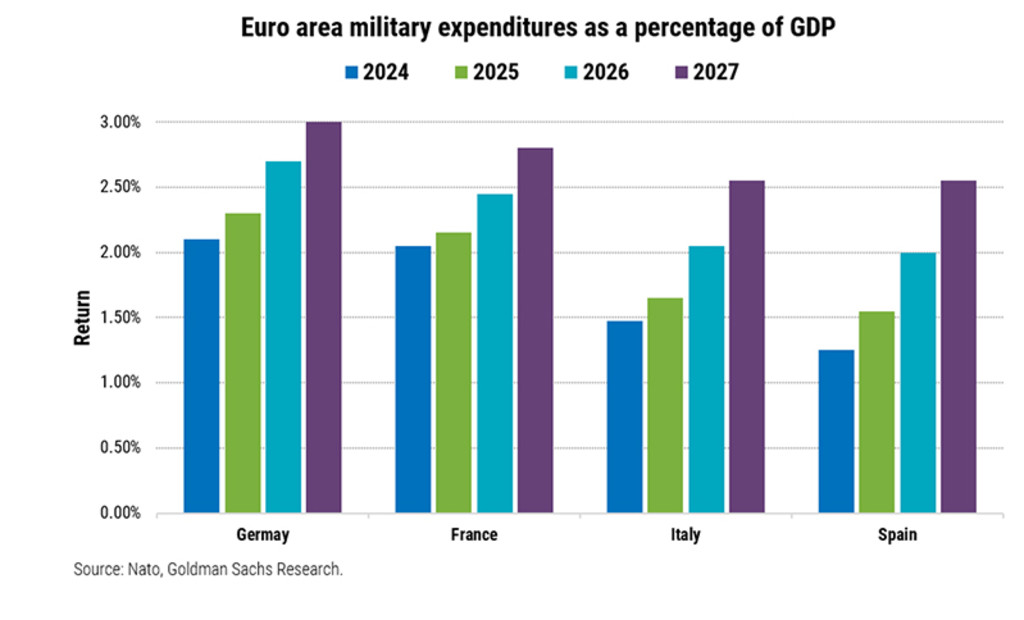
Bron: NAVO, Goldman Sachs, november 2025.
Profiteren van AI
De uitrol van AI stimuleert zowel het aanbod als de vraag voor industriële bedrijven. “Naast defensie- en infrastructuuruitgaven profiteert ook de Europese industrie voor elektrische apparatuur van veranderende vraagfactoren”, zegt Hart.
“De wereldwijde uitbouw van AI-datacenters verhoogt de behoefte aan geavanceerde elektrische systemen, terwijl de transitie naar nieuwe energieoplossingen – van integratie van hernieuwbare energie tot modernisering van het elektriciteitsnet – voor een extra laag van duurzame groei zorgt.”
“Deze trends creëren kansen voor bedrijven die zeer efficiënte energietechnologieën, geavanceerde componenten en modernere technologieën kunnen leveren. Tegelijkertijd veranderen automatisering en AI-tools de manier waarop industriële bedrijven werken.”
“Bedrijven die geavanceerde automatiseringstools, AI-gedreven procesoptimalisatie en digitale oplossingen voor ketenbeheer inzetten, behalen meetbare efficiëntievoordelen. Deze innovaties stroomlijnen workflows, verminderen administratieve lasten en verbeteren zowel de operationele marges als de wereldwijde concurrentiekracht.”
Figuur 2: Luchtvaart & defensie neemt toe als aandeel van Europese marktwaarde
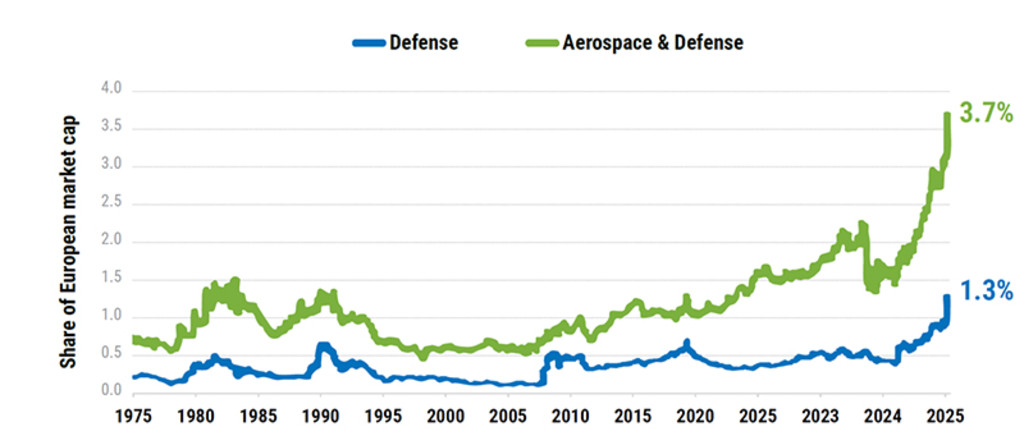
Bron: Goldman Sachs Research, “Defense spending to boost German and European GDP growth”, 19 maart 2025
BP Global Premium Equities D EUR
- performance ytd (31-8)
- 15,63%
- Performance 3y (31-8)
- 17,98%
- morningstar (31-8)
- SFDR (31-8)
- Article 8
- Dividenduitkerend (31-8)
- No
In het verleden behaalde resultaten bieden geen garantie voor de toekomst. De waarde van uw beleggingen kan fluctueren.Geannualiseerd (voor periodes langer dan een jaar). De performance is gebaseerd op de koers na aftrek van kosten.
Nog wat extra rugwind
Een veerkrachtige wereldhandel, hogere investeringen en goede kapitaaldiscipline zijn allemaal extra rugwind voor de sector. “Groei in de industriële sector vindt niet in een vacuüm plaats”, herinnert Hart beleggers. “De sector blijft nauw verbonden met de wereldhandel, kapitaalinvesteringen en infrastructuuractiviteiten – gebieden die de neiging hebben te versnellen tijdens perioden van macro-economische kracht.”
“Wij denken dat deze cyclische gevoeligheid, in combinatie met seculaire rugwinden, de sector goed positioneert voor groei op zowel korte als middellange termijn. Initiatieven voor reshoring van toeleveringsketens, de aanhoudende energietransitie en een gestage stroom efficiëntieverbeteringen versterken de onderliggende kracht van de sector.”
“Toch blijven het Amerikaanse handels- en tarievenbeleid een aspect dat nauwlettend moet worden gevolgd, maar de tot nu toe beschikbare cijfers wijzen erop dat de wereldhandel de hogere kosten van zakendoen met de VS goed heeft doorstaan.”
Op zoek naar echte waarde
Uiteindelijk komt het nog steeds neer op het selecteren van de juiste aandelen voor een beleggingsportefeuille. “Een belangrijk onderscheidend kenmerk binnen industrie & dienstverlening is kapitaalefficiëntie”, zegt Hart.
“Wij zoeken naar bedrijven die consequent een hoog rendement op geïnvesteerd vermogen realiseren, wat – in combinatie met een gezonde balans en een sterke ontwikkeling van vrije cashflow – niet alleen financiële veerkracht biedt tijdens neergangen, maar ook ruimte laat voor organische investeringen, aantrekkelijke aandeelhoudersrendementen en waardeverhogende overnames.”
Voor beleggers die zich zorgen maken over het toenemende concentratierisico in Amerikaanse aandelen, schetsen deze dynamieken volgens Hart een positief beeld van de Europese industriële sector.
“Gezien de structurele groeikansen in defensie en energie-infrastructuur – in combinatie met gedisciplineerde kapitaalallocatie en mogelijke efficiëntiewinst door automatisering – denken wij dat Europese industriële bedrijven een ondergewaardeerd opwaarts potentieel bieden tegen aantrekkelijke absolute waarderingen.”
Ontvang de nieuwste inzichten
Meld je aan voor onze nieuwsbrief voor beleggingsupdates en deskundige analyses.