
Strategist


• Einblick
US-Finanzministerium interveniert angesichts steigender Langfristzinsen
Die ausgeweiteten Rückkäufe des US-Finanzministeriums signalisieren wachsende Bedenken über steigende Renditen am langen Ende und einen Wechsel zu einem stärker interventionistischen Ansatz. Aber ohne Veränderung bei den grundlegenden Haushaltsbelastungen könnte sich die Wirkung dieser Maßnahme zur Eindämmung der Renditen als kurzlebig erweisen.
Autoren/Autorinnen


Strategist
Zusammenfassung
- Ausgeweitete Rückkäufe signalisieren stärkere Interventionen durch das US-Finanzministerium
- Eine Verkürzung der durchschnittlichen Laufzeit in der Finanzierung des US-Finanzministeriums wäre mit Kosten verbunden
- Fiskalische Belastungen dürften die Renditen am langen Ende hoch halten
Das US-Finanzministerium gab gestern (19. August) bekannt, dass es den Umfang seines liquiditätsstützenden Rückkaufprogramms für länger laufende US-Staatsanleihen auf das Doppelte ausweiten werde. Das maximale Volumen jeder Maßnahme wird von 2 Milliarden US-Dollar auf mindestens 4 Milliarden US-Dollar steigen. Wenn die Maßnahmen im derzeitigen Tempo fortgesetzt werden, könnten sich die Käufe auf Jahresbasis auf rund 66 Milliarden US-Dollar summieren. Das sind keine unbedeutenden Zahlen, weil die ausgeweiteten Käufe des US-Finanzministeriums effektiv etwa 15 % des Bruttoangebots von 20- bis 30-jährigen US-Staatspapieren entsprechen würden.
Rückkaufmaßnahmen sind nichts Neues. Sie werden seit einiger Zeit als aktives geldpolitisches Instrument zur Verbesserung der Liquidität älterer Anleihen verwendet. Ziel ist es, die Liquidität zu verbessern, um den Handel zu stützen und die Renditeaufschläge zu senken. Das Timing der Ankündigung ist jedoch bemerkenswert. Es hatte zuletzt keine erhöhten Renditeaufschläge bei älteren, vor längerer Zeit begebenen Staatsanleihen gegeben, und das Finanzministerium hatte erst vor zwei Wochen seine bisherigen Finanzierungspläne bestätigt.
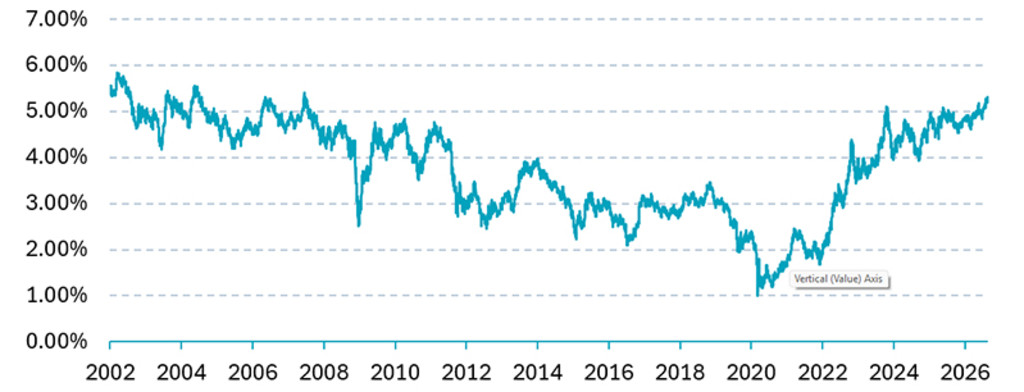
Die Ankündigung ist klar als Reaktion auf steigende Renditen von US-Staatspapieren zu verstehen: Die 30-jährigen US-Staatsanleihen hatten zuletzt den höchsten Stand seit 2007 erreicht (siehe Abbildung 1). Das US-Finanzministerium möchte also wahrscheinlich die Botschaft senden, dass ihm die Höhe der Renditen am langen Ende wichtig ist und es bereit ist, zu reagieren, um den Renditeanstieg zu begrenzen. Künftig dürften es weitere stärkere Interventionen durch das US-Finanzministerium geben.
Als Reaktion auf die Ankündigung legten Anleihen mit längerer Laufzeit zu, und die Renditekurve der US-Staatspapiere wurde deutlich flacher. Dabei verringerte sich der Spread zwischen 30- und 2-jährigen Anleihen an diesem Tag um 10 Basispunkten (Bp.) von 112 Bp. auf 102 Bp.
Abbildung 1: Rendite 30-jähriger US-Staatsanleihen
Die bisherige Performance bietet keine Garantie im Hinblick auf zukünftige Ergebnisse. Nur zur Veranschaulichung. Quelle: Bloomberg, August 2026
Was könnte das US-Finanzministerium sonst noch tun?
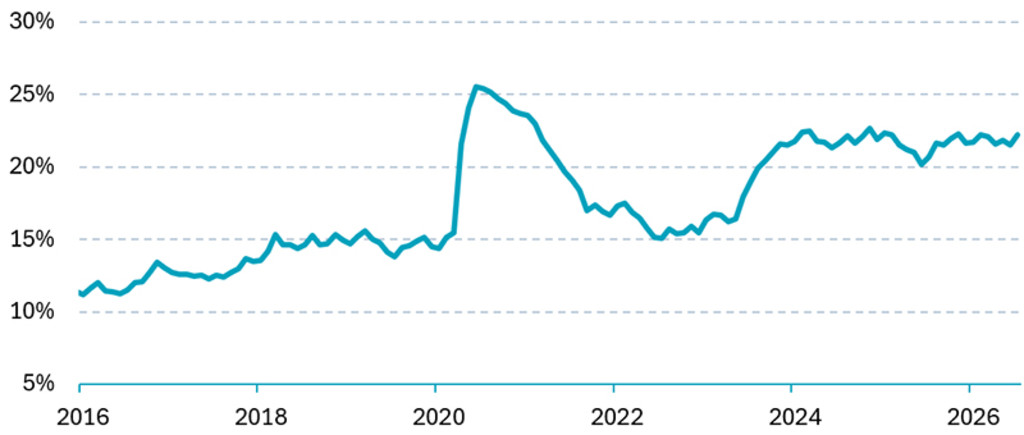
Eine wichtige Einschränkung besteht darin, dass das Finanzministerium diese Käufe auch finanzieren muss, was höchstwahrscheinlich durch zusätzliche Emissionen von Treasury-Bills erfolgen wird. Diese Strategie verfolgt das Finanzministerium seit 2023 (siehe Abbildung 2).
Die Frage ist also, was das US-Finanzministerium sonst noch tun könnte, um den Anstieg lang laufender Renditen zu dämpfen. Ein möglicher nächster Schritt wäre eine Änderung in der Zusammensetzung neu begebener Schuldtitel. Das US-Finanzministerium bestimmt, wie viele Staatsschuldtitel mit den jeweiligen Laufzeiten begeben werden, und könnte das Angebot länger laufender Anleihen verringern. Eine solche Änderung könnte bei der Veröffentlichung seiner Emissionspläne im Rahmen der vierteljährlichen Refinanzierungsrunde im November angekündigt werden.
Eine Verkürzung der durchschnittlichen Laufzeit der Finanzierung wäre mit Kosten verbunden. Durch ein kürzeres Laufzeitenprofil würden sich die Leitzinsen der US-Notenbank Fed stärker auf die Zinszahlungen des US-Finanzministeriums auswirken. Dies könnte auch als zusätzlicher Druck auf die Fed wahrgenommen werden, auf niedrige Zinsen hinzuwirken. Außerdem käme es zu einem stärkeren Anschlussfinanzierungsrisiko bei den Schuldtiteln.
Abbildung 2: Anteil der US-Treasury-Bills an den ausstehenden US-Staatsschulden (in %)
Quelle: US-Finanzministerium, Bloomberg, August 2026
Euro Government Bonds D EUR
- performance ytd (30-9)
- -4,41%
- Performance 3y (30-9)
- 1,91%
- morningstar (30-9)
- SFDR (30-9)
- Article 8
- Ertragsverwendung (30-9)
- No
Frühere Wertentwicklungen, Simulationen oder Prognosen sind kein verlässlicher Indikator für die zukünftige Wertentwicklung.Annualisiert (für Zeiträume, die länger als ein Jahr sind). Die Performance-Zahlen sind abzüglich Gebühren und basieren auf den Transaktionspreisen.
Rückkäufe sind nicht mit der „Operation Twist“ gleichzusetzen
Auf den ersten Blick ähneln die Rückkäufe des Finanzministeriums möglicherweise der „Operation Twist“1 . Es gibt jedoch einige wesentliche Unterschiede. Erstens war das Volumen der „Operation Twist“ der Fed deutlich größer. Mit mehr als 600 Milliarden US-Dollar übertrafen die Käufe und Verkäufe der Fed in den verschiedenen Laufzeiten die aktuellen Käufe des Finanzministeriums bei Weitem. Zweitens hat das Finanzministerium im Gegensatz zur Fed nicht die Möglichkeit, neue Liquidität zu schaffen, und muss diese Käufe finanzieren, wie bereits erwähnt.
Außerdem scheint es gewisse Abstimmungsprobleme zwischen den geldpolitischen Präferenzen des neuen Fed-Vorsitzenden Warsh und den Maßnahmen des US-Finanzministeriums zu geben. Warsh ist dafür bekannt, dass er eine Verkürzung der Duration in der Fed-Bilanz bevorzugt, und er hat eine Taskforce eingerichtet, um die Bilanzpolitik erneut zu überprüfen. Diese Taskforce könnte möglicherweise zu einer Verkürzung des Laufzeitenprofil der US-Staatsanleihen in der Fed-Bilanz durch Reinvestitionen in kürzer laufende Staatsanleihen führen.
Die zugrunde liegenden Belastungen bleiben unverändert
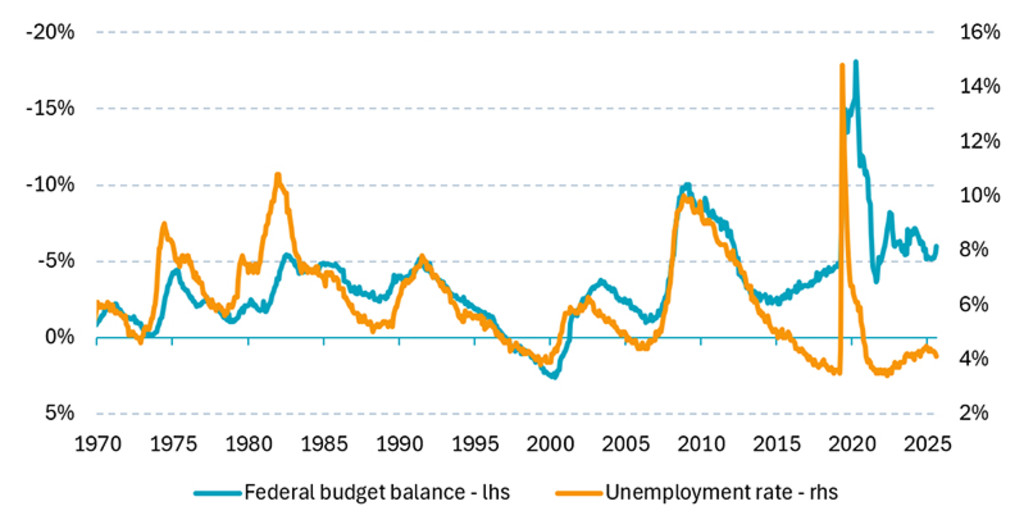
Wir sind der Ansicht, dass sich Interventionen des Finanzministerium kurzfristig auf die Renditen auswirken können. Die entsprechenden Maßnahmen gehen jedoch nicht auf die grundlegende Ursache dafür ein, dass die Renditen von US-Staatspapieren am langen Ende überhaupt so hoch sind. Die Unsicherheit rund um das Thema Inflation hat zugenommen, und die US-Regierung arbeitetet mit einem hohen Haushaltsdefizit, das für 2026 auf 6,3 % des BIP geschätzt wird, obwohl Wirtschaft und Arbeitsmarkt relativ stark sind. Es gibt keine Anzeichen dafür, dass dieses hohe Defizit bald zurückgefahren wird. Die US-Staatsverschuldung hat gerade die Marke von 40 Billionen US-Dollar (123 % des BIP) überschritten und dürfte auf absehbare Zeit weiter steigen.
Für unsere Positionierung bedeutet dies, dass wir wegen möglicher Spillover-Effekte von den US-Renditen auf andere Anleihemärkte bei Staatsanleihen mit längerer Laufzeit vorsichtig bleiben. Wir halten Steepener-Positionen in Märkten wie britischen Gilts und deutschen Staatsanleihen.
Abbildung 3: Ein angesichts der Lage am Arbeitsmarkt außergewöhnlich hohes Defizit
Quelle: US-Finanzministerium, BLS, Bloomberg, August 2026
Fußnote
1Die Operation Twist war ein Programm der Federal Reserve in den Jahren 2011 bis 2012, bei dem die Fed kürzer laufende US-Staatspapiere verkaufte und länger laufende Wertpapiere kaufte, um die langfristigen Zinsen Verlängerung ihrer Gesamtbilanz zu senken.
Was gibt es Neues im Credit Investing?
Bleiben Sie mit unserem Newsletter über die neuesten Entwicklungen im Credit Investing auf dem Laufenden.