
Portfolio Manager
• Podcast
Podcast: Searching for gems in the credit markets
Credit markets usually do not make the headlines, as the big themes of the day, such as AI, are perhaps less relevant to fixed income investors. However, they quietly shape how investors generate income and manage risk. Credit investors Evert Giesen and Jan Willem Knoll discuss the state of the markets and their favorite segments in this podcast episode.
Auteurs




Portfolio Manager



Equity Investment Specialist
This podcast is for professional investors only.
Jan Willem Knoll (JWK): I myself have a background in the financial space, but I've never seen the banking sector in such a good shape as especially the European banking sector.
Erika van der Merwe (EM): Credit markets don't usually grab headlines. Instead, they quietly shape how investors own income, manage risk and diversify portfolios. And as we enter 2026, the backdrop for this is an interesting one.
Welcome to a new episode of the Robeco Podcast.
EM: While yields are still attractive, spreads are tight and uncertainty from geopolitics to policy is very much part of this investing landscape. What does all of this mean for credit investors today? Where are the opportunities and how should portfolios be positioned in this environment?
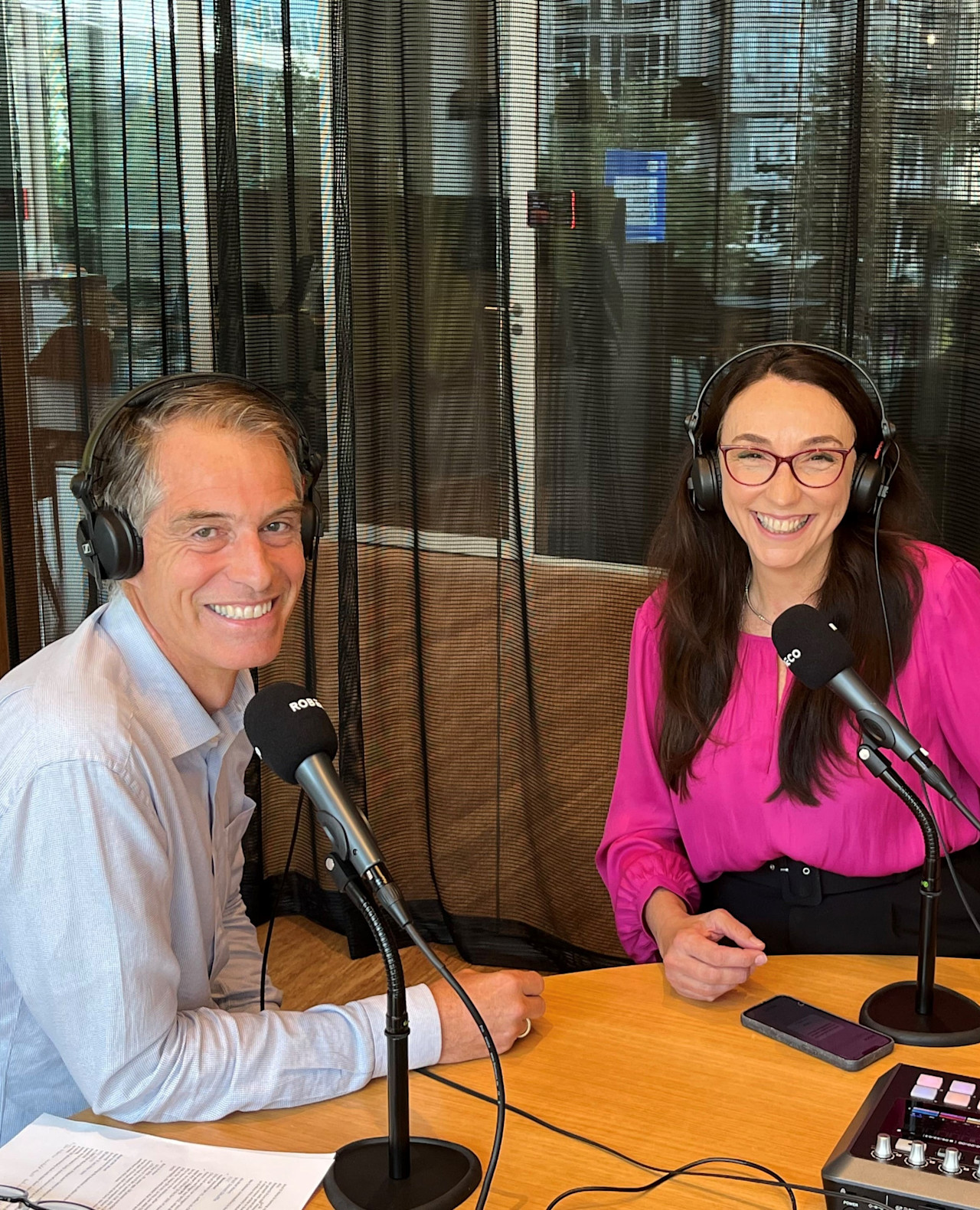
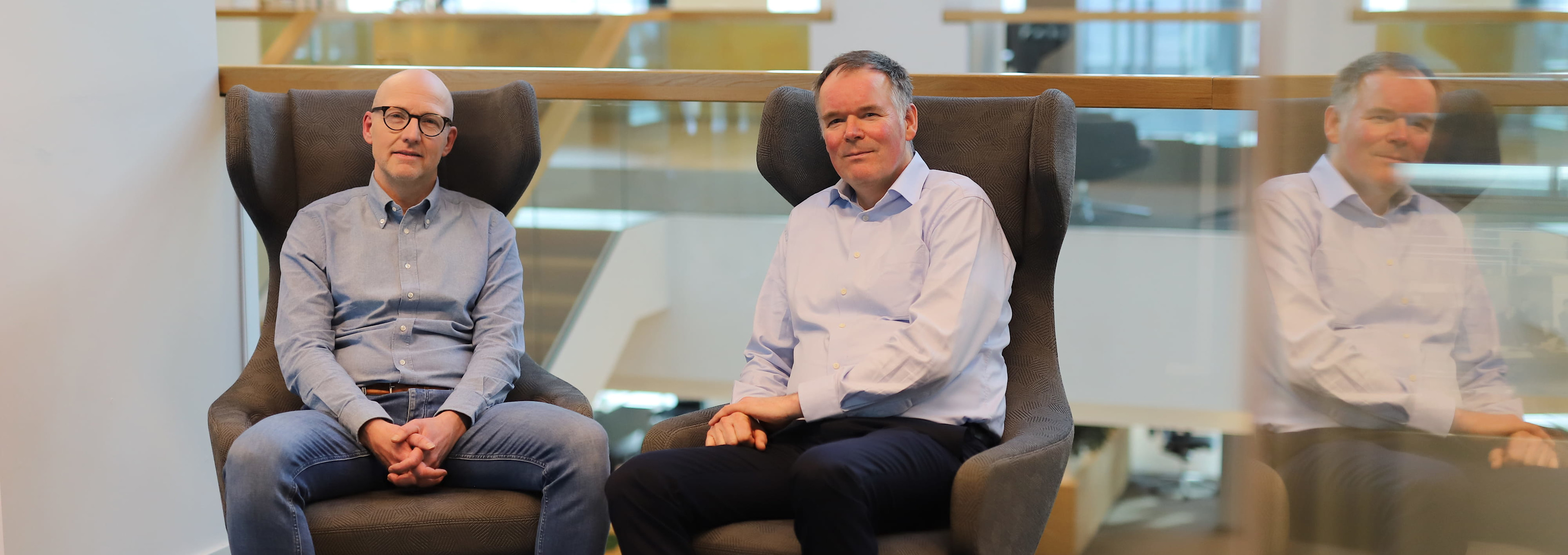
Well, I'm joined by Evert Giesen and Jan Willem Knoll, portfolio managers of the Robeco Credit Income strategy and together they invest across global credit markets with a focus on quality, diversification and income. Evert and Jan Willem, welcome. Great to have you here in our studio.
Evert Giesen (EG): Nice to be here.
JWK: Thanks, Erika.
EM: So now as we start 2026, you've heard my brief assessment. So how do you describe the current environment for investors? Are you nervous? Are you excited? And what feels different today compared with a year ago?
EG: I think markets and investors have got used to, say, some volatility from the policy front. So last year we've seen quite a lot of initiatives from different politicians which from time to time shook markets. The markets have become quite used to that. If you look at the macro front, then things are pretty okay at the moment for credit markets. So we're looking at an environment with global growth, which will probably be around trend growth for the global economy, inflation. In some markets it's still a little bit over central bank targets but inflation is coming down. So that's also giving central banks some headroom to cut rates. So at least for the short or intermediate term, it's a pretty okay environment for credit markets.
JWK: And if I may add to that, financial conditions are pretty easy. The ECB has been lowering rates last year quite a lot. The Fed has lowered rates three times in the second half of last year. So if you look at financing conditions they have been eased quite a lot over the last let's say 12-18 months. So that will also help markets in general.
EM: So you sound relaxed. Your body language certainly is relaxed. Now you often frame your investment approach using a framework of valuations, fundamentals and technicals. If we look at valuations, with credit spreads pretty tight right now, do you think parts of the credit markets are becoming complacent?
EG: You could say that markets at some point are perhaps complacent for some risks. But the thing is, we will only know that in hindsight if the risks have materialized. There's also a big probability that the risks will not materialize. If you look at overall valuations on an index or market level, then we are at tight levels. So in our perspective, there's not a lot of potential for additional tightening.
But on the other hand the risk that we will see wider spreads is also relatively limited given the solid fundamental environment that we are in. And that means that we expect 2026 to be an environment where returns will be different by carry. So simply the spread income that you will generate in your portfolio. If you look at different parts of the markets then there are still parts in the high yield market, a better quality part of the high yield market. And also in emerging markets where you still can earn pretty attractive carry in your portfolio.
EM: Okay. So Evert the point you're making what I'm hearing is if you look at the market overall, that's what the metrics are telling you. Tight spreads. But it's really about looking a little closer and looking, finding those opportunities.
EG: Exactly.
EM: Jan Willem, perhaps to ask you on the fundamentals, because this is clearly also important: corporate balance sheets, quality of earnings. Are you finding some gems still?
JWK: Yes, absolutely. And maybe we cannot stress that enough: macro fundamentals are really strong. And also most corporate sectors in the financial sector in particular bottom up, they look very strong. So, for us this is a very nice environment to look for interesting, let's say, alpha opportunities because they're out there. They're still rising stars.
There are certain sectors which are in less good shape, the chemical sector for example. But even there we see at more stressed valuations, we see interesting opportunities but also in sectors – financials is a very important sector for us at the moment. A sector, [where] we've seen a lot of rising stars, especially in the European banking space, but also in the emerging markets: balance sheets are strong, credit quality is extremely strong. Backed by a strong macro environment. So we see lots of opportunities basically across the globe.
EM: To ask you the flip side, in which sectors or regions are you seeing some early signs of stress or distress, if at all?
JWK: There are segments we are more cautious on that have to do with chemicals. But that's some structural trends without going into detail that have to do with China. There's lots of competition, price competition, the sector which had too much capacity over recent years, so that's very sector-specific, I would say private credit, but now we're talking about risks. But private credit is an area we watch closely.
We're not overly worried, but we do expect more idiosyncratic risk there. On the other hand, BDCs – that's a specific segment within the private credit space – is, let's say, a sub segment which has been very volatile. But also there you have good and bad companies. So even there, we might in ‘26 see backed by, let's say, or caused by volatility more interesting opportunities. Currently we don't invest in those, but those might be interesting opportunities for us going forward.
EM: Just the acronym if you can explain that?
JWK: Business – sorry. Business development company. So they're basically mostly based in the US and they lend to small and mid-cap enterprises in the US. They're designed to do that. And they have been very volatile with us was last year. There have been lots of market concerns around those companies. We have avoided them until now. But that might be an interesting segment going forward.
EM: Okay. Now just picking up some of what you've said, speaking by region: US emerging markets, etc. Your positioning by region Evert – is that regional exposure ultimately because of bottom up selection or do you have an upfront allocation by region?
EG: We don't have a say upfront, top-down regional allocation. We have a top-down framework for overall markets. And that more or less points us to where the potential bottom up opportunities are. So if our top-down framework indicates that emerging markets are relatively attractive from a global perspective, and then we will start looking for bottom-up opportunities in emerging markets. In the end, everything we invest in is a bottom-up decision because in credit you want to do your homework. Avoiding losers is very important in investing in credits.
EM: I understand that's one's motto for life if you are a credit portfolio manager.
EG: You have to realize that upsides in credit markets is relatively limited. So you get your coupons and perhaps some spread tightening. But if you are wrong in an investment case, you can lose your investment. So that can have a big impact on your portfolio. So avoiding losers in your portfolio already will generate a lot of additional returns for clients.
EM: Right. Jan Willem, looking now at the emerging market region, as you've now mentioned – but we know on the equity side, emerging market equities had a stellar year, really finally outperforming. Was there a similar momentum in emerging market credits?
JWK: Not so much as we've seen on the equity side, but fundamentals – and sovereign fundamentals to start with – let's say broadly in emerging markets are strong. For us the more interesting areas have been the EMA region. So Eastern Europe, Africa to a certain extent, and also Latin America. So we have owned companies like banks, telco companies, tower companies. So we have seen opportunities.
Asia is an interesting area. Although there we found valuations more stretched especially on the IG side. And China of course is a special case where we have been more cautious. But there are lots of opportunities. As you know we run a benchmark, unconstrained strategy so we can invest across sectors, industries, rating classes, and countries.
EG: One of the nice things we also played in emerging markets is in the commodity space. So mining companies. Towards say mid-2025, we became a little bit more constructive on global growth prospects for the global economy. And that's an environment where also commodities will do relatively well. We added exposure to a number of mining companies in the emerging market space. And there we have also seen that aspects have tightened by quite a bit.
EM: So you've really seen a payoff from that.
EG: Look for example at the copper price that is reaching record levels. And mining companies active in the copper industry are benefiting from that.
EM: The other aspect really that was noticeable last year, continuing the previous year's theme, was the AI story. And that's dominating the investment conversation. Is this mostly an equity story too? Are you also seeing opportunities for yourselves?
EG: Let me start. I don't want to sound like a grumpy credit investor, but –
EM: We would never call you that.
EG: No, no, but in credit, it's about protecting your investment and a little bit excess return. If you look at AI, then there are big growth stories. So as an equity holder you will benefit tremendously if you invest in the right opportunities. As a bond investor, you could invest in a similar, in the same company. But what you will get is your coupon, not a big upside.
If you look at, say, 10 to 15 AI companies, then perhaps 1 or 2 of those will be the big winners. The others will simply disappear. So for a credit investor, those are not really the type of investments that you want to invest in. You don't want to invest in the big high potential upside. But also a pretty high likelihood that there will be a big downside. So AI is not a team that we play very actively in our portfolios.
EM: You're going somewhere with that. But I just want you to interrupt this point. If we're seeing all these announcements by these tech AI companies on capex expansions, a lot of it's going to have to be debt-funded. So are you saying you're not necessarily going to look there?
EG: Only when relative value is there. So you see some of the big tech companies, issuing debt for AI investments at say 40 to 50 basis points perhaps. That's simply not attractive enough for the credit income strategy. If a name sells off at a certain point of time, and spreads are approaching, say, 150 to 200 level and the underlying business is solid, then it becomes an interesting basis investment case. So there our more or less contrarian approach steps in. If markets start to worry about things, then we think things start to become interesting. Start doing our homework. And then we could invest in those cases.
EM: So Jan Willem I think Evert was going somewhere with that story. But I would imagine around the AI theme, there's so many other related sectors and components that might come up as opportunities that do appeal to your more pedestrian approach to investing.
JWK: “Pedestrian approach” [EM laughs]. Now, AI has a big impact, of course, on the economy, first of all. There's a lot of capex relating to AI, so that at the moment it benefits US growth a lot. It will have an impact on sectors, positive and negative. It will help productivity in certain sectors. Even European banks, by the way, are named as an AI beneficiary because there's still a lot of human tasks, repetitive tasks which could be taken out by more AI programs.
Partly the investment case for European banks is more equity driven, but also helps credit investors is just lower costs as well. So rising profitability, not only on the revenue side but also cost by lower cost. The winners and losers software is an area where we will be more cautious. And data centers and other, let's say, AI capex-related companies, they will issue probably a lot of bonds next year that might reprice the whole market negatively, so wider spreads. As Evert mentioned, those might be opportunities for us to look at. There will be a lot of volatility and excitement I think, following this whole AI theme for us, and it might be more indirect and direct, but lots to do for us I think.
EM: In summary, what would you say are the top three sectors that are well represented or an overweight representation in your portfolio?
JWK: Banks, first of all, that is by far the largest sector. And that is because currently we see very strong fundamentals as mentioned there. As you know, I myself have a background in the financial space, but I've never seen the banking sector in such a good shape as especially the European banking sector. As we see today, and that is from every angle you could look at it: be it credit quality, capital, liquidity, funding, profitability. Even for next year, we see rising profitability for European banks, driven by steeper yield curves, cost control, and very low credit costs. So that looks very solid.
And sticking to the financial theme, also insurance is still a pretty large sector for us. Also there – but that's a bit more [of a] longer-term theme – their solvency regulations have changed over the years, with a regime, especially in Europe again, with a regime called Solvency II that has in our view made insurance companies – just make or help them become better risk managers. So balance sheets also profitability looks much better than it used to be, let's say, 20 years ago when I started looking at financials.
EM: Evert, one more sector?
EG: Sectors like telco and telecom and utilities are also attractive. So what we see there a lot is the issuance of so-called hybrid bonds that are subordinated bonds are often issued by investment grade companies. And you get quite an attractive spread premium versus a normal bonds for those type of companies. So over the past one or two years, we have seen quite some issuance in the telco space and utility space.
And actually we also expect that in the utility sector because of all the AI investments, utilities need to more invest more in electricity generation. So we expect more issuance in that part of the market. So there could be very nice hybrid opportunities in the utility sector going forward.
And basic industries – so we talked a bit about mining, and that's part of the basic material. So that's one of the names that we still like. And chemicals. So we've been very cautious on that sector. But things are starting to turn in that part of the market There's not a lot of feasibility yet on margin improvement, but we see here and there that companies start to take out some capacity. So it's time to start looking at that sector.
EM: And then perhaps asking you the other end of the spectrum question, what are you avoiding? Or what's suggesting too much risk compared with what investors are earning? Jan Willem?
JWK: Currently, if I start again with financials that is currently still private credit. So we are cautious with for example insurance companies, which have a large exposure to private credit. And again, we're not we don't see private credit as a systemic risk. But we do we do expect idiosyncratic risks. So that's where we look very carefully. Other sectors we cautious with is, as I mentioned, chemicals, although we also see specific bottom-up opportunities in that sector. Valuations are tight as Evert mentioned. We are a bit more cautious with longer duration bonds. So if spreads widen then the price volatility of long duration bonds is higher. So in this instance that would be then a negative price movement.
We're looking more for names with a decent spread a bit lower in the quality spectrum but still high quality according to our definition. So high quality for us would be let's say what we typically call the five Bs: triple B and double B companies which are still very high quality but also offer decent spreads. We're looking for example in the double B space for shorter maturity, but then more spready names, or names would generate a decent income with low price volatility.
EM: Got it. Evert, perhaps a more philosophical question from an investor perspective, what we've seen over the past year with really US policy becoming much more adventurous and unpredictable. It's changing the rules of investing. And so it seems to me, looking at it from the outside. Is that how you've experienced it? Have you had to adapt and adjust your approach to things?
EG: No. Our approach has always been contrarian. And actually that approach worked pretty well in 2025. So what we saw in April when, say, all the tariffs were announced, we saw a huge spread widening. And our view was in the end this will not work. So we used that opportunity to start adding exposure or credit risk to the portfolio. So an environment where there is volatility then it can either be from something like Covid or a political regime where it's a little bit less unpredictable. That's an environment where a contrarian investment strategy actually works.
JWK: It's not always – those opportunities are not always there. But that is a very natural way to look at markets. But sometimes consensus is also very, very right.
EM: And then on a personal note, we always teased you as credit investors and apologies because I teased you today, but what still gives you a kick as a credit investor Evert?
EG: Oh, I was hoping that Jan Willem would get that one.
EM: You thought that would get past you [laughter].
EG: What's very nice about this strategy is that we can invest globally in all kinds of markets, so there's a lot of opportunity. And what is nice is to have the right bets in your portfolio. So actually make additional performance for the strategy. And that at least gives me a lot of energy.
EM: Yes. Jan Willem, I'm interesting in your career how you've shifted. You were an analyst for a very long time, a senior analyst moving across to a portfolio manager position. Have you experienced that? And indeed, what gives you a kick now?
JWK: I also moved from equity to credit. So yes, I've done several things. Now what gives me a kick: as Evert said, I mean I love looking at markets. I love looking at bottom-up analyzing companies. And the fun there is apart from following themes which are very interesting I guess also to non-investors, it's also to implement bets and to have a few and especially of course when that few turns out to be the right few and especially when it has been a contrarian view. That is just very nice that that gives a lot of energy. So the drive to perform to generate alpha, it has always been there. And I think that's also why I enjoy doing this strategy with Evert because he has exactly the same drive.
EM: Jan Willem, Evert, I've loved talking to you. Thanks so much for your time.
Both: Thank you.
EM: And thank you to listeners. If you've enjoyed this episode, please subscribe and share the podcast link within your network. Stay tuned for more investment perspectives in our next episode. This podcast is available on all major podcast platforms and on the Robeco website. Until next time.
Thanks for joining this Robeco podcast. Please tune in next time as well. Important information. This is marketing material intended for professional investors. Capital at risk. The podcast was brought to you by Robeco Institutional Asset Management, a Dutch investment management firm located in Rotterdam, the Netherlands. Robeco Institutional Asset Management B.V. has a license as manager of UCITS and AIFS for the Netherlands Authority for the Financial Markets in Amsterdam. In the US, this is brought to you by Robeco Institutional Asset Management, US, Inc., an investment advisor registered with the US Securities and Exchange Commission.
Credit Income FH EUR
- performance ytd (30-9)
- -1,79%
- Performance 3y (30-9)
- 5,35%
- morningstar (30-9)
- SFDR (30-9)
- Article 8
- Dividenduitkerend (30-9)
- No
In het verleden behaalde resultaten bieden geen garantie voor de toekomst. De waarde van uw beleggingen kan fluctueren.Geannualiseerd (voor periodes langer dan een jaar). De performance is gebaseerd op de koers na aftrek van kosten.
Beschikbaar op