

Portfolio Manager

• Podcast
Marchés émergents, risque de concentration et évolution de l'investissement quantitatif
Les marchés émergents sont souvent considérés sous l'angle de la géopolitique, de la croissance et des valorisations. Mais pour les investisseurs quantitatifs, une autre question revêt tout autant d'importance : comment les modèles systématiques doivent-ils évoluer à mesure que les marchés eux-mêmes changent ?
Auteurs




Client Portfolio Manager
Dans ce podcast, nous examinons comment les investisseurs quantitatifs abordent les actions des marchés émergents, pourquoi cette classe d'actifs reste structurellement sous-représentée dans les portefeuilles, et comment les innovations en matière de signaux, de données et de construction de portefeuilles peuvent aider à s'y retrouver dans un paysage d'investissement plus concentré et plus complexe.
This podcast is for professional investors only.
Jan Sytze Mosselaar (JSM): In quant, in total and DM and EM. And now I'm going to throw some numbers at you. In total we have nearly 200 portfolios. We have 140 billion in assets under management in euros. And we have a total investment universe DM and EM of almost 8000 stocks. So if you put that together, you can imagine it's a big ship that we have to navigate from day to day.
Welcome to a new episode of the Robeco podcast.
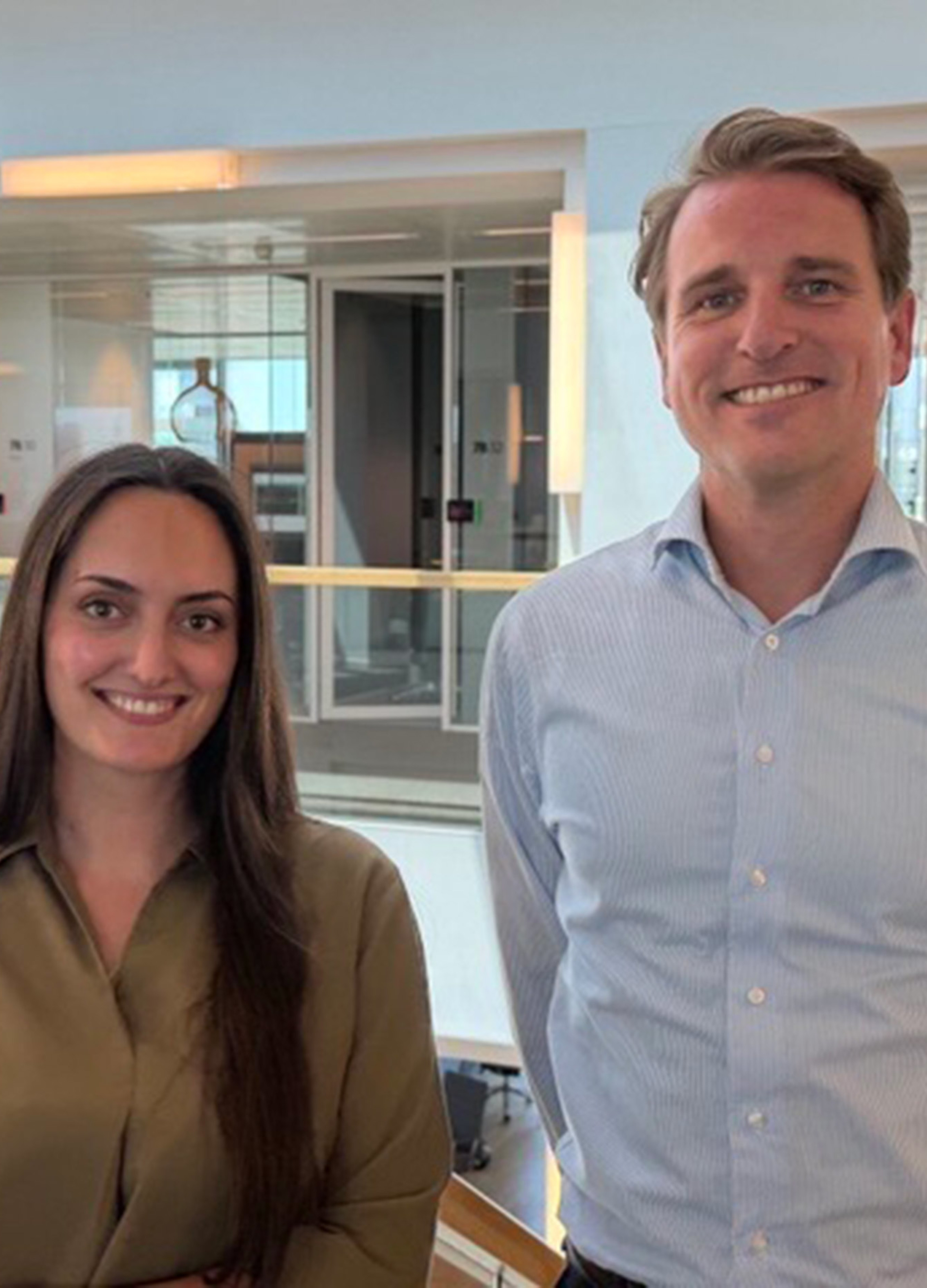
Erika van der Merwe (EM): Emerging markets are often discussed through the lens of geopolitics, economic growth and valuations. But for quantitative investors, some of the key issues today are how quant models need to adapt as markets evolve and what innovation is needed to invest systematically in emerging markets equities. So to explore these questions and more, I'm joined by Dijana Kostic. She is client portfolio manager in Robeco’s Quant client portfolio management team, and Jan Sytze Mosselaar, who is portfolio manager in Robeco’s quant equity capability. Welcome both.
Dijana Kostic (DK): Hello. Thank you for having us.
EM: Well, to set the scene, Diana, how does a quant investor look at emerging market equities? We've had many discussions in the studio on fundamental emerging market equities. So of course your life is quite different.
DK: I think the easiest way to explain this is more to contrast it more versus what our fundamental colleagues do.
Because when you look at fundamental managers, they of course look at it top down. So they first look across emerging markets. What are the trends? Which countries are interesting to invest in? And then from there they actually move on to the different companies. Whereas we are kind of more of a mirror of that. We first look at the entire pool of opportunities that are out there in the emerging market universe, and from there, we apply our own proprietary signals and then try to see, okay, what are the opportunities in there? And those signals are essentially the ones that we use to build a systematic strategy. And we do that in a repeatable way, very disciplined as well. And I think that's also a very big advantage of having a quant strategy, because it's so disciplined and it's unbiased as well. We are not married to stocks, so we don't get emotionally attached to them. So it's all of course very quantitative. And the beauty of quant is also that on a regular basis you get a new fresh portfolio with new opportunities. So if certain stocks that we had in the portfolio over the past couple of months are not delivering positive alpha anymore, we don't see that the signals are pointing towards those – they're actually pointing towards different stocks – you get a fresh portfolio and that just happens on a continuous basis.
EM: So that's what your world looks like. Jan Sytze if I could ask you, we’ve seen a resurgence in interest in emerging market investing and particularly in equities. It still is structurally under owned by institutional as well as retail investors. From your quantum perspective why do you think that's the case?
JM: So when you look at the valuation, there's still quite a big valuation gap. Also, when you look long term, you have these big waves of DM versus EM outperformance. I think we could be at the outset of a long period of emerging markets outperformance. So what we look at with our quant models, we do see that a lot of emerging market stocks are quite attractively valued still, even in the technology space. So we do find still a lot of stocks that are very attractive despite the recent bull market, because you could get fear of heights in these environments. But if you look longer term, emerging markets are still very attractively valued versus other parts of the world.
EM: Maybe a last point on this. What are you hearing from clients, Dijana? And what are your clients doing when it comes to emerging market quant investing?
DK: So the interest right now is huge, and it's quite a different shift from what we just discussed. Of course, what we've been seeing is that, I think the first reason is pretty simple: EM has performed really well over the past couple of years. It has had a very strong run, especially if you compare it over the history. And what we've been seeing is that there have been quite tremendous flows in Robeco. Also within the emerging market quant strategies, flows has been really strong. And of course, as Jan Sytze already mentioned, we see very attractive valuations. The opportunities are there, the growth expectations are really high. And now you can get also exposure to tech stocks that are offering this growth, but at much cheaper valuations that you would have in developed markets. So it's a very attractive alternative than just to go to DM.
EM: But Jan Sytze, nevertheless it's looking increasingly as though that concentration phenomenon is quite clear and strong in emerging markets. Increasingly, it feels like this is still an AI and tech story.
JSM: Yeah. It's true. And of course, in DM this has been the case for many years already with the Magnificent Seven dominating the S&P 500. But also in EM there’s no denial that emerging market index has become very skewed towards the tech stocks. If you look at the technology sector, it's now more than 40% of the index. Three names are more than 30% of the index. So yeah you could say it's become crowded. It's become more concentrated. There is some truth in that. Yeah. At the same time, not all tech stocks behave in the same way. They all have their different place in the AI or tech value chain. Furthermore, we have a very broad investment universe. We cover around 3000 emerging market stocks. So emerging markets for us is really a quant candy store. So we have indeed the large number of technology stocks. But for us all these 3000 names are opportunities to take a small overweight or a small underweight. So, albeit a small stock or a large stock, they're all important to us. Nevertheless, the heightened index concentration that you see and also to some extent, some regulatory constraints where, for example, one stock has become so large in the index that most active funds have to underweight it. Of course, I think it presents a challenge for every active investor. But we as quants, we have such a broad investment universe, so we can always look for these alternatives to these big index weights and look for other attractive alternatives. Well, the model does that for us and also finds a lot of attractive Asian hardware stocks that has gone that have performed phenomenally this year. So basically we can diversify beyond these big three index names.
EM: I would imagine then that your sector allocation is the result of bottom up or model-determined stock picking. But can you tell me at the IT, at the tech level where the model currently would be overweight or underweight tech?
JSM: Yeah, indeed. So bottom up stock selection is the main driver of all our quant strategies. So we prefer to have limited country and sector tilts. If you currently look for our most active EM strategy, we have a slight overweight in Korean tech companies and some underweights in some of the Taiwanese tech companies, but overall it's quite balanced. So if you look at the overall Asian hardware ecosystem, we have quite a balanced exposure to that. But the stock selection within that has been pretty successful.
EM: Diana, you said earlier you love looking at history as a quant. Is this also a potential weakness or downfall for quant investing if it is so backward looking? Particularly if we in this current world where things are changing so exponentially, and this is even more true for emerging markets. Is this a constraint for quant investors?
DK: It's really the nature of the strategies. Quant models are just backward looking. And I think the most important thing is that it's not just a static black box. So yes, it's backward looking. But if you look at the overall performance that our quant strategies have delivered over the past 15, 20 years, it has been very stable, very consistent. So this backward looking signals and the model is working. And the reason that it's working is because we have innovated a lot. If you actually compare the current version of the model with itself ten years ago, it only correlates about 40% with itself. So you would think that's quite a big chunk that is quite different. And does that still mean that the performance that we have delivered is representable right now over the history? I would say yes, because to its core, the philosophy, the definitions, they haven't changed. We have stuck to what we have done and what we know. But of course, we have innovated. And that's really important because you want to make sure that you continuously find new ways of getting alpha. More and more competitors or peers are looking into alpha opportunities, data sets. And the more people go to the same data set, of course, what happens is that alpha will be arbitraged away. So it's always this competition of finding new data sets, finding new ways and techniques to find this differentiated alpha and extract information out of the market. And because we have been doing that, you can see that of course, the correlation with these previous versions have been changing and is lower ten years ago, but that is the essence of the quant strategy and how we're able to continuously deliver the alpha that we have been delivering. So really using AI techniques like natural language processing, machine learning to extract more information out of the market, finding new signals, that is what is essential to have strong alpha strategies.
EM: Jan Sytze, listening to Dijana, I'm picturing teams of people doing this innovation day by day doing research. Is that the case?
JSM: Well, it's a rigorous process. So basically it starts indeed with research ideas. So how we are set up is basically we have research team, we have a portfolio management team and a client portfolio management. So every research project is basically a joint effort. So the idea generation can come from anywhere. Then basically per idea we set up a project team, we do the research. Typically project team consists of mostly researchers, but also some PMs are involved. In the end a proposal is written or the proposal is rejected because we don't find anything that adds to the already strong model. I think the majority of the idea is being rejected. Once an idea is finalized and it's basically going to the approval committee that meets every month, and then we see, does it add value? Does it make sense? Is it stable enough? And then we basically implement it into the model. But it's typically more evolution than revolution.
EM: It's quite a rigorous funneling process. Coming back to these innovations. Can you give me from your world, Jan Sytze, an example of how you've made adjustments to changing environment?
JSM: Yeah. So the model has become I'd say more adaptive over time. So indeed traditionally we looked at things like profitability, so, quality, balance sheet, valuations, and to some extent also momentum, earnings revisions. I think the model has become more adaptive. So basically when the circumstances change, typically the model changes its minds. And we basically come up with a different positioning. For example, like two years, one and a half years ago, the Chinese platform names are really popular. So, the big names in the Chinese platform internet ecosystem, these names went up a lot. And we basically had an overweight. Momentum was positive, earnings revisions were positive, quality was quite good. And we had an overweight, we profited from this rise up. At a certain point, what happened in the e-commerce platform ecosystem in China was basically a price war. So basically, companies started to compete with each other. That's good for the consumer because you get lower prices, but it's bad for the profitability of these companies. And what we saw is that the earnings revisions turn negative, momentum turned negatively, and basically the whole sentiment around these stocks changed. And also the earnings were impacted. So also the fundamentals changed. This was picked up by our model. We went from an overweight to underweight. And this year we are less impacted by the still ongoing negative adjustments for these names. At the same time around a year ago, the model also started to recognize the positive change for the Korean memory chip makers, the big… well, we all know them of course, and we've also profited from the increased overweight from these stocks. So again, the model is quite adaptive. Like Diana said at the beginning, we never fall in love with a stock. So if the circumstances change, the model basically forces us to also change the portfolio in a very unbiased, rules-based way.
EM: So we've discussed the model, the world that's changing and how you need to be innovative for that. But then in emerging markets specifically, you've got issues that you don't have in developed markets, like, and Dijana, you touched on this a little earlier also, sort of the geopolitics, but also lack of data or reliable data or changing regulation that's unpredictable, governance risk, currency risk, you name it. How do either of you factor that in?
JSM: Most of these things are the emerging market practicalities. Indeed they are very specific typically for emerging markets. Most of these practicalities the model is a blind box. So that's where we as humans come in. It's really man and machine. You could say.
EM: Or woman and machine.
JSM: Of course. I think we have a good mix. We have a large universe of stocks. So especially with quant investors, the practicalities need to be dealt with, and that's why we have a very experienced BM team with lots of EM experience and we have been doing EM quants for 20 years, so we have a lot of experience with these data issues. And some of the people were there 20 years ago already in the same team. It's not only risks and threats, but there's also opportunities. So for example, we can profit from imbalances. For example cross holdings for a Korean market is notorious for that. So you have all these different cross holdings that create discounts, for example, we can profit from that. So the model is typically blind for these things, preferred shares versus ordinary shares or US listed ADRs versus local shares. And within the Chinese space you have the A-shares, so the mainland shares versus the Hong Kong listing. So the same company with two different listings create discounts and premiums. We can basically add value kind of an arbitrage, but basically selecting that listing that looks more appealing to us while giving the same economic exposure to the underlying company.
DK: And I would also add to that, the infrastructure that we have in place at the quant investment side is also really robust and because of course, we have this huge resource team that create and use all of these data sets for both developed markets as well as emerging markets. And oftentimes maybe investors would think in developed markets you have a lot more coverage than within EM. But the data sets that we use and the signals that we use, we make sure that we have everything set in place, that the coverage that we have in EM is also full. So we really want to make sure that everything is, of course, sound and reliable in terms of the model. So in that sense, we definitely have full coverage and everything is pretty much set in place. And then also next to the portfolio managers looking at the different opportunities and of course, all of the experience that Jan Sytze was just talking about is also important that on the portfolio construction side, so on the trader side, everything is going smoothly. So also there we have done a lot of research, and all of these techniques that we have set in place, to make sure that when we do trading and rebalancing, that everything runs efficiently and smoothly and that it's catered to the emerging market world.
EM: And that must be a key component, if you have such a high sort of transaction rate, to keep transaction costs at a minimum.
DK: Right, exactly. And that is also our entire process in terms of portfolio construction we have set in place to make sure that turnover is minimized, transaction costs are minimized. So really making sure that every single basis point that we can save in these instances that we do.
EM: So you've emphasized the model and you as quants not falling in love with a particular stock. So it sounds as though there's not a great deal of emotion here. This is pretty systematic. Jan Sytze, I'm going to ask you to walk us through the day in the life of a quant equity investor with a passion for emerging markets, because by the sounds of things, there's a lot of mathematics, stats and pushing a button every now and then to rebalance portfolios. Is there more to the story?
JSM: Yeah, we actually we get this question a lot also from clients. So what does a quant PM do basically? And I think our role is very different from a traditional equity portfolio manager that builds valuation cases, meets with company management, sifts through annual reports and broker research. Well, we of course do our own research, but we have a research team for that. Well, first of all, I'd say the quant PM team is a group of people with very diverse professional backgrounds. So we have people with a research background, we have people coming from a fundamental background.
EM: That would be you, right?
JSM: Yeah, that's myself as well. And then, mostly from asset allocation, some from risk management, some from data analysis. So very diverse professional backgrounds. And in quant, in total, in DM and EM, and now I'm going to throw some numbers at you. Well we have nearly 200 portfolios. We have 140 billion in assets in the management in euros. And we have a total investment universe, DM and EM of almost 8000 Stocks. So if you put that everything together, you can imagine it's a big ship that we have to navigate from day to day. And that's just the portfolio management side. So we also have the involvement with every research project. And our role is also to connect our models, of course, to the day to day reality of financial markets that our clients and that we are also facing. So the question is, what does a quant PM do? I think every PM will answer this question differently because we all have more or less different roles. So the rebalancing, I'd say is only a small part of that. So every morning it's a structured process. So every day we rebalance a couple of portfolios, two hundred every month. But that's fairly straightforward. If you look at my role, for example, with the focus on emerging markets, I look at things, how we are positioned. At this point, for example, the AI boom is impacting our portfolios. Which stocks do we overweight and underweight? We want to understand which stocks we have and what they do in terms of business models. And of course we have a wide universe of stocks. So we cannot know all the ins and outs of all the holdings, of course, but we want to understand as much as possible what we own. So yeah, connecting models to markets is basically one of my main roles. And you can imagine that the whole AI boom in Asia is keeping me very busy at the moment. I really want to understand how our portfolios are impacted by these names. And for example, last week I wrote a note on this together with our fundamental colleagues, emerging markets fundamental colleagues. Basically creating the bigger picture based on the hundreds of active positions that we have, and translate this into insights for our colleagues and clients.
EM: Dijana, a word from you, because as a client portfolio manager, you are connecting those models and the numbers to the client, really telling the story and bringing it to life.
DK: So actually having all of these different type of portfolio managers, people that are experienced in different assets of the investment space within quant actually helps me and us within the client portfolio management team quite a lot because we know exactly who to go to depending on what type of client question we have and what we need to prepare for. So it really also allows us to be quite well rounded CPMs, because we can go to Jan Sytze if we need more insights about the market, we can go to maybe other portfolio managers that go even deeper on the operational side within emerging markets. So it's a really good way to cooperate within the team.
EM: Looking to the future, Dijana, what is it that you're excited about when it comes to quant emerging market investing?
DK: I think there are many things to be very excited about. As I mentioned before, we are continuously innovating because at the end of the day, it's a race, it's a competition. You need to find differentiated alpha, you want to continuously deliver this alpha that we have been doing over the past decades, and the way that we're doing that is really by continuously investing in people, data sets, our infrastructure because at the end of the day, that is the foundation that is holding our quant capabilities together, and that is something that we are really proud of. We're continuously working on research and finding new ways of adding signals to the model that are really tapping into the emerging market space. So that is something that our researchers are working on. And I would say that those are kind of the general things that we are very excited about.
EM: Jan Sytze?
JSM: Yeah, I'm very excited about emerging markets in general. I think it's an asset class. Well, personally, I'm invested a lot in emerging markets simply because it offers the long term growth prospects of a well of the emerging economies at quite an attractive valuation. What has been lacking over the last ten years is earnings growth and that has come back in full power now. So you see that especially driven by the tech boom, but also very healthy fundamentals. I'd say I wouldn't be surprised if we are at the start of a long term period of outperformance for emerging markets stocks compared to other parts of the world.
EM: So, there you have it. Lots of energy and momentum in this particular asset class. Jan Sytze and Dijana, thanks so much for joining me.
JSM/DM: Thank you.
EM: And thanks to our listeners for joining us for this episode. If you've enjoyed this discussion, please subscribe and share the podcast within your network, and stay tuned for more investment insights in upcoming episodes available on all major podcast platforms and on the Robeco website. Until next time.
Thanks for joining this Robeco podcast. Please tune in next time as well. Important information. This publication is intended for professional investors. The podcast was brought to you by Robeco and in the US by Robeco Institutional Asset Management, US, Inc., a Delaware corporation, as well as an investment advisor registered with the US Securities and Exchange Commission. Robeco Institutional Asset Management US is a wholly owned subsidiary of Orix Corporation Europe NV, a Dutch investment management firm located in Rotterdam, The Netherlands. Robeco Institutional Asset Management B.V. has a license as manager of UCITS and AIFS for the Netherlands Authority for the Financial Markets in Amsterdam.
Trois points à retenir de cet épisode
Les marchés émergents restent sous-représentés dans les portefeuilles, mais les opportunités sont nombreuses
Malgré un regain d'intérêt de la part des investisseurs et de solides performances récentes, les actions émergentes restent structurellement sous-représentées dans les portefeuilles. Pour les investisseurs quantitatifs, la largeur de l'univers d'investissement offre des opportunités parmi des milliers de titres, et pas seulement parmi les plus grandes valeurs de l'indice.La concentration est un défi, mais ce n'est pas tout
Le secteur des technologies occupe désormais une place bien plus importante dans les indices des marchés émergents, quelques valeurs seulement y ayant un poids significatif. Dans cet épisode, nous soulignons que toutes les valeurs technologiques ne se valent pas et qu'un vaste univers quantitatif peut aider les investisseurs à voir au-delà des titres qui dominent l'indice.Les modèles quantitatifs doivent évoluer, et non rester figés
L'analyse quantitative repose intrinsèquement sur des données historiques, mais le modèle n'est pas statique. Les avancées en matière de signaux, de données alternatives, de traitement du langage naturel et de machine learning ont permis à notre approche de s'adapter au fil du temps.
QI Emerging Markets 3D Active Equities D EUR
- performance ytd (31-8)
- 33,44%
- Performance 3y (31-8)
- 25,24%
- morningstar (31-8)
- SFDR (31-8)
- Article 8
- Paiement de dividendes (31-8)
- No
Les performances passées ne préjugent pas des performances futures et ne sont pas constantes dans le temps.Annualisé (pour les périodes supérieures à un an). Les performances s'entendent nettes de frais et en fonction des prix de transaction.
Disponibles sur