


Portfolio Manager
• Podcast
Are consumer stocks about to make a comeback?
Black Friday is almost here, marking the start of the crucial holiday shopping season in the run-up to Christmas. And despite stubborn inflation and fairly gloomy consumer confidence, spending has held up surprisingly well. So, how healthy is the consumer?
Authors



Portfolio Manager
References to specific securities, issuers, or sectors are for illustrative and informational purposes only and do not constitute an investment recommendation, financial advice, or a solicitation to buy or sell any security.
This podcast is for professional investors only.
Erika van der Merwe (EM): Black Friday is almost here, marking the start of the crucial holiday shopping season in the run-up to Christmas, and despite stubborn inflation and fairly gloomy consumer confidence, spending has held up surprisingly well. So how healthy is the consumer? And after several difficult years for parts of the listed consumer sector, could improving fundamentals finally set the stage for a comeback in consumer-focused stocks?
Welcome to a new episode of the Robeco Podcast.
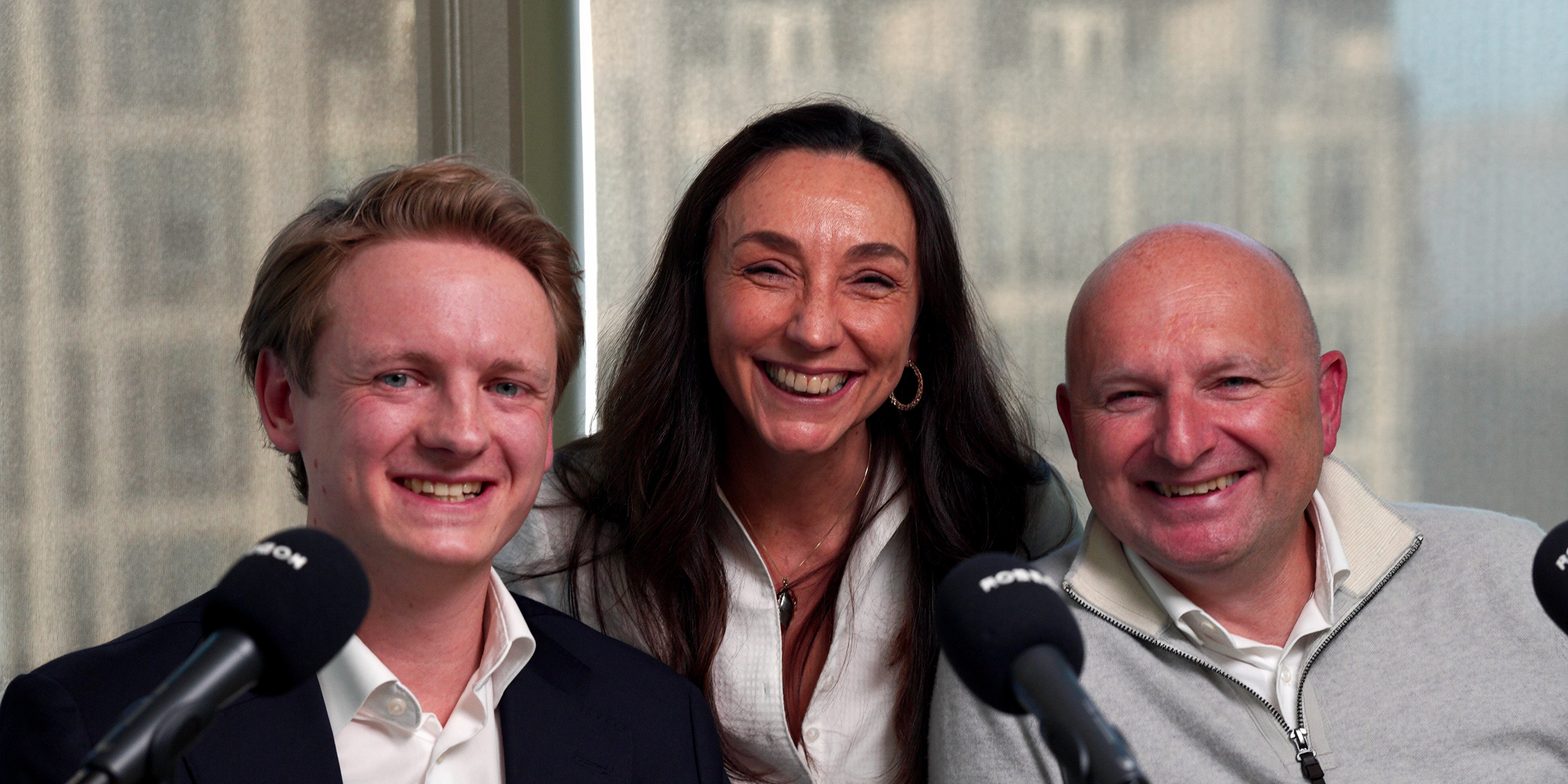
EM: Joining me to discuss this are Jack Neele and Sam Brasser, who are from Robeco's Global Consumer Trends team. Welcome; good to have you here. Jack, let's start with the consumer and the state of the consumer. We've seen all the sentiment surveys and those are pretty gloomy, pretty negative. And yet when you look at the spending numbers, that tells a different story. So is this a case of watching what consumers do rather than what they say… and say to pollsters.
Jack Neele (JN): Well, effectively, yes, because what we have indeed seen is that if you look at consumer sentiment data, I think it's at somewhere around the lowest level since we've seen, since they are actually recording the data since the start of the 70’s. So that would paint a very gloomy picture of actual consumer spending. But then, what we've actually seen, if you look at companies like Visa, Mastercard – and they obviously have a lot of data on consumer spending through credit cards – is that consumer spending actually is trending at 8 or 9%, according to their data. So there's a big discrepancy between what consumers are indeed doing, and what they are signaling, let’s say, from the consumer sentiment indicators. And so for us, that’s, to some extent, also made it a little bit difficult to gauge where the consumer is, right? Because there's been a lot of talk about the ‘K-shaped economy.’ I think we'll talk about that a little bit later, where higher-end income groups are doing well, and the lower-end [income group] is actually struggling to make ends meet. But I think that overall, we can be, I think we have a pretty good idea that consumer spending is actually okay going into the holiday season.
EM: Sam, let's pick up on that point on the K-shaped economy. Could this be the reason why it's confusing to really point out from sentiment what the consumer is up to because you have different streams?
Sam Brasser (SB): Yeah, to some extent, because we always see that, let's say, or historically we see that the high-end consumer, the ones with higher income and more wealth are doing better than lower-income consumers. And that's basically almost always the case. Unfortunately, the lower end is oftentimes struggling. But there was a bit of a discrepancy during 2020, 2021 and in 2022, when the lower-income consumer got a lot of support – almost everyone got a lot of support – but disproportionately, because for them, it mattered a lot. And then they went out and spent a lot of that. So looking back, let’s say only four years, they seem versus then to now, that they are struggling quite a lot. But actually, if you look back further over longer time periods, they're always struggling a bit. So oftentimes commentators or companies that are, well, maybe struggling a bit, they point to things that are not going well. But if you look overall – and Jack mentioned the credit card spending data, and we can also supplement that with data governments collect or retail sales data, for instance, collected by a US government or Eurostat in Europe – that's looking quite good. So that talk of the K-shaped economy to some extent is always there. Maybe it is now a bit stronger than a few years ago, but I don't think it's worsening. And that's also what we hear from banks and other companies that are kind of pushing back on that K-shaped narrative.
EM: So your description here, is it mainly for the US consumer about whom we hear a lot and, and who's quite important in global spending?
JN: Yeah, that's also, I guess, where we have the most data available. So a lot of the research and data available is on the US consumer. So that determines also a lot – of the global consumer sentiment – is determined by what [data] is available on the US consumer. I would say though, from a fundamental perspective, it's also interesting to keep looking at the strength of the labor market; obviously wage growth. We've seen actually that the labor market continues to be strong. Maybe there were fears about AI disruption, right, that would disrupt the labor market. But so far, that hasn't really come to pass. And at the same time, we're seeing that wage growth is also still pretty strong. And so for the balance of the economy, if the labor market is in good shape – incomes are rising at a faster rate than inflation, now that's becoming almost even, I would say. But both are now between 3 and 4%. Then yeah, the overall spending patterns of consumers should be relatively healthy. And that's exactly what we're seeing today.
SB: Yeah, and if you look across the pond on both sides of the US. So if we turn to Europe, let's spin the rule like that, then retail sales here or like consumer spending here is also holding up pretty well and has actually accelerated from half a year ago. It is at a lower level than the US, but still, I think a solid 4.5% year-on-year. And then if we go further east towards China, there the situation is a bit more difficult. There consumers also have low consumer sentiment, but also spending isn't growing. And that has a lot to do with the slump in the property market there that continues to linger on. That has a big effect on the willingness to spend among Chinese consumers because if you look at, let's say, their household balance sheets, if you want to use a bit of a financial term, just the amount of money they could spend. They have the means to spend, but they are not keen on doing that. They save a lot. And then if we go to Japan, which has been for well, there's often the saying lost decades in Japan, right. But the last few years has been remarkably good. And we see also consumer spending there accelerate on the back of higher wages, low unemployment, and a bit of a pickup in inflation.
EM: What are consumers spending their money on? Are you seeing consumers who are feeling a little nervous trading down?
SB: I think the last few years ‘private label’ continues to gain share. So private label, you know, it's the brands that the retailers themselves make, that they don't produce themselves. They go to a manufacturer to produce cornflakes with a certain Walmart brand, for instance. Or Amazon Basics, which is also quite a big private label. And Kirkland from Costco is the biggest brand you've never heard of, probably. They sell anything from golf balls to steaks. They are often priced at a bit of a discount to say the name brands from Procter and Gamble, Colgate, Unilever, and we see them, those private label brands, taking share.
EM: So suggesting [people] are trading down?
SB: Trading down? I think, well, what does attract consumers is the lower price, but also at the same time, [I] think that the retailers have realized in the last few years that they should put a bit more investment into their private labels, a bit more marketing, increase the quality a bit to lure consumers in. It's not only about, okay, I'm just gonna offer a super, super low price and attract customers that way. So it's a form of trading down, but I think also a bit of a battle – retailer versus, you know, big brands – that are making a lot of margin, to balance that power a bit. And you also have to realize that, or it's helpful to realize, I think that the retailers, they have gained a big data advantage over their suppliers, the big brands, because upwards of 70-80% of customers shop with the loyalty cards, right? You have your, maybe you have your ‘AH’ bonus cards in your wallet as well, or on your app. So, they can track very well what customers are buying, and how they also perhaps respond to promotions and those kinds of things. They can sell that data to the brands, but they can also use it to their own advantage, right? If they see a gap that bigger brands have left, they can fill that void themselves, or they can sell the insight to a big brand and say, ‘hey, there's a gap you should pay some attention’. And some of the brands are willing to pay for that.
EM: Quite an interesting segment within the consumer sector – and I think to a large extent it overlaps with the staple sector – is beauty. Some fascinating developments here.
JN: Yeah, definitely. I mean, it's also been a while, I must say, because it's also post-Covid beauty had gone through a normalization in terms of organic growth. And so we've started to basically since the beginning of this year, see the organic growth for companies like L'Oreal, Estee Lauder, the leading beauty brands, starting to come back, let's say, to 6 or 7%, which is a relatively healthy growth rate, especially among staples, which tend to be in the low single digits. The drivers are a bit different because, pre-Covid it used to be very much skincare related, also driven to some extent by China. Now it's basically much broader. You've seen a lot of success for fragrances, but also areas like haircare are starting to show up again. So, you're seeing, a broad-based level of growth in beauty. And it's translating not just from consumer staples. So that's your typical beauty products that you buy at the supermarkets or in specialized stores, but also translating towards more healthcare related beauty. And so we are seeing that also in injectable aesthetics. So, where you actually use injectables to improve the looks – that maybe we can discuss obesity a little bit later. But you see also with a lot of obesity, clients that have been taking or using obesity drugs that obviously they also need to work on their face or on their bellies or at least have some work done. And so you're starting to see that beauty is not just in consumer staples, but also in the health-related part, it's gaining traction, basically. And it's becoming a nice growth driver.
EM: So Sam, this is the fascinating development, this sort of blending of beauty and well-being and health is your sense, and as an investor also, is your sense that consumers are taking more ownership of their health and thinking more broadly?
SB: I think so, yes. Because they've gained more, they've gained, let's say, the tools to do that. So think for instance of obesity, right? Well, we could have always done something about, to some extent, how much we weigh in terms of exercise or diet, and that's still there. And we also see consumers taking charge there. For instance, protein-rich foods or yogurts, they're growing rapidly. But the new, the modern obesity medicine really helped. That started in 2018, at the very low scale. But then Eli Lilly's drugs came onto the market in 2022. And now millions of people are taking those medicines. Now this year actually, the pills have been launched, so the obesity pills, they're not as effective as the injectables, but this has further lowered the barrier, because some people might not want to inject themselves. And also, the prices of the pills are lower. So, I think maybe what's quite interesting is that where Eli Lilly, Novo Nordisk, kind of the pioneers of these drugs, they initially came into this market very much from a, you know, physician. You have to go to the doctor and get it prescribed, and you still need to get it prescribed, obviously. But now we had a lot of consumers going to their physicians like: ‘hey – because they sell it on social media, for instance – ‘I'm interested in this and am I eligible for it, to get it prescribed? We like to, you know, browse around obviously also in the internet and there's big Reddit groups, with a lot of people taking these kind of things, even people discussing upcoming medicine. So, you see kind of the buzz around it and really the consumer interest.
JN: Just to add, I think it's also…we obviously see a trend towards convenience and ease of use. And obviously working out is basically an effort. It requires an effort and simply taking a pill and losing some weight is obviously the, to some extent, the easy way out. Obviously, there are cases where it's definitely a required, but for especially a lot of people that feel that they are just a little bit overweight. I know some of that myself, but it's an easy answer to a question that many people then have.
EM: Yeah, well, just to add, I mean, I've heard so many stories of people, I mean, it's easy to say, ‘oh, well, that's the easy way out.’ But so many people have tried for years, for decades, and this is a life-changing event that finally they found something that works.
SB: Yeah, and the stance towards it is also changing, and I think there's this, this ties into also what Jack was mentioning about injectables, aesthetics, kind of the social stigma. It's not gone, right? It's still there, but it has definitely decreased over the last few years, the social stigma of even saying maybe to your friends or family or colleagues that you might be using some of these products, or you have taken an obesity medicine, that has, the barrier has changed. And I think that also leads to, how do you say, less self-censorship. Like, I shouldn't do it because I will be judged by the people around me. I think that is decreasing.
JN: It's become much more culturally acceptable basically. And that's why you're also seeing, or what we are seeing is that also a lot of younger consumers are actually doing it, right? And historically, injectables are mainly for, maybe for your grandma or maybe older people that use that to increase their beauty.
EM: So, you're talking about aesthetics now?
JN: Yeah, on aesthetics. So, it was generally much more older people. But now you see even people in their 20’s and 30’s actually starting to use that as well. So, it's become much more acceptable. Maybe again there's some influence with social media here, but we'll leave that for another podcast maybe.
EM: So those are some critical, key, interesting components of healthcare spending and what it might mean ultimately for investors. Another part that I know you are looking at also is healthcare relating to early diagnosis. Tell me about that.
SB: This is, I think, this is quite interesting. And I think the example that, or the area where it's most developed, the most impactful is in oncology, in cancer treatment and detection, where we've seen over the last few years very rapid growth in early detection tests, but also testing for the recurrence of cancer. So, there are various companies involved in this, but one of the examples is that colorectal cancer is actually quite prevalent. We can test a group of people that have higher risk of developing colorectal cancer. We can test them on a regular basis, maybe every year or every couple of years. And through that we can detect it quite early. And if, if it's detected earlier, then it's also more treatable. It's not always successful unfortunately, but the chances of success are higher.
JN: Just to add here, that I think the big plus, of course, for the healthcare sector is that it also saves a lot of money down the line, right? I mean the early test, it's not as expensive as obviously something that requires multiple months or even multiple years of treatment. So, if you can diagnose it early, yes, it's easier to treat because you're earlier in the process. But it also saves a lot in healthcare costs down the line. And I think that's one of the biggest attractions because we've all seen the percentage of healthcare costs rising as a percentage of GDP almost everywhere. And I think that's where this is becoming something that can have quite a big impact on long-run healthcare costs.
EM: And by that you also mean, of course, public spending on healthcare. So, reducing the burden ultimately. So, from an investor perspective, how big or how substantial is this opportunity at this stage? Is it very early still like the agentic AI example or are we further along?
SB: We're a bit further along. There's a group of, a substantial group, of companies also listed that are doing this, that are developing, and a couple of companies have more than a million tests already being done a year. And that's growing north of 25%. And they are getting actual revenues from this. That's not the pre-revenue. So they have created a lot of value because as Jack said, well they can prevent a lot of harm. And this also saves governments, or whoever is spending on healthcare, money.
EM: So overall you've described a really vibrant landscape for the consumer. And so I would imagine the consumer stocks have opportunity, have a runway from here. But if we look at it, we can see consumer stocks are trading at some of their cheapest valuations in a decade. So, what would need to change for consumer-related stocks to make a sustained comeback?
JN: Good question and that's probably the main question: What will lead to a true comeback for consumer stocks? Obviously, what we've seen is that consumer stocks more recently have done well, but that's more on the back of, let's say, rotation in the equity markets away from artificial-intelligence-related stocks. The market has been moving more towards defensive stocks, and that includes consumer staples and healthcare. But what we are obviously looking for is a more sustained inflection or improvement in consumer stocks and not just on the back of a rotation in equity markets, because that doesn't really speak to underlying strength in the consumer sector itself.
And so, there are obviously some areas of strength that we've discussed, right? We've discussed the experiences. We've seen some pickup. And I would say, maybe call that a little bit of a broadening in terms of consumer spending. Whereas in the beginning of the year, there was very much focused – we talked a little bit about – the low end struggling, et cetera. But now we've seen that consumer spending data in general, overall, continues to tick along nicely. And that also the lower-end consumers are participating in that. And that has also led to, I think, the expectations for the upcoming holiday season are now for 6% growth in spending, which is actually quite … the historical average is more like 4 to 5%. So maybe six doesn't seem like a huge step up, but at least it's trending in the right direction. And I expect all consumer stocks to benefit if it actually starts to accelerate. So that's, I think, one of the things that could really drive a re-rating for consumer stocks if we get the sense, or at least the proof, that we are starting to see an acceleration in that overall spend.
EM: Before I come to our final remarks, just to focus on the strategy in which both of you are involved. So, the Robeco Global Consumer Trends strategy, it's changed quite a bit over the past, let's say, five years, including becoming a bit more defensive, a bit more exposed to healthcare, which to me makes sense given what you've told me now. So yeah, is that the key driver that these opportunities have changed?
SB: Yeah, I think well, we are looking for trends in the consumer landscape. And then we have found quite interesting ones. Some of the ones that we discussed like injectables, aesthetics, obesity, and diagnostics in the healthcare space that are also related to consumers. Whereas, well, luxury is for instance, we used to have a much bigger weight in the luxury stocks, but that industry is going through a bit of a rough patch at the moment, so we have less exposure. We do have some exposure in the segments that are still quite vibrant. And so yeah, that has naturally, I think, shifted the portfolio to other areas.
JN: I would say if we look a little bit over a longer timeframe, let's say 10-15 years, if we go back, then I think a lot of the trends were in the technology space, right. The arrival of smartphones, social media, the big consumer platforms that we have seen. So, it was very much a technology or technology-driven or digital-consumer driven decade between 20[09], let's say post financial crisis up until Covid. Now it's much more consumer-health related. And that has changed a bit the positioning of the portfolio. So, we're a little bit less geared to up-markets than we were a decade ago. But now it's a much more defensive proposition, I would say, compared to the overall equity market. So that's definitely a change that we have noticed.
EM: And Jack, how many years have you been involved in this strategy?
JN: From 2007 basically. So it's bordering on 20 years.
EM: Wow, what an achievement! Sam, so we've heard Jack just talking about this coming holiday season. Decent spending expected. But if we look beyond that into 2027, what, in your opinion, would be a plausible path for consumer spending and for the consumer exposed sectors, in listed indices? What's the most likely path?
SB: Well, the most likely and positive part would be that the macroeconomic indicators such as employment, they stay, like it is quite low. And then it would be great if consumer sentiment would improve because it has historically, the last few years, has not been a great correlation between consumer sentiment and what they actually spend, because, well, like we discussed, they continue to spend quite well, but they're a bit depressed, they say. But it would, I think, help in general also with the stocks, if consumer sentiment improves, if interest rates would go lower. That would be a positive as well, although it's not necessarily a negative because a lot of people also save money and they get interest on that … on those savings. If inflation goes a bit lower, that would also help. For instance, an end to the war in Iran [and] lower oil prices would definitely help. In terms of the consumer stocks, well, those segments that are currently quite vibrant, such as travel, we expect them to continue because it's more structural. It's a preference for experiences over goods. And then in terms of other segments, I think there's also a job to do for consumer companies themselves to innovate, to entice the consumer to go out and spend. So that would be kind of the final push.
EM: Lots to think about. Jack, final remarks from you.
JN: Well, first of all, thanks a lot for the invite. We think that, in general, we have seen after many years of underperformance for basically consumer discretionary / consumer staples relative to the broader market, to some extent, because it was all pretty much focused on artificial intelligence. We think that now we're starting to see a broadening and improvement in the consumer sectors. And we don't have a crystal ball, but hopefully that translates into also better relative returns in the upcoming years.
EM: Jack and Sam, thanks very much. Good to hear from you.
JN/SB: Thank you very much.
EM: And thanks to you for joining us for this episode. If you've enjoyed the discussion, please subscribe and share the podcast within your network. Stay tuned for more investment insights in upcoming episodes, available on all major podcast platforms and on the Robeco website. Until next time.
Thanks for joining this Robeco podcast. Please tune in next time as well. Important information. This is marketing material intended for professional investors. Capital at risk. The podcast was brought to you by Robeco Institutional Asset Management, a Dutch investment management firm located in Rotterdam, the Netherlands. Robeco Institutional Asset Management B.V. has a license as manager of UCITS and AIFS for the Netherlands Authority for the Financial Markets in Amsterdam. In the US, this is brought to you by Robeco Institutional Asset Management, US, Inc., an investment advisor registered with the US Securities and Exchange Commission.
Available on


Tune in now – Robeco podcasts
Important information
This information is for informational purposes only and should not be construed as an offer to sell or an invitation to buy any securities or products, nor as investment advice or recommendation. The contents of this document have not been reviewed by the Monetary Authority of Singapore (“MAS”). Robeco Singapore Private Limited holds a capital markets services license for fund management issued by the MAS and is subject to certain clientele restrictions under such license. An investment will involve a high degree of risk, and you should consider carefully whether an investment is suitable for you.