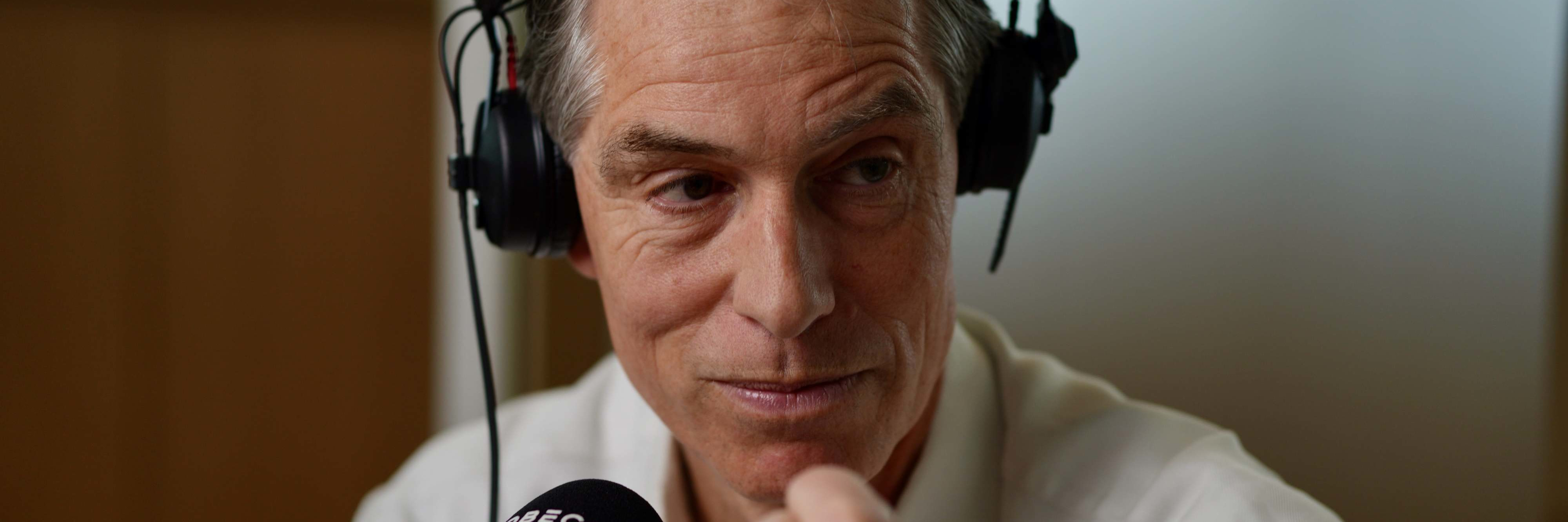

Head of Sustainable Alpha Research


• Insight
How to quantify a company’s contribution to the UN SDGs?
Earning a good return and contributing to the Sustainable Development Goals at the same time? Building a strategy that does just that, has turned out to be a challenge. The main difficulty is to quantify a company’s contribution to the SDGs. Robeco is now one of the first to solve the puzzle, developing an SDG framework that scores companies on their contribution to the SDGs. It will be used in the global SDG credits strategy that will be launched in mid-May.
Authors
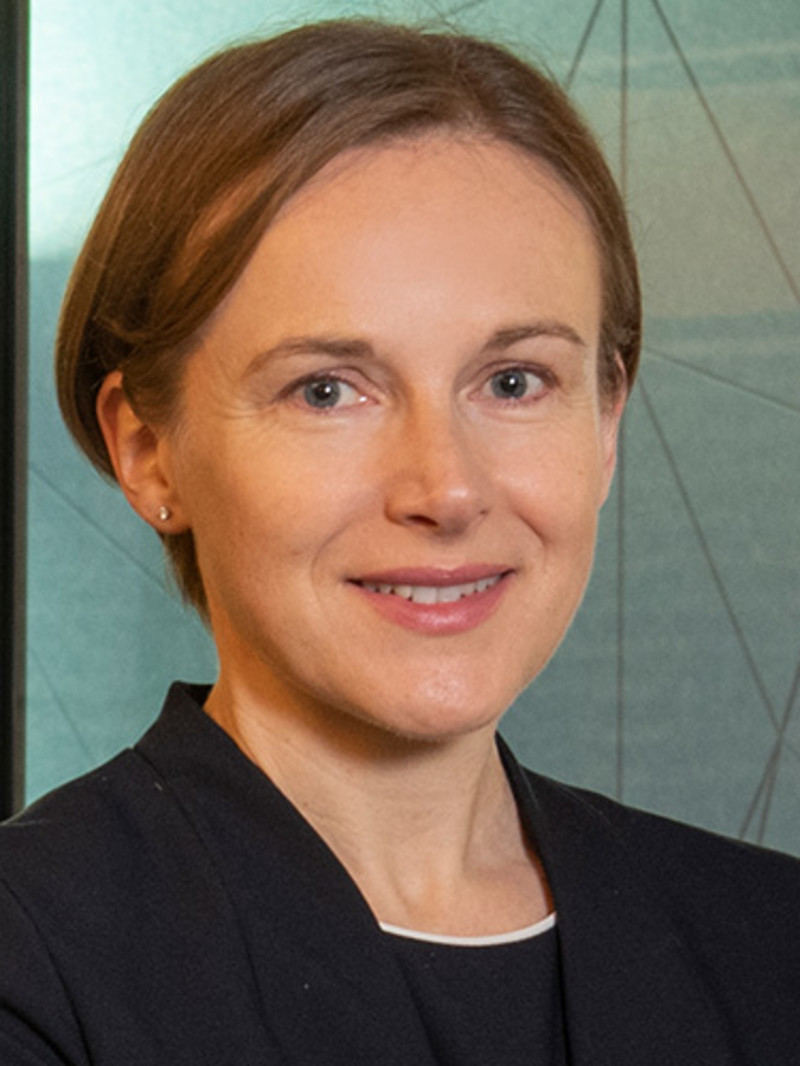
Summary
- RobecoSAM has developed a proprietary SDG framework
- We can rate companies’ impact on the UN SDGs
- The SDG ratings can be used to build a global SDG credit strategy
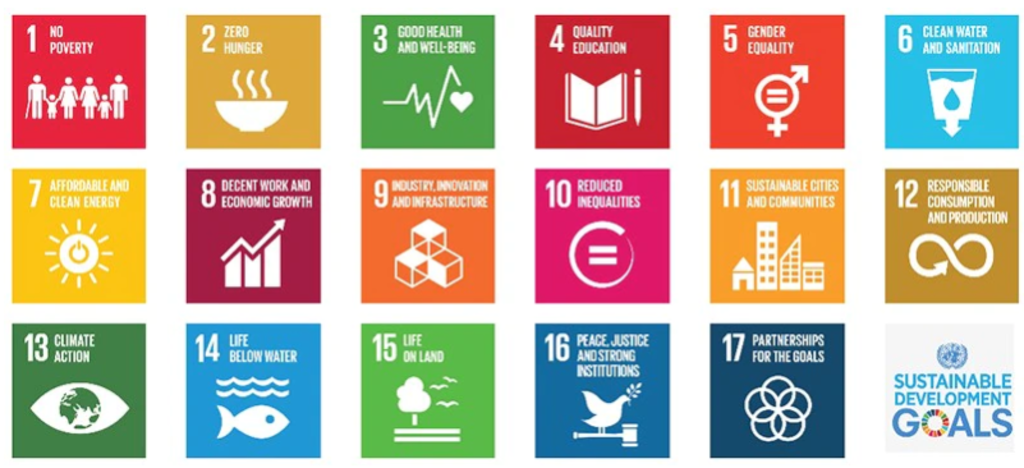
Ever since the United Nations defined its Sustainable Development Goals (SDGs) in 2015, investors have become increasingly interested in investments that contribute to the realization of these goals and provide a good return. The 17 goals, which should be achieved by 2030, target a broad range of topics such as the availability of water and sanitation for all, food security, achieving gender equality, and access to affordable and sustainable energy.
The challenge: measuring an investment’s impact on the SDGs
It is easy to imagine that, for example, a solar company has a positive impact on the goals, and an oil company a negative one. The challenge, however, is to properly evaluate and quantify the contribution of all companies in an investment universe when building a targeted SDG strategy. This requires a framework, with clear, objective and consistent rules.
RobecoSAM is one of the first asset managers to meet this challenge by developing a proprietary SDG framework. This consists of taking a three-step approach. Robeco’s Credit team will use this framework for the global SDG credits strategy that will be launched in May. We will briefly explain the three steps.
Step 1: What does the company produce?
In step 1 we link companies’ products and services to the SDGs. To what extent do they contribute? Companies are assessed on an extensive set of rules and Key Performance Indicators (KPIs). These are summarized in a guidebook. The guidebook states whether the contribution of these products and services is positive, neutral or negative.
Stay informed on Credit investing
Stay ahead with our newsletter on the latest in credit investing.
For the telecom sector, for example, the starting point is positive. Telecommunications are an essential part of the infrastructure in a safe and connected society. Farmers can use mobile phones to check market prices before selling to middlemen, and market traders can accept payments in mobile money. This way, the telecom sector can contribute to a proper infrastructure (SDG 9), economic growth (SDG 8) and ultimately to the reduction of poverty (SDG 1).
We then determine the extent of the contribution, which in the case of telecom we deem low. Subsequently, we then dig deeper by looking at the individual companies within this sector and how they score on a set of KPIs. If, for example, more than 25% of the telecom company’s sales take place in emerging markets (which have most to gain from a good telecom network, as e.g. mobile payments can provide large numbers of unbanked with bank accounts), we upgrade the impact from positive-low to positive-medium. See figure 2 for an illustration of the KPIs used.
Step 2: How does the company operate?
SDGs are also about how companies operate themselves. Are they polluting, do they respect labor rights, do they refrain from corruption? In step 2, the credit analysts check if the way the firm operates is compatible with the SDGs. If necessary, the SDG ratings can be adjusted.
Step 3: Are controversies known?
In the final step, we check whether the company concerned has been involved in any controversies, such as oil spills, fraud or bribery. This step can lead to adjustments in the rating. If firms commit serious and structural breaches of the UN Global Compact, they are excluded.
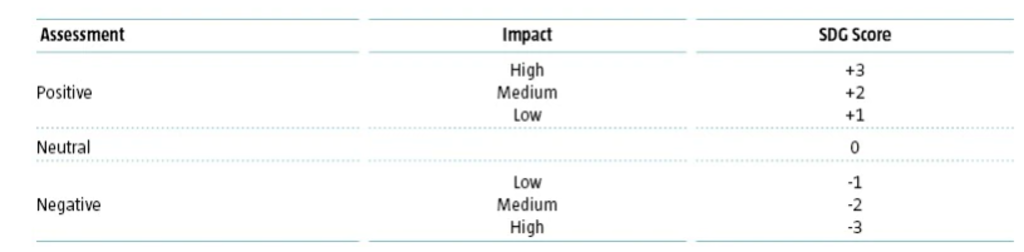
The outcome of this three-step analysis is quantified with an SDG score. This is shown in Table 1.
Table 1 | SDG rating methodology
Source: Robeco
The good and the bad
Robeco’s credit analysts and RobecoSAM’s SI analysts have done a mapping exercise of some 450 companies. 62% of the companies have been assessed as making a positive contribution, such as grid operators, healthcare companies, banks (by providing finance, especially in emerging markets, banks play an important role in fostering innovation and stimulating economic growth) and utilities with a relatively small share of coal, nuclear energy and oil in the energy generation mix.
26% of the companies analyzed make a negative contribution. Examples are energy producers with a relatively large share of fracking, companies that produce unhealthy food, or car manufacturers with a low share of EV/hybrid models.
Conclusion
Assessing a company’s contribution to the SDGs is a challenge. However, we have found a way by applying the RobecoSAM SDG framework, which quantifies the contributions that a company’s products and services make to the SDGs. Results of our analysis indicate that sectors with a weaker SDG profile include the energy, car manufacturers and food & beverage sectors. However, we have also found that there are more than sufficient issuers to create a well-diversified global credit portfolio with a positive impact on the SDGs.
Important information
THIS WEBSITE IS SOLELY INTENDED FOR PROFESSIONAL INVESTORS, WHICH HAS THE MEANING ASCRIBED TO IT IN THE SECURITIES AND FUTURES ORDINANCE (CAP. 571 OF THE LAWS OF HONG KONG) AND ITS SUBSIDIARY LEGISLATION. Investment involves risks. Past performance is not indicative of future performance. The information contained in this website is provided for reference only and does not constitute investment advice or an offer or solicitation to buy or sell in any securities or to adopt any investment strategy. Investors should not base their investment decisions solely on the information provided on this website and are advised to seek independent advice (including advice on tax implications) before making any investment decisions. Investors should ensure they fully understand the risks associated with the investment products and should also consider their own investment objectives and risk tolerance level. The investment decision is yours. You should not invest unless the intermediary who sells you the investment products has advised you that it is suitable for you and has explained how it is consistent with your investment objectives. Please refer to the relevant offering documents or other legal documents for further details including the risk factors. This website is published by Robeco Hong Kong Limited which is regulated by the Hong Kong Securities and Futures Commission (“SFC”) (CE No. APU851). This website has not been reviewed by the SFC. No assurance can be given that the investment objective of any investment products will be achieved. No representation or promise as to the performance of any investment products or the return on an investment is made. The value of investments may fluctuate. Past performance, projections, or forecasts included in this website should not be regarded as guarantees or indications of future performance, and no express or implied warranty is provided. The contents of this website are based on sources believed to be reliable, but due to the nature of information delivery technology and the necessity of using multiple data sources, including third party content, their accuracy is not guaranteed. The opinions expressed are as of the date shown above and may change as market conditions evolve, and are subject to change without notice. These opinions may differ from those of other Robeco investment professionals. Robeco accepts no liability for any direct, indirect, or consequential loss arising from the use of this material or any comments, opinions, or estimates contained herein. Robeco has no duty to update this website or any website content. Materials on this website may not be reproduced, distributed, or published without prior written permission from Robeco. Unless otherwise specified, Source: Robeco.