
Chief Researcher


• Podcast
The curious case of Fama-French: where does alpha come from?
Factor investing was built on powerful academic foundations, but its real-world results have become harder to ignore. While many traditional factor approaches have disappointed, some quant strategies have continued to outperform across cycles. In this podcast, we unpack the gap between theory and practice, and what it reveals about the evolution of quant investing.
Authors






Researcher
This podcast is for professional investors only.
David Blitz (DB): And if we consider momentum, one of the most beautiful factors – you just buy what went up over the last 12 months – works pretty well. One little caveat, though. Once in a while, you get completely wiped out. And this is what happened to the Fama-French factor, the momentum factor, in ‘09 when it experienced a negative return of -80%. And that has wiped out a decade of prior gains.
Welcome to a new episode of the Robeco podcast.
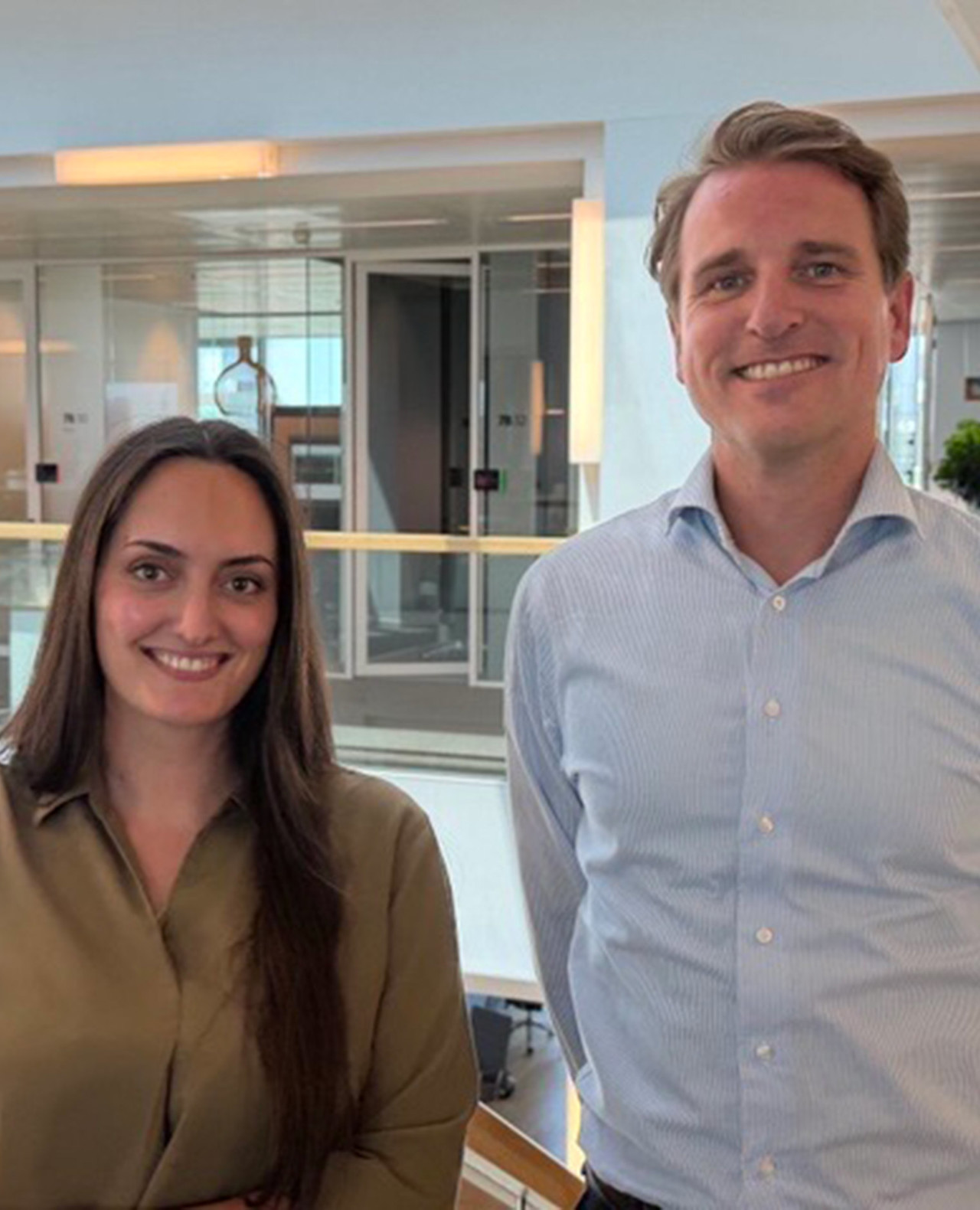
Erika van der Merwe (EM): Factor investing has been one of the most influential ideas in modern finance. Since the early 1990s, the Fama-French framework has shaped how investors think about why some stocks outperform, by introducing factors such as size, value and profitability alongside the traditional market factor. But markets evolve. Over the past two decades, many of these classic factors have struggled to deliver the returns investors once expected, a period referred to as the ‘Quant Winter’. Quantitative investors haven't stood still, though. They've responded by refining factor definitions, developing new signals, and embracing advances in data and machine learning. So what happened to those original factors? And how has quantitative investing moved beyond them? Well, to explore that I'm joined by David Blitz, he's Chief Researcher at Robeco’s Quant Equity Research team, and Matthias Hanauer, he's a Researcher in the Quant Equity Research team. Welcome, gentlemen. Good to have powerhouses here with me. So how would you, just looking back over time, since the Fama-French factors were developed, how have they stood up to the test of time? David?
DB: Well, not too well, I'm afraid.
EM: To be quite blunt.
DB: Yeah. So in recent years, the Fama-French factors, if you just take a simple average, they're experiencing another quant winter. So there was this quant winter in 2018-2020, and lately, they're experiencing a similar-sized drawdown. But also if you look back a bit further, say, the last 20 years, what you see is that actually the Fama-French factors have been pretty poor. Four out of the five factors stopped working altogether. Only one still is reasonably OK. But if you just... you wouldn't have picked that one in advance, probably. So if you just look at the average Fama-French factor, it's pretty close to zero, actually.
EM: Matthias, that's a terrible track record, to be quite frank. What’s the reason, what are the shortcomings of these traditional factors?
Matthias Hanauer (MH): Well, I think these factor definitions have been set in stone in the early 90s, but a lot of things have happened since then. So as practitioners, we don't have to stay with these early definitions, but we can adapt to changing market dynamics. And while maybe there are flaws with the existing definitions, we can also add additional elements, additional signals to this pool.
Matthias Hanauer (MH): Well, I think these factor definitions have been set in stone in the early 90s, but a lot of things have happened since then. So as practitioners, we don't have to stay with these early definitions, but we can adapt to changing market dynamics. And while maybe there are flaws with the existing definitions, we can also add additional elements, additional signals to this pool.
EM: But tell me about those flaws.
MH: Well, we can go with, maybe if you think about size: I think the case for size as a standalone factor is overstated. The initial research probably overestimated the size premium because of de-listing biases. So there are a lot of firms that were delisted. These were not taken properly into account. And even also when you look at the performance after the publication, that has been rather flat. Or if you take into account the additional risk of size, then it has been negative. So we as practitioners, we don't think there's a case for a standalone size effect. Small caps are an important part of the market portfolio, but you shouldn't overweight them in the stock selection, for instance.
EM: And some of the other factors, David?
DB: Yeah. So, size basically isn't a factor at all in our view. Also hasn't worked for close to 40 years now. But also if you look at the other factors, like value and momentum, we see there are severe flaws in the way these factors are defined. And so this methodology was determined back in the early 90s, looking back over periods going back to the 1960s. And for that day and age, maybe this worked fine. But markets have evolved, the landscape has evolved. And these definitions just don't hold up anymore. So with value, for instance, one of the key problems, I think, is the fact that Fama-French simply compared the valuation of every stock with every other stock. So this means that, say, a utility firm, tends to trade at a much cheaper valuation than a technology stock. And it will be a structural bet on utilities and against tech stocks. This is what you see happening if you look at the underlying portfolio. And yeah, this kind of position has been detrimental to the performance in recent decades.
EM: And I would imagine, linked to that, also is the kind of metric used to determine value. That would also depend on the industry you're looking at, linking to your utility example.
DB: Yeah. So the classic definition used by Fama-French compares the book value of a stock to the market value. So this makes a lot of sense for a traditional, say, an industrial firm with a factory and machines. Those are captured by the book value. But if you look at a software services firm nowadays, like Meta or Alphabet, what's the book value? So the value is in the brand, in the network, in the user base, the human capital, all things that are not captured by accountants and put on the balance sheet. So definitions have to evolve to adapt to this new reality that we’re in.
EM: So you’ve spoken about size, value, and then there's quality, which I believe is also profitability in terms of the naming, and there's momentum. Your views on those factors?
MH: Maybe if you start with quality, it's a bit interesting. Quality is not a clearly defined concept like value or momentum. Value has different characteristics, but there’s always some fundamental to price. With quality the range is much wider, and here the key distinction is, I think, only those definitions that actually predict future earnings, are also the ones that are robustly predicting future returns. And I think here, Fama-French, even with the profitability definitions, is on the better side, compared to what we see for index providers with smart beta products that rely really on simplified definitions.
DB: Yeah. And then if we consider momentum, one of the most beautiful factors – you just buy what went up over the last 12 months – works pretty well. One little caveat, though. Once in a while, you get completely wiped out. And this is what happened to the Fama-French factor, the momentum factor, in ‘09 when it experienced a negative return of -80%. And that has wiped out a decade of prior gains. So there's this inherent crash risk, which is actually well known, a lot has been written about it. But the question is, how can you deal with that? Is there a way to get rid of this while not throwing out the baby with the bathwater?
EM: On that point, a really troubling pedigree here for the Fama-French factors and certainly in practice, certainly over time. But having said all of this, we certainly know quant investing is thriving. So how would you explain the gap between these traditional factors and what we see in academia, and some basic indices versus in practice, how many quant funds are succeeding, Matthias?
MH: I think the key is really the continuous innovation. So if you don't adopt, then maybe you're wiped out by the time. And for instance, we also see that certain index providers that have initiated new indices, they look good until they are back tested. Let's say the MSCI Diversified Factor Index was initiated in 2015, and the back-tested performance looks great. But the ten years out of sample it's flat.
DB: Yeah. So indeed I think the key to success, because there's a huge discrepancy between the performance of quantitative asset managers that use factors as the alpha engine versus the academic theoretical factors. So whereas the latter have basically flattened out, it's actually been a great period for quant managers such as ourselves. And the key to that is to identify the pitfalls with each factor. And come up with a way to address that, and to take the performance to the next level. Apart from that, we also augment the academic view. We talked about size, value, momentum, profitability. That was about it. But there's so much more out there. And I think this is also a big limitation of the academic community, that they have this strong desire to just limit the factor zoo preferably what you can count on one hand.
EM: Yes, to keep it pure.
DB: And it has to have data going back to 1963. That's also a thing they love.
EM: For the testing.
DB: Yeah. So factors like analyst revisions, short interest, which we see are really powerful, simply get dismissed or not even taken into consideration because of that.
EM: Okay, so you as practitioners are willing to be less purist, to be quite innovative, maybe take some risks, being out there, declaring new factors or other elements. Let's look at that. What kinds of innovations have either yourselves or what you see in the market have been implemented and undertaken? Matthias?
MH: So one way to find alpha outside of the Fama-French framework is to look at short-term signals. So maybe these short-term signals like seasonality, short-term reversal or short-term momentum, they are not highly correlated as valuation metrics to each other. The problem is they have high cross alpha. However, if you implement it naively, most of this cross alpha goes to transaction costs. So they eat it up. However, if you combine these signals, the gross alpha increases, so you have more capacity for transaction costs. And if you also have a smarter implementation where you balance the expected alpha and the expected trading costs, you really can increase the net alpha.
EM: Okay. But I can understand listening to you how an academic would find that problematic because it does sound a bit messier. But we have to be pragmatic. We have to generate alpha, generate returns for clients, so looking at all of this and really squeezing everything out of the markets and out of the information and data you have. David?
DB: Yeah, so the academics tend to look at these short-term signals in isolation and then they conclude, well probably very high transaction costs, so let's dismiss it. The way we use them, and we find this is actually one of our most fruitful research areas over the last couple of years, looking at these short-term dynamics, that if you integrate them into a diversified multi-factor model including more traditional factors, that actually they help to boost the performance quite a bit with just a modest impact on turnover. So that's the power of diversifying.
EM: So collectively it sort of nets out all the requirements together. So in practice, just to conclude that point, you are not finding with introducing all of these short-term signals that you are having to trade unnecessarily and therefore eating up alpha?
DB: No. So we combine the short-term signals with our proven, more established signals. And then they give a really nice, consistent additional boost to performance.
EM: So that's one aspect of innovation. And earlier you also pointed to the fact of really looking at the definitions of the traditional factors. But then of course, we’re in this new amazing era of AI, of data, all of the new sources of data, alternative data. How are you employing that in your modeling and your thinking?
MH: So you speak also to our next-gen approach and research. And I think this is a really broad and new area, but we see a lot of promising alpha ideas. So when you think about AI, that can be natural language processing or machine learning. But maybe for us quants, machine learning was more natural, or was initially more natural to look at machine learning, that was more an evolution than a revolution, because we were used to look at the relationship between characteristics and return. And in the past that was mainly done in a linear way.
EM: Pre-AI, pre-machine learning.
MH: Maybe let's say 20 years ago, ten years ago. And now with more complex algorithms that are available in packages and increased computing capacity, we can also look at these more complex algorithms that detect nonlinearities and interactions. And while we see that the linear effects are still most important, these added alpha from interactions and nonlinearities can be really the cherry on the alpha cake.
DB: And then next to that there's also all the alternative data. So Fama-French are in this world of financial statement data and price data, and that's more or less it. Actually when they came up with their initial findings in the 90s, this was really revolutionary and they were disrupting the mutual fund industry with these insights. But by now it's the other way around. The industry is embracing all these new opportunities with machine learning, with AI, with alternative data. There’s huge amounts of data, whatever you can imagine, it's basically available now. And we test this and we're eager to uncover novel alpha there.
EM: Well, take me into your everyday world. Is this a smooth switch and transition for you to incorporate all of these ideas around next-gen and all of the complexity that it entails? I mean, conceptually, can you contain all of this, or are you relying on other teams to provide modular input to your thinking, David?
DB: Well, it’s definitely a team effort. If you think about the research platform that we’ve built – the infrastructure – all the code to test signals and to run our models. Last time we counted, this was over half a million lines of code, the entire code base. And then the database containing all the raw data – that’s terabytes of data. Just one new text-based signal can be based on millions of social media posts that we collect on an ongoing basis to scrutinize, for instance, the sentiment that’s being revealed there.
EM: That also shows, for the organization and the business, this is a commitment. It’s an investment into the infrastructure, into the data, and also into maintaining it and keeping it running.
MH: Yeah, exactly. I think maybe everybody can do a pilot on machine learning or natural language processing. But if you want to use it day-to-day in your production environment, then really the platform and infrastructure have to be ready, backed up, and tested.
EM: Looking to the future, it feels as though we are already in the future. It is extraordinary how rapidly things are changing, and how different the world is, even compared with three years ago. But looking beyond this, what does the future hold for quant investing?
MH: I think we will see continuous innovation and continuous research. We have changed a lot over the last five to ten years, and I think this will continue. Maybe not as a revolution, but each year we will add new signals, new alpha, and enhance our existing factors.
DB: Yes, I also expect increased dispersion between different quant managers, because there is so much different data available now and so many different directions research can take. These models will likely become less similar than what they were in the past. The opportunities are infinite, basically. And if you look at advances in AI algorithms, they get better year after year, it is already affecting our workflow in a major manner. Talking about the code base I mentioned before – usually each line of code would have been written by the researcher. But nowadays AI can generate a lot of code. So also the way of working is being disrupted by AI.
EM: Well, let’s hear your final verdict, let’s take it full circle. What is your final view on the prospect or verdict for the Fama-French factors? Matthias.
MH: I think the Fama-French factors were flat over the last 20 years. You could even say they were dead over that period. But long live quant.
EM: David.
DB: Yes, so they did great work back in the days. But if Fama and French would be asset managers, they would probably be fired with this track record.
EM: Well, there you have it. Time for a quiz, gentlemen. If you could go back to 1993, when the Fama-French model was introduced, what would you tell those researchers about what they were missing?
MH: I think in ‘93, I would tell them they should use the most recent price to measure valuation, and not a price that is 6 to 18 months years old.
DB: I agree. Yeah, that's a lot. Not a little issue with you with the generic factors. Yes, also the way the vector portfolios are constructed, we didn't really touch upon that. But if you look at the market index nowadays, a handful of big tech stocks dominates the index. And when we take our positions in our actively managed portfolios, we always take the benchmark rate as a starting point. So Nvidia is 5% in the index, you know if we're bullish, we go to six, if we're bearish, we go to 4%. And maybe that more risk-aware thinking about how you construct a portfolio, I think that would also be a very important lesson to incorporate.
EM: Good insight. Then what's the worst or the strangest quant signal that you've ever seen proposed? By a colleague or in the industry?
DB: Well, there's these papers which look at the moon cycle to predict stock returns.
EM: As a man, you're skeptical.
DB: Well, yeah. I doubt the moon influences the stock market all that much, but I might be missing something there.
EM: Matthias isn't commenting on this one.
MH: No, not a good idea now.
EM: Okay, third question. If you could keep only one factor for the next 20 years. That's a long time, gentlemen. Value, quality, momentum, or any other signal or factor for that matter, which one would you choose?
MH: If I have to keep it for 20 years… so it's not the stock, but the factor?
EM: Yes. I can tell it's a tough decision.
MH: If you have kids, I have three kids, you also want to keep them for all of the next years, not just keep one. So probably I would say I take a diversified factor mix and keep that one.
EM: That's a cop-out answer. David.
DB: Your question is a bit like do you want to eat spaghetti the rest of your life, or do you want to eat curry for the rest of your life?
EM: Let's get a pass on this. You can't answer.
MH: No, we don't want to keep it for 20 years as it is, okay? Because we miss the innovation then.
EM: Another sneaky response, right? Final question. Imagine that you're explaining quant investing to a fundamental stock picker who thinks that models can't work. And believe me, there are many of those. What's the one argument that usually convinces them?
DB: Well, in a way, we're not so different from fundamental managers because we're looking for the same thing. We're looking for undervalued business models with great momentum. I think the main difference is that many fundamental managers are willing to pay a lot more for a business model that they believe to be undervalued, so even though the valuation, according to our models, is already quite high, they still see more growth. So we're a bit more skeptical about growth. But apart from that, we're also looking for catalysts, for momentum, for positive earnings growth. So in that sense we're actually quite aligned.
EM: Matthias, what's been your best argument?
MH: I think the difference, I think both approaches have the position in the market and fundamental investors, they can really do deep dives in a few handful dozens of companies. But the strength of quant is we can any moment analyze thousands of firms. So I think it's a really large numbers game, and there's where the quant advantage is. For the deep, intense research on the individual companies, maybe fundamental analysts are superior.
EM: Mathias, David, thanks very much.
MH: Thank you, Erika, for having us.
DB: Thanks.
EM: If there is one takeaway from today’s discussion, it is that the original Fama-French framework remains foundational. But static factor definitions are not the same as modern quantitative investing, which has continued to innovate and adapt. Thank you for joining us. If you enjoyed the discussion, please subscribe and share the podcast within your network. Stay tuned for more investment insights in upcoming episodes, available on all major podcast platforms and on the Robeco website. Until next time.
Available on





Engineered to filter market noise
Our Active Quant strategy is designed to be highly effective by analyzing vast amounts of potential opportunities and exploiting market inefficiencies resulting from predictable patterns.