• Insight

How strategic autonomy is reshaping thematic investing

The drive to secure energy, critical minerals and strategic technologies is reshaping industrial policy and capital allocation. In 2027, this should continue to support investment in renewables, electrification, reshoring, recycling and cybersecurity as governments and companies seek to reduce external dependencies and protect critical physical and digital infrastructure.

Authors

    Richard SpeetjensRichard SpeetjensRichard Speetjens
    Global Head of Thematic Investing

Summary

  • Countries vulnerabilities exposed by geopolitical tensions and trade barriers
  • Governments are prioritizing investments to secure and protect supply chains
  • Resource-scarcity and security themes should benefit from structural shifts

Electrification: Powering energy independence

Dependence on imported fossil fuels constrains economic growth, competitiveness and national security. Reliance on Russian gas prompted European governments to spend EUR 758 billion (equivalent to 4.4% of GDP) to shield households and industry from soaring energy prices.1 Meanwhile, disruption in the Strait of Hormuz has exposed Asian economies’ dependence on Middle Eastern oil and gas.2 With three-quarters of the world’s population living in countries that are net importers of fossil fuels, energy dependence is a global challenge.3

Electrification – replacing fossil fuels with electrons – offers a versatile, long-term solution. By shifting transport, heating and industry to domestically produced electricity, countries can strengthen energy security, lower costs and reduce emissions.

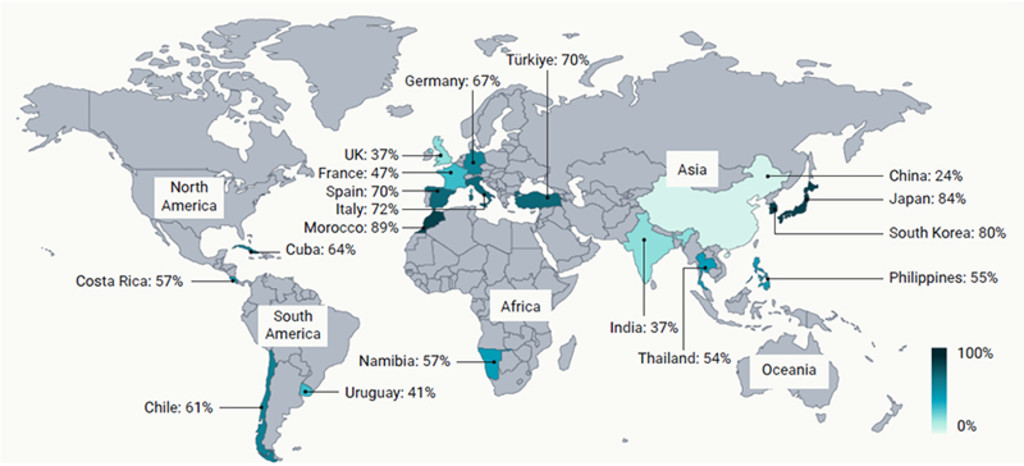
Figure 1: The global cost of fossil-fuel dependence

Source: Robeco, Ember, 2026 (https://ember-energy.org/latest-insights/the-energy-security-fall-out-from-fossil-fuel-fragility-to-electric-independence/). Fossil fuel net imports as a share of primary energy demand in 2023 (%). 50 countries import more than half of their primary energy demand as fossil fuels.

Policy action reflects this opportunity. Under its 2026 Electrification Action Plan, the EU aims to reduce oil and gas imports, raise electricity’s share of final energy consumption from 23% to 46% and cut EUR 260 billion in annual energy costs by 2040.4 Similarly, Japan, another import-strapped Asian economy, launched the Green Transformation Plan (GX2040), which links clean power, energy security and economic growth.56

Both underscore how energy-importing economies increasingly view domestic electricity systems as a strategic asset. These and other global initiatives7 point to a long-duration investment cycle8in the Smart Energy value chain – from electrified end-use technologies and power electronics to renewables, transmission grids, distribution networks, and energy storage.

Mobility: Powering transport resilience

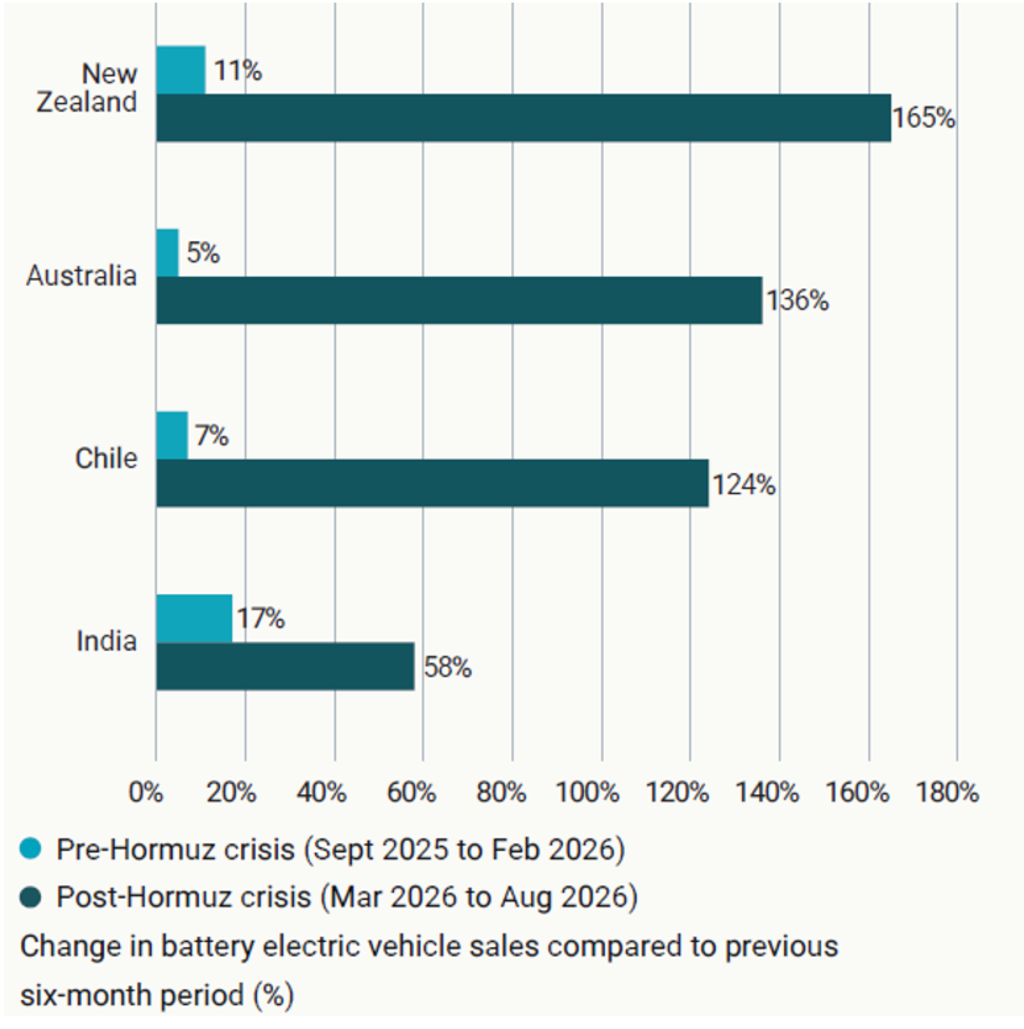
Higher fuel prices are helping to accelerate transport electrification. In the EU, plug-in hybrids and battery-electric vehicles accounted for nearly 32% of new car registrations in the first eight months of 2026, exceeding the combined share of petrol and diesel cars.9 Surging energy prices have also helped accelerate adoption in markets globally, with many countries recording their highest-ever share of battery-electric vehicle sales in 2026.

Figure 2: Energy shocks are turbo-charging EV adoption in global markets

Beyond electrification, autonomous driving is emerging as one of the most tangible applications of AI in mobility. As AI moves from research into real-world applications, demand for the chips, sensors, software and automation technologies that enable autonomous systems is expected to grow rapidly. Companies across the Smart Mobility ecosystem supply these critical building blocks, positioning them to benefit both from autonomous vehicle adoption and from wider applications of physical AI.10

Resource scarcity is driving innovation and investment

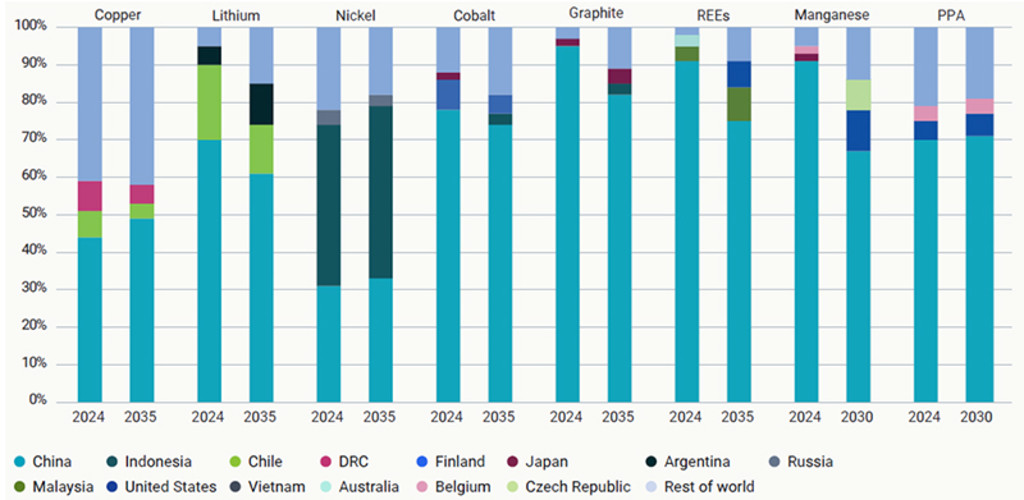
A country’s growth and prosperity also depend on access to materials and the domestic manufacturing capacity to turn energy and other inputs into productive output. US supply chains demonstrate the economic stakes of materials dependence. Mineral-reliant industries contributed USD 4.09 trillion to the US economy in 2025.11 Yet China remained a major source for 14 of the 33 critical minerals on which the US was most import-dependent, leaving strategic-growth industries such as semiconductors, defense, robotics and electrification exposed to geopolitical disruption.12

Over the coming year, export controls, elevated prices and concentrated mineral processing, particularly in China, are pushing countries to secure supplies any which way they can, including financing projects, stockpiling reserves and pursuing international partnerships to support mining and processing capacity.13 New mines take decades to develop, so scarcity and price volatility should continue to incentivize substitution, resource-efficient production and technologies that reduce material intensity. Over time, these measures can reduce import dependence and strengthen the resilience of domestic producers.14

Figure 3: China dominates production of minerals needed for strategic industries

Source: IEA, Critical Minerals Outlook 2025. Chart updated 13 May 2025. Notes: Manganese=battery-grade manganese sulphate, PPA=battery-grade purified phosphoric acid. The figures for graphite are based on battery-grade including spherical graphite and synthetic graphite. REE=rare earth elements. The figures for rare earths are for magnet rare earth elements only. The figure depicts the value of the top three producing countries in a given year.

Moreover, secondary supplies of materials from recovery and recycling are expected to double their contribution to key mineral supplies, from 10% to around 20% by 2040, easing pressure on primary sources as demand intensifies from AI, data centers, energy infrastructure and national defense.15 Together, these trends create opportunities for companies across our Smart Materials and Circular Economy strategies,16 spanning the value chain from raw inputs and extraction equipment to advanced materials, manufacturing, recycling and recovery technologies.

Circular Economy D USD

performance ytd (31-10)
15.27%
Performance 3y (31-10)
22.91%
morningstar (31-10)
5 / 5
SFDR (31-10)
Article 9
Dividend Paying (31-10)
No
View the fund
Past performance is no guarantee of future results. The value of the investments may fluctuate. Annualized (for periods longer than one year). Performances are net of fees and based on transaction prices.

Cybersecurity: There can be no autonomy without security

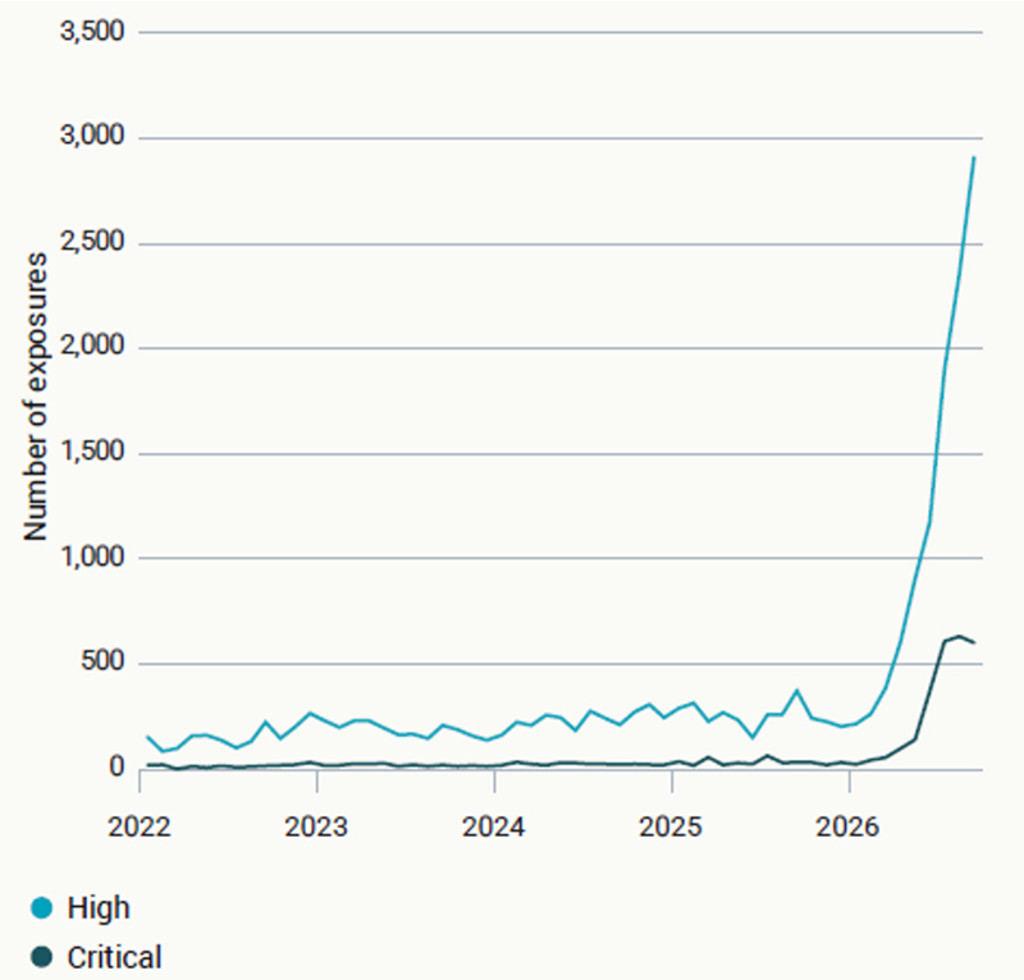
Increased reliance on digital systems from banking to supply chain management illustrates the critical role of cybersecurity in strategic autonomy. Over the last five years, the volume of cyberattacks has surged more than threefold according to Check Point Research. Over the past year, the number of disclosed high- or critical-severity common vulnerability exposures (CVE) rose nearly ninefold (see Figure 4). Alarmingly, cyberattacks have increasingly targeted critical infrastructure and services including airlines, banks, government agencies, hospitals, and retailers.

Figure 4: High- and critical-severity vulnerability disclosures rose sharply in 2026

Source: Epoch AI based on CVE.org data, October 2026. Monthly high- and critical-severity vulnerabilities published by 21 major technology organizations, January 2022 to October 2026. CVEs are standardized records of publicly disclosed software and hardware vulnerabilities; they do not necessarily indicate that a vulnerability has been exploited or resulted in a breach. Severity is based on the Common Vulnerability Scoring System, with scores of 7.0-8.9 classified as high and 9.0-10.0 as critical.

To address growing cyber risks, AI is increasingly used to improve threat detection and automate responses. However, AI is a double-edged sword in cybersecurity: both defenders and attackers can leverage it. A 2025 US House Committee on Homeland Security report found that one in six data breaches involved AI-driven attacks. As a result, a faster-moving, more complex threat environment is expected to provide structural tailwinds for cybersecurity and cloud computing services, both key pillars of Robeco’s Digital Innovations strategy.17

Conclusion

Looking across sectors and geographies, Robeco’s thematic equity strategies identify the companies developing the energy, raw materials, and manufacturing solutions needed to build more resilient economies, as well as the cybersecurity capabilities to secure them.18 While the macroeconomic backdrop may influence the pace of investment in 2027, we believe it is unlikely to reverse the powerful structural forces driving countries and companies toward strategic autonomy.

This article was originally published as a special feature in our 2027 Investment Outlook.

Footnotes

1https://eprinc.org/eu-plus-norway-and-the-u-k-national-fiscal-policy-responses-to-the-energy-crisis-september-2021-to-january-2023/
2https://www.iea.org/about/oil-security-and-emergency-response/strait-of-hormuz
3https://ember-energy.org/latest-insights/the-energy-security-fall-out-from-fossil-fuel-fragility-to-electric-independence/
4https://energy.ec.europa.eu/topics/eus-energy-system/electrification_en
5https://opengov.jp/en/economy/energy/self-sufficiency/
6https://www.meti.go.jp/policy/energy_environment/global_warming/transition/pathways_to_green_transformation_eng.pdf
7https://energy.ec.europa.eu/topics/eus-energy-system/electrification/electrify-now_en
8Investment in Smart Energy strategies involves risk of capital loss, heightened volatility due to technological disruption, regulatory uncertainty, and sector concentration risk. Past performance or anticipated growth trends are not a reliable indicator of future results.
9https://www.acea.auto/pc-registrations/new-car-registrations-5-3-in-august-2026-year-to-date-battery-electric-21-7-market-share/
10Investment in Smart Mobility strategies involves risk of capital loss, heightened volatility due to technological disruption, regulatory uncertainty, and sector concentration risk. Past performance or anticipated growth trends are not a reliable indicator of future results.
11https://www.usgs.gov/news/national-news-release/value-us-mineral-production-rose-last-year-driven-precious-metals-prices
12https://usgs.maps.arcgis.com/apps/dashboards/399d237a295e4eec9394e0e880ec8e4e#
13https://www.spglobal.com/energy/en/news-research/latest-news/metals/010926-us-eu-to-further-intensify-critical-mineral-investments-as-china-tightens-hold
14 https://www.iea.org/reports/global-critical-minerals-outlook-2026 and https://www.spglobal.com/energy/en/news-research/latest-news/metals/010926-us-eu-to-further-intensify-critical-mineral-investments-as-china-tightens-hold and https://www.jpmorganchase.com/content/dam/jpmorganchase/documents/center-for-geopolitics/jpmc-cfg-minerals-ada-remediated.pdf
15https://www.iea.org/reports/recycling-of-critical-minerals/executive-summary
16Key strategy risks: Investing in Smart Materials and Circular Economy strategies involves specific risks, including sector concentration, exposure to commodity price volatility, supply chain disruptions, and regulatory shifts. Capital is at risk, and investors may not recover the full amount invested.
17Risk consideration: Technology-focused strategies such as Digital Innovations may experience higher volatility and carry risks related to rapid technological shifts, rapid obsolescence, cybersecurity breaches, and valuation fluctuations. Capital is at risk.
18Important risk notice: Thematic equity investing carries risks, including market risk, sector concentration risk, and the risk of capital loss. The value of investments and any income from them can fall as well as rise, and investors may not get back the amount originally invested.

2027 Investment outlook

The forces beneath the surface

Discover more

Let's keep the conversation going

Keep track of fast-moving events in sustainable and quantitative investing, trends and credits with our newsletters.

Don’t miss out

Robeco aims to enable its clients to achieve their financial and sustainability goals by providing superior investment returns and solutions.

Important information
The Robeco Capital Growth Funds have not been registered under the United States Investment Company Act of 1940, as amended, nor or the United States Securities Act of 1933, as amended. None of the shares may be offered or sold, directly or indirectly in the United States or to any U.S. Person (within the meaning of Regulation S promulgated under the Securities Act of 1933, as amended (the “Securities Act”)). Furthermore, Robeco Institutional Asset Management B.V. (Robeco) does not provide investment advisory services, or hold itself out as providing investment advisory services, in the United States or to any U.S. Person (within the meaning of Regulation S promulgated under the Securities Act).
This website is intended for use only by non-U.S. Persons outside of the United States (within the meaning of Regulation S promulgated under the Securities Act who are professional investors, or professional fiduciaries representing such non-U.S. Person investors. By clicking “I Agree” on our website disclaimer and accessing the information on this website, including any subdomain thereof, you are certifying and agreeing to the following: (i) you have read, understood and agree to this disclaimer, (ii) you have informed yourself of any applicable legal restrictions and represent that by accessing the information contained on this website, you are not in violation of, and will not be causing Robeco or any of its affiliated entities or issuers to violate, any applicable laws and, as a result, you are legally authorized to access such information on behalf of yourself and any underlying investment advisory client, (iii) you understand and acknowledge that certain information presented herein relates to securities that have not been registered under the Securities Act, and may be offered or sold only outside the United States and only to, or for the account or benefit of, non-U.S. Persons (within the meaning of Regulation S under the Securities Act), (iv) you are, or are a discretionary investment adviser representing, a non-U.S. Person (within the meaning of Regulation S under the Securities Act) located outside of the United States and (v) you are, or are a discretionary investment adviser representing, a professional non-retail investor.


Access to this website has been limited so that it shall not constitute directed selling efforts (as defined in Regulation S under the Securities Act) in the United States and so that it shall not be deemed to constitute Robeco holding itself out generally to the public in the U.S. as an investment adviser. Nothing contained herein constitutes an offer to sell securities or solicitation of an offer to purchase any securities in any jurisdiction. We reserve the right to deny access to any visitor, including, but not limited to, those visitors with IP addresses residing in the United States. This website has been carefully prepared by Robeco. The information contained in this publication is based upon sources of information believed to be reliable. Robeco is not answerable for the accuracy or completeness of the facts, opinions, expectations and results referred to therein. Whilst every care has been taken in the preparation of this website, we do not accept any responsibility for damage of any kind resulting from incorrect or incomplete information. This website is subject to change without notice. The value of the investments may fluctuate. Past performance is no guarantee of future results. If the currency in which the past performance is displayed differs from the currency of the country in which you reside, then you should be aware that due to exchange rate fluctuations the performance shown may increase or decrease if converted into your local currency. For investment professional use only. Not for use by the general public.