• Insight

El Niño risks and biodiversity investing in a warming world

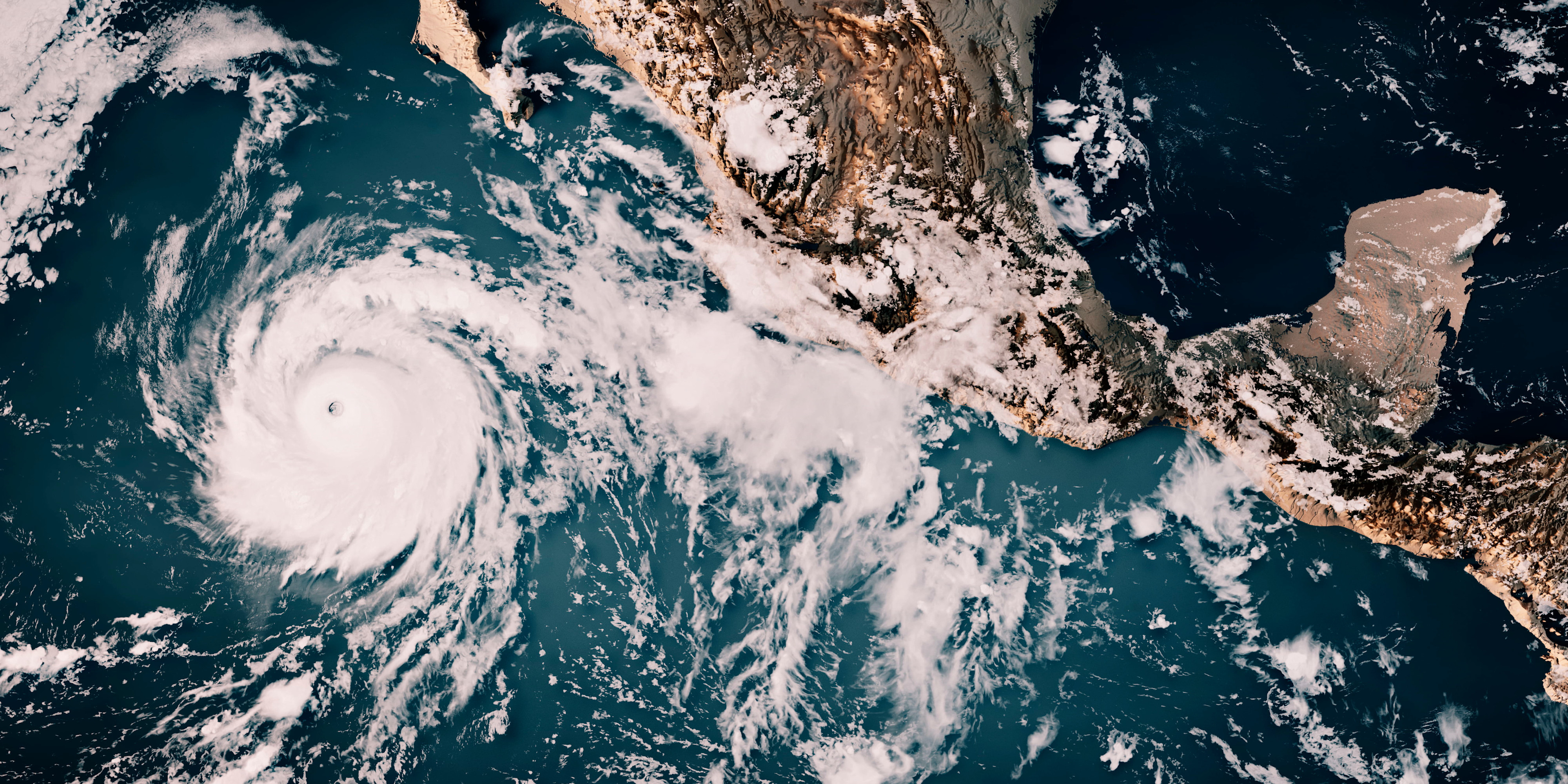
The strongest El Niño in recent history is set to intensify droughts and floods worldwide, with climate change magnifying its impact and economic costs. Biodiversity serves as a natural buffer against extreme weather by enhancing ecosystem resilience and protecting critical resources. Companies already investing in nature-based solutions and resilient supply chains may be better equipped to navigate the disruptions ahead.

Authors

    Portfolio Manager
    Senior Equity Analyst

Summary

  • An imminent El Niño powerfully underscores economic risks of climate change
  • Biodiversity acts as a buffer, boosting resilience for communities & companies
  • The biodiversity strategy targets companies helping to protect natural capital

The 2026 El Niño is shaping up to be one of the most powerful on record. The National Oceanic and Atmospheric Administration (NOAA) currently assigns a 90% probability that it develops into a Super El Niño between October and December.

El Niño can trigger crop failures, food shortages, supply chain disruptions and inflationary pressures, while extreme weather damages infrastructure, reduces labor productivity, strains water and energy systems, and drives higher insurance losses. The result is a macroeconomic shock with significant implications for inflation, economic growth and corporate earnings. In an Allianz research special, the IMF estimates that a typical El Niño increases global food prices by roughly 5% within a year, although there are regional differences.1 Citi estimates cumulative economic losses of USD 5-7 trillion over five years, equivalent to 4.5-6.4% of global GDP.2

Why biodiversity matters

Forests regulate rainfall, wetlands store water during droughts, healthy soils improve water retention, and biodiversity supports pollination and agricultural productivity. As biodiversity declines, these resilience mechanisms weaken and with significant economic consequences.

More than half of global GDP depends directly or indirectly on nature and the World Bank estimates harming it could result in economic losses of USD 2.7 trillion by 2030. That’s annual, not total. Yet the interaction between biodiversity loss, climate volatility and economic growth remains materially underappreciated by capital markets. As Mark J. Spalding, President & CEO of The Ocean Foundation, notes:

Every El Niño is a preview of what a warmer, less biodiverse ocean costs us, in fisheries, coastlines and communities. Biodiversity protection isn't separate from economic resilience; it's the foundation of it

His observation highlights the growing interconnection between biodiversity, climate resilience and economic performance. As natural capital deteriorates, economies become more vulnerable to climate shocks, affecting inflation, resource availability, supply-chain stability, corporate earnings and crucially, political capital.

Figure 1 – El Niño will intensify weather extremes in regions across the globe

Source: Robeco, Columbia International Research Institute for Climate and Society (accessed 2026).
https://iridl.ldeo.columbia.edu/maproom/IFRC/FIC/elninorain.html

From risk to opportunity

The investment opportunity is not driven exclusively by government policy and corporate sustainability commitments. When climate disruption and biodiversity loss begin to affect harvests, water supplies, commodity prices and the reliability of global supply chains, they reshape the economics of entire industries. That creates demand for businesses that operate with greater resilience and produce with fewer natural-resource inputs.

The benefits of which can include improving water availability and quality, reducing pollution and waste, restoring degraded land, strengthening agricultural yields, or making materials and production processes more efficient. These solutions are increasingly becoming operational necessities rather than discretionary initiatives.

The effects also extend specifically to consumer-facing companies that depend on agricultural commodities, water and other natural-resource inputs. Businesses that improve soil health, protect water sources and secure more sustainable supply chains are better placed to secure essential raw materials, manage volatility in input costs and maintain production during environmental shocks.

For investors, this expands the opportunity from a narrow ‘green spending’ theme into a broader structural shift in how economies produce food, manage resources and build resilience. The World Economic Forum estimates that nature-positive business models could create up to USD 10 trillion in annual opportunities by 2030, including USD 3.6 trillion from sustainable food, land and ocean use.3

Importantly, biodiversity investing is already accessible today. Companies delivering environmental solutions, improving resource efficiency and enabling a more nature-positive economy operate across multiple sectors and collectively represent a multi-trillion-dollar market.

Figure 2 – Biodiversity loss is creating a significant investment opportunity

Source: Robeco, PwC 2023, WEF 2020, Citi Research & Global Insights 2021.

Spotlight on biodiversity during COP17

Momentum is building ahead of COP17 in Yerevan, Armenia (19-30 October 2026) where 196 countries will conduct the first formal review of progress against the 2030 Global Biodiversity Framework targets. While approximately 90% of countries have established national biodiversity targets, data, implementation strategies, and funding gaps remain significant challenges.

COP17 is expected to mark the transition from biodiversity target-setting to biodiversity implementation, with a strong focus on financing, accountability and measuring progress against previously agreed targets. It’s time to put meat on the bones of the agreed USD 200 billion per annum spend. Greater policy support, regulatory clarity and financial commitments could further accelerate private-sector investment in biodiversity-related solutions and strengthen the long-term growth outlook for companies exposed to these themes.

Biodiversity Equities I USD

performance ytd (30-9)
0.35%
Performance 3y (30-9)
8.47%
morningstar (30-9)
2 / 5
SFDR (30-9)
Article 9
Dividend Paying (30-9)
No
View the fund
Past performance is no guarantee of future results. The value of the investments may fluctuate. Annualized (for periods longer than one year). Performances are net of fees and based on transaction prices.

A strategy positioned for structural growth

The Robeco Biodiversity Equities strategy focuses on companies that either help solve biodiversity challenges or are helping mititage biodiversity loss. The portfolio is built around three clusters:

  • Solution providers benefit directly from rising demand for water management, waste treatment, technology enablers and environmental infrastructure.

  • Transitioning consumer companies are reducing their biodiversity footprint through sustainable and environmentally responsible supply chains.

  • Lower-impact material providers that enable the transition through sustainable packaging, environmental monitoring tools, alternative chemicals and lower-impact construction materials.

Figure 3 – Robeco’s Biodiversity Equities strategy’s investment universe

Source: Robeco

Together, these segments aim to provide diversified exposure across the biodiversity value chain while maintaining a focus on high-quality companies with durable competitive advantages, strong cash generation and attractive long-term returns. 4 For example, Veolia (a solution provider) is a critical supplier of water treatment and recycling solutions for cities and industries. Novonesis – of the lower-impact materials group – makes natural, bio-based inputs to replace chemicals in food, agriculture, biofuels and other household products (see Figure 3).5

Beyond stock selection, engagement6 is intended to serve an important lever to target real-world impact. Robeco aims to have 25% of the Biodiversity Equities strategy under enhanced engagement, led by our Active Ownership team. These long-term agreements outline clear milestones which underpin the goal of improving corporate biodiversity performance and strengthening long-term value creation.

Conclusion

El Niño is more than a weather event. Its increasing intensity highlights a fundamental investment reality: climate risk, biodiversity loss and economic outcomes are becoming increasingly interconnected. As ecosystems and natural resources deteriorate, future climate shocks are likely to become more economically costly.

What were once viewed primarily as environmental issues are increasingly emerging as drivers of inflation, supply-chain disruption and earnings volatility. As biodiversity moves from policy ambition to economic reality, companies that strengthen resilience, improve resource efficiency and protect natural capital are likely to be among the long-term winners. 7

Footnotes

1 Allianz Economic Research, El Nino, July 2026.
2 Citi, Global Economic Outlook & Strategy, June 2026.
3 World Economic Forum, ‘New Nature Economy Report II: The Future of Nature and Business.’ July 2020.
4 Capital at risk. There is no guarantee that these investment objectives or positive returns will be achieved. Investments in equity strategies are subject to market volatility, company-specific risks, and thematic concentration risks, and investors may lose part or all of their invested capital. Diversification does not protect against loss in declining markets. There is no guarantee strategies will be successful.
5 The companies/securities shown here are for illustrative purposes only in order to demonstrate the investment strategy on the date stated. The companies/securities are not necessarily held by a strategy/fund nor is future inclusion guaranteed. No inference can be made on the future development of the company. This is not a buy, sell, or hold recommendation.
6 Robeco focuses its engagement efforts based on an analysis of financial materiality. Robeco selects three to five new engagement themes every year, and for any given engagement theme, a number of companies are selected that have the most exposure to the engagement topic. These companies are not necessarily part of this portfolio and the impact of engagement is limited on fund level. Information with regard to Robeco’s Stewardship approach and guidelines can be found at docu-stewardship-approach-and-guidelines.pdf.
7 While companies addressing natural capital may be well positioned over the long term, thematic investing carries specific risks, including potential regulatory shifts, market valuation fluctuations, and unexpected economic developments. Past performance and thematic positioning do not guarantee future positive financial results.

Let's keep the conversation going

Keep track of fast-moving events in sustainable and quantitative investing, trends and credits with our newsletters.

Don’t miss out

Robeco aims to enable its clients to achieve their financial and sustainability goals by providing superior investment returns and solutions.

Important information This disclaimer applies to any documents and the verbal or written comments of any person in presentations or webinars on this website and taken together is referred to herein as the “Information”. The services to which the Information relate are NOT FOR RETAIL CLIENTS - The information contained in the Website is solely intended for professional investors, defined as investors which (1) qualify as professional clients within the meaning of the Markets in Financial Instruments Directive (MiFID), (2) have requested to be treated as professional clients within the meaning of the MiFID or (3) are authorized to receive such information under any other applicable laws and must not be relied or acted upon by any other persons. This Information does not constitute an offer to sell, or a solicitation of an offer to buy, any financial product, and may not be relied upon in connection with the purchase or sale of any financial product. You are cautioned against using this Information as the basis for making a decision to purchase any financial product. To the extent that you rely on the Information in connection with any investment decision, you do so at your own risk. The Information does not purport to be complete on any topic addressed. The Information may contain data or analysis prepared by third parties and no representation or warranty about the accuracy of such data or analysis is provided.
In all cases where historical performance is presented, please note that past performance is not a reliable indicator of future results and should not be relied upon as the basis for making an investment decision. Investors may not get back the amount originally invested. Neither Robeco Institutional Asset Management B.V. nor any of its affiliates guarantees the performance or the future returns of any investments. If the currency in which the past performance is displayed differs from the currency of the country in which you reside, then you should be aware that due to exchange rate fluctuations the performance shown may increase or decrease if converted into your local currency. Robeco Institutional Asset Management B.V. (“Robeco”) expressly prohibits any redistribution of the Information without the prior written consent of Robeco. The Information is not intended for distribution to, or use by, any person or entity in any jurisdiction or country where such distribution or use is contrary to law, rule or regulation. Certain information contained in the Information includes calculations or figures that have been prepared internally and have not been audited or verified by a third party. Use of different methods for preparing, calculating or presenting information may lead to different results. Robeco Institutional Asset Management UK Limited (“RIAM UK”) is authorised and regulated by the Financial Conduct Authority. RIAM UK, 30 Fenchurch Street, Part Level 8, London EC3M 3BD (FCA Reference No:1007814). The company is registered in England and Wales under Ref No. 15362605.

In all cases where historical performance is presented, please note that past performance is not a reliable indicator of future results and should not be relied upon as the basis for making an investment decision. Investors may not get back the amount originally invested. Neither Robeco Institutional Asset Management B.V. nor any of its affiliates guarantees the performance or the future returns of any investments. If the currency in which the past performance is displayed differs from the currency of the country in which you reside, then you should be aware that due to exchange rate fluctuations the performance shown may increase or decrease if converted into your local currency. Robeco Institutional Asset Management B.V. (“Robeco”) expressly prohibits any redistribution of the Information without the prior written consent of Robeco. The Information is not intended for distribution to, or use by, any person or entity in any jurisdiction or country where such distribution or use is contrary to law, rule or regulation. Certain information contained in the Information includes calculations or figures that have been prepared internally and have not been audited or verified by a third party. Use of different methods for preparing, calculating or presenting information may lead to different results. Robeco Institutional Asset Management B.V. is authorised as a manager of UCITS and AIFs by the Netherlands Authority for the Financial Markets and subject to limited regulation in the UK by the Financial Conduct Authority. Details about the extent of our regulation by the Financial Conduct Authority are available from us on request.